Inequality in the Solution

Niel Dustin Benedict Agner ||

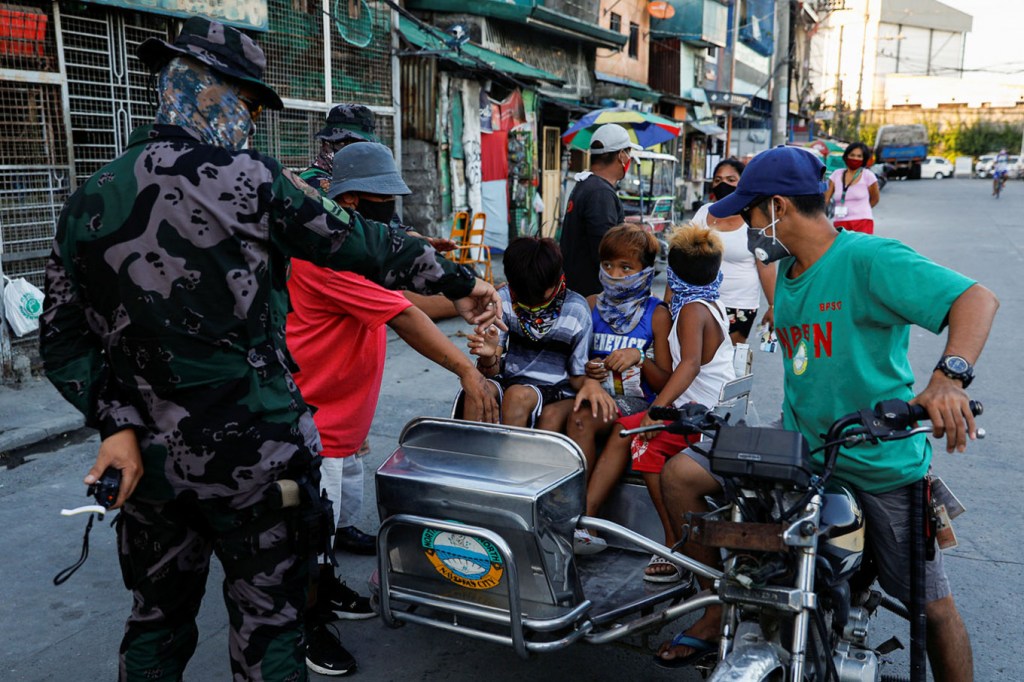
Photo Credit: International Disability Alliance

In recent years, nothing has ever been as disruptive to human society as the COVID-19 pandemic. The pandemic took the world by surprise, and amidst this life-changing experience, one of the voices that need to be heard is the World Health Organization (WHO), which PubMed describes as one that “plays an essential role in the global governance of health and disease due to its core global functions of establishing, monitoring and enforcing international norms and standards, and coordinating multiple actors toward common goals.”

An article on nrp.org cited that WHO describes itself as the “the global guardian of health.” It is imperative to ask: What does its leadership have to say now, after a year of the global health crisis that challenged its organization? 

In a speech delivered by Dr. Tedros Adhanom Ghebreyesus, WHO’s Director General, some key lessons about the pandemic were discussed. First, COVID-19 exposed the capacity of nations around the world in terms of crisis preparedness and response. Second, the pandemic illustrates the close association between and among the health of humans, animals, and the planet. Third, the global pandemic requires a very reliant and competent WHO.

The question now is: Since vaccination is supposedly the cure to this pandemic, what does WHO have to say about the distribution of it?

Dr. Ghebreyesus calls upon all countries for the equal distribution and deployment of vaccines. He emphasized,

“It’s not right that younger, healthier adults in rich countries are vaccinated before health workers and older people in poorer countries. Prioritize those most at risk of severe diseases and death.”

As much as WHO desires to achieve the equal and fair distribution of vaccines, a substantial amount of work still has to be done. WHO reported that more than 39 million doses of vaccine have been given to at least 49 higher-income countries, whereas only 25 doses have been given in one lower-income country. 

This unequal distribution of vaccines can lead to unwanted scenarios that WHO wanted to avoid such as vaccine hoarders, market chaos, uncoordinated responses, and continued social and economic disruption.

“Ultimately, these actions will only prolong the pandemic, the restrictions needed to contain it, and human and economic suffering,”

the WHO Director General warned.

PSHS-EVC kickstarts Online Sportsfest 2021

Kyrus Pampanga ||

Due to the pandemic, Philippine Science High School – Eastern Visayas Campus (PSHS-EVC) upheld its annual sports tradition, Sportsfest, virtually. The event took place through Google Meet and SKRIBBL last January 22-23, 2021, while schedules for upcoming additional games and activities are yet to be announced.

  Given the limitations of an online event, Sportsfest 2021 only featured three games: Pisay Henyo, Skribbl.io, and Kahoot. House Carina, House Vela, and House Pyxis are the three factions competing for the trophy.

“However, despite this year’s hindrance, our annual Sportsfest can still be celebrated. Utilizing our modern technology, an online sportsfest can be an alternative experience. Amid the pandemic’s difficulties, by combining Esports and online events, we can keep up with the sportsfest spirit,”

Athletic Council President Alchris Ceballos said.

Starting with the classic Pisay Henyo, the school’s version of Pinoy Henyo, pairs from the houses (1 pair per category) will guess terms given by their teammates. Second, an online multiplayer game entitled Skribbl.io will accommodate 3 participants per category (each house) to label the drawings of fellow players. Lastly, a quiz-like Kahoot with 12 players per house (2 players per batch) will challenge the knowledge and reading comprehension of the scholars. 

In the meantime, House Vela leads to bag the overall champion award upon dominating Kahoot and tying with House Carina in Skribbl.io. The general results will be declared in a week’s time.

The half-day stretch in the kick-starter event for the online sportsfest has concluded and has officially sparked the competition. Alchris Ceballos added,

“As much as we want to hold a full-blown amazing event, the time frame given to us was just short, only half a day for this quarter. Although, we are expecting the events will be held in an ongoing manner. We will be working hard for the succeeding iterations and events.”

IATF-EID eases age restrictions in MGCQ areas

Louella Mae A. Sas ||

Starting from February 1, 2021, the Inter-Agency Task Force on Emerging Infectious Diseases (IATF-EID) will ease the age restrictions in areas placed under Modified General Community Quarantine (MGCQ), which the Presidential spokesman, Harry Roque, announced last January 22. From the previous age restriction of 15 to 65 years old, the agency will now allow children aged 10 to 14 years old to go outside their residences. However, they can only leave their homes if accompanied by their parents.

For the areas still under General Community Quarantine (GCQ), the respective local governments would have to decide whether they would also adopt the eased restrictions. Moreover, the eased age-based restrictions mean that persons below 10 years old and older than 65 years old are still not allowed to go out and are required to stay home at all times except for essential activities.

The Department of Trade and Industry (DTI) and the National Economic Development Authority (NEDA) were the offices that proposed to ease the age restrictions to help stimulate economic activity. They explained that Filipino children have already been staying in their homes for ten months and that allowing them to leave their houses is good for their physical, social, and mental health. 

DTI Secretary Ramon Lopez also stated that, based on their conducted surveys, business revenues could potentially double or triple once more people would be allowed to go outside. He said that this would prevent the closure of enterprises and job loss. It is also a way of helping businesses survive during the pandemic since economic activities would be re-stimulated.

Not easing restrictions would result in further economic deterioration; thus, the government needs to balance opening the economy and controlling the spread of the virus. The task force is then reassuring the public that health protocols would be strictly followed. 

“As long as we continue to implement and comply with the minimum public health standards, kahit anong age ang lumalabas as long as compliant tayo, we are protected,”

DOH spokesperson Ma. Rosario Vergeire stated.

Moreover, the agency clarified that allowing children to go out is not the same as letting them attend face-to-face classes since they differ in nature, intensity, and proximity.

Photo Credit: The Jakarta Post

E. Visayas reports first ASF case

Louella Mae Sas ||

The Department of Agriculture (DA) announced the first case of African swine fever (ASF) in Eastern Visayas last January 15, 2021. Blood samples taken from hogs in Abuyog, Leyte have tested positive for ASF. The virus affected the backyard farms of Barangay Can-aporong and Bunga where unusual swine mortalities were reported during the latter part of 2020.

It was on January 6 when the DA launched an investigation and took semen samples from seven pigs, four of which resulted positive according to the antigen detection rapid test conducted. For confirmatory testing, they also sent the samples to the Animal Disease Diagnosis and Reference Laboratory of the Department of Agriculture’s Bureau of Animal Industry (BAI) in Manila, which confirmed the result on January 12. 

It was agreed in the coordination meeting of the Department of Agriculture and the local government unit that control measures should immediately be implemented to control the movements of swine and hogs. According to DA Regional Director Angel Enriquez, disease control measures such as depopulation and proper disposal of the affected hogs, inventory of hogs in the identified areas, enforcement of strict border control, and disease surveillance and samplings, including in nearby villages, were implemented. 

All hogs within a 500-meter radius from an infected swine would be culled, and the checkpoints would be operated by the Philippine National Police and the Provincial Agriculture and Veterinary Office. The local government has also banned the entry of all vehicles carrying pigs and pork meat.

According to the DA, it is not yet clear how the hogs have acquired the virus; however, they are examining two possible reasons behind it. DA Information Officer Francis Rosaroso said,

“One could be due to boars service providers as most of the affected pigs were adult female swine and second, due to swill feeding or left-over food, which we discourage.”

Unconquered Legends

Jeb Eduardo Garganera ||

“Be strong enough to be someone even the demons would fear.”

Towering over the other competitors, Pyrocentrix Gaming swept the EVC Mobile Legends Bang Bang Tournament, 9-0, on December 25-29, 2020.

Although undefeated, Pyrocentrix experienced a hard matchup against Team Xerzes, as it looked as if they were about to lose to their big early game advantage, but they managed to take control of the game and had faith in the strong late game that got them the win.

Showing true mastery in roles and team building, Pyrocentrix outplayed the entire tournament with the execution of perfect plays and coordination.

“Upon the first attempts in the tournament, we encouraged ourselves to play specific roles and work on it until it becomes smoother until eventually, we got used to it,”

Captain0000 mentioned.

“Knowledge that we had is no value unless we had practiced and honed it,”

Team Captain Andrei also added.

Popping off simultaneously, cores of the team, like WynsTV, AltairKazuro408, and Team Captain Andrei, showcased astounding skill and mastery in their games. WynsTV’s Lapu-lapu diving the enemy in their base and AltairKazuto’s troll Miya pick caught the enemy team off guard and demonstrated what is colloquially called “a gamer move”.

Securing a game in the finals, Pyrocentrix continued their assault as they comfort pick Natalia for their Team captain Andrei Calo “ⓐⓝⓓⓡⓔⓘ” who dominated Game 2 leaving Lapid Esports helpless in their base performing a ritual around their nexus. 

Throughout the tournament, the team played very well because they had a general idea of their respective roles and stuck to their strong points no matter the struggle. Quite notable is Dustin Agner “Captain000” with his off lane and Renzo Roa “Tonton90” with his tank.

The finals ended with a series of emotes and good sportsmanship demoralization as Team Lapid Esports completely bowed down to the towering giants, and left with a good heart and emotes blast, which Captain0000 started. 

Jed Luis Quismundo, Jaowarskiee Event Organizer said,

We are satisfied because we were able to finish the tournament successfully and the players are cooperating well with us, organizers, regardless of the one-sidedness because of the monstrosity that is Pyrocentrix. Congratulations to all.”

Photo Credit: Jed Luis Quismundo

PSHS-EVC celebrates Christmas virtually

Louella Mae A. Sas ||

To welcome the Christmas season, the Philippine Science High School – Eastern Visayas Campus (PSHS-EVC), in coordination with the Student Alliance, held a two-week school-wide virtual event, the “Pisay Pamasko Experience”. With the goal of bringing the EVC community closer, the festivities were composed of three different sessions with various games and talks from speakers including Pisay alumni and scholars. The events were live-streamed on the EVC Direct page.

The first session which was the “STEMatagingting na Pasko: STEM Career Testimonials” was held last November 27, 2020. Three EVC Alumni were invited as speakers for this event, namely, Mr. Mark H. Robin, a Senior Software Engineer – Inspire Team, Arch. Junelle B. Barcena, a Creative Arts Specialist I – Philippine Statistical Research and Training Institute, and Engr. Ma. Roselle C. Portula, a Quality Assurance Manager – Mondelez International. The speakers shared their past experiences as scholars in Pisay, their career choices, and what to expect after we graduate in Pisay. They gave a lot of advice on how to choose the best career for the PSHS scholars.

The second session which was the “Kwentuhan sa Paskong Kwarantin” was held last November 28, 2020. Scholars from different batches were chosen to be speakers in this event, namely: Reese Latonio, Marifel Balbarona, Nicole Erroba, Ronn Opina, and a freshman, Samantha Macabit. The speakers shared their quarantine experiences and the seniors also shared tips related to school for the younger scholars.

In line with the “Pisay Pamasko Experience”, the SA also held competitions such as the “Pa-Mask Ko: A Face Mask and Face Shield Design Competition” in which the participants designed their face mask or face shield in adherence to the theme: “QuaranFeels: How do you feel under this quarantine?” and “Pisay Tiktok Competition” wherein the participants were free to do whatever they want; as long as their TikToks were Pisay related which would be judged based on the idea, creativity, presentation, resourcefulness and audience impact.

To formally conclude the event, the third and last session, the “pa-MASK-orisyo: PISAY Christmas Culmination Program” was held last December 18, 2020. The director, Sir Erick John Marmol, gave a closing speech and the winners from the icebreaker games during the sessions, TikTok competition and Pa-Mask Ko competition were announced.

Her Kept Promise

Ricci Jilliane Faelnar ||

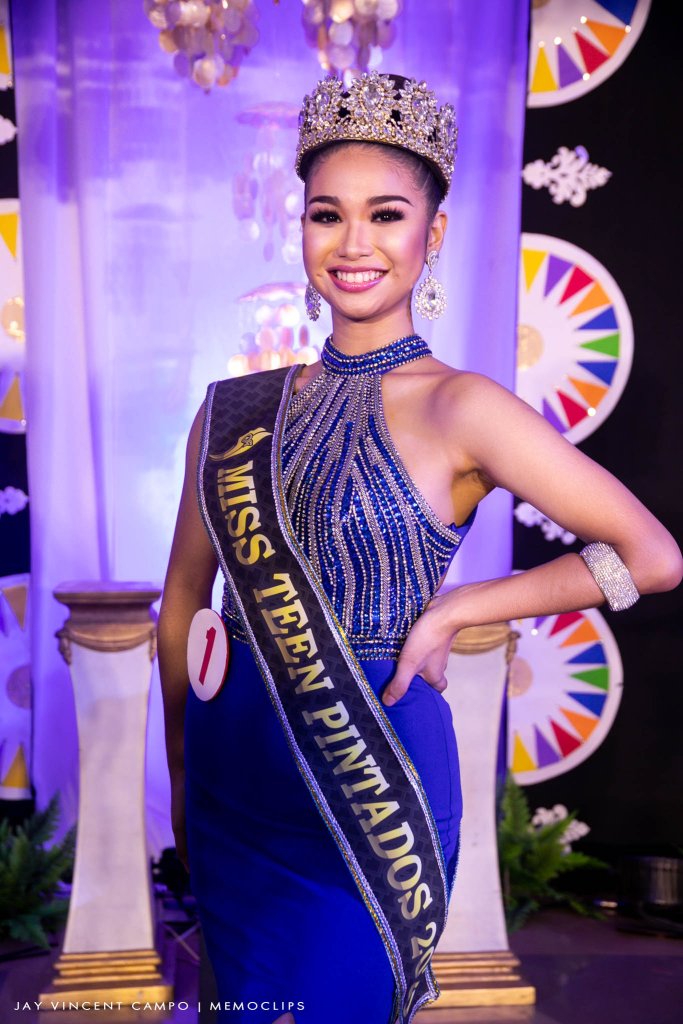
Photo Credit: Memo Clips

She woke up to the sound of constant ringing. Still half-asleep, she fumbled to reach her phone. She pressed answer on the video call flashing on-screen, thinking nothing of it. With a classic case of bedhead and sleep heavy eyes, she accidentally answered to the Pintados Foundation. Little did she know, she was about to hear that she was selected to proceed to the pageant she was most eager for. Etched on Czarinah Cameron Castro’s face was a small sheepish grin, taken aback by the lovely news. 

“It was embarrassing but I felt overjoyed. I fondly recall this memory every time I reminisce my experience,”

said Castro. She lit up with her dreamland smile, now a step closer to her goal. 

This was her second time joining the pageant. She joined in 2018 at 13, setting zero expectations, only hoping to experience and learn. Her not placing didn’t discourage her, she knew it was because she hadn’t prepared enough. She dipped her toes into the water, but she hoped to dive. 

“I promised, sitting backstage I looked in the mirror and told my reflection I’ll come back more prepared and aim not only to place but to wear the crown itself,”

shared Castro. 

Fast forward to 2020, she has her hand rested delicately on her waist, her almond eyes twinkling, her rich olive skin glowing as it had been rightfully complimented with her sequined royal blue gown. She stands poised and radiating, a complete stunner on the stage of the pageant. 

More than what meets the eye, Castro knows how to enthrall people with her sharp wit and inherent grace. The 15-year-old is wise beyond her years, which made her stand out in the pool of young women. There is an apparent depth in her character—the substance to match her beauty, and this was greatly appreciated by the judges. 

“During the pageant, I wasn’t as nervous as I thought I would be. I just kept chanting in my head that I can do this and that whatever the result I would still treat myself to a lot of cake,”

quipped Castro.

Welling up within her was confidence and faith in her growth as a contestant. Deep down, she had the courage to face whatever may be thrown at her. She had prepared herself in more ways than one. 

A long moment passed. She then heard her name called as the Miss Teen Pintados 2020, and a wide dimpled smile started forming on her lips. Bowing in utter glee, she had just fulfilled the promise she kept to herself. With the studded crown perched on her head, she beamed ever brightly. What once was a dream was on top of her pretty little head now.  

“I am able to help a lot more people and it’s heartwarming to somehow be someone the youth can look up to. After my reign, I plan to not only limit myself and my reach solely through the stage but also to other platforms where I can communicate my advocacies and fight for the causes I believe in,”

she shared. 

With her charisma and appeal, Castro shines as a role model. She keeps herself busy with the plentiful commitments and causes she never fails to attend to. She is a force of nature, her eyes dead straight on endeavors she had set her mind to. She might go through and win more crowns on her head. 

One thing’s for certain, Czarinah Cameron Castro has a blindingly bright future ahead of her. 

Photo Credit: Memo Clips

When Conditions Change to Times

Jake Tse Jr. || Cartoon by: Ma. Kristine Erika Flanco

In keeping with the safety measures against the coronavirus pandemic, the 16 campuses of the Philippine Science High School System announced its plan of action for continuing with its mission of providing education humanistic in spirit, global in perspective, and patriotic in orientation. Little could it have been anticipated however, just how pushed Pisay scholars would become to go beyond the limits of their physical and mental capacities in order to cope. 

In this “new normal,” the modality of learning relies mainly on distance education through digital modules, frequent online synchronous classes, and online assessments. In practice, however, this equated to an overbearing academic workload accompanied by suboptimal home environments leading many students to struggle with keeping up to the high expectations set by being a Pisay scholar. 

Add to that the difficulties of relying heavily on the infamously terrible Philippine internet, and the difficulties of having counsel to support mental health due to quarantine restrictions. Not to mention the difficulties teachers face in having to educate with the entirely new virtual environment. All these led to an education set-up making students feel even more isolated and anxious, hindering their productivity and creativity. 

It then came as no surprise when Pisay scholars and alumni from all over the country raised an uproar on the internet, pleading for an academic break. Through the hashtag #PisayGiveUsABreak, the students’ concerns were expressed on social media. After more than 10,000 uses of the hashtag landing it squarely on Twitter’s trending page, these pleads were answered and an academic break for one week was amended to the school calendar. 

The academic break was then a crucial checkpoint for students to de-stress themselves and reconnect with reality. Students, as well as teachers, were given time for themselves to enjoy, relax, and rest in order to prepare themselves mentally and physically for upcoming school requirements. However, come the return of classes, the exhausting cycle repeated itself and the supposedly rejuvenated spirits of the Pisay community were quashed back down to a depressing square one.

As rigid as the academic calendar and curriculum is, it is then necessary for the education system to be less demanding and more considerate to reduce pressure and anxiety from students. Likewise, parents should not expect too much from their children and support them when needed. It is worth noting that aside from benefiting students, this aids teachers as well since making modules and assessments will significantly be less taxing.

Lastly, it is essential for regular counseling sessions to occur between students and teachers. Alternatively, online school community events and games can be implemented to lighten everyone’s spirits. In addition to that, everyone should be made aware of mental health problems to create a better understanding of one another. 

All things considered, education under the new normal is surely challenging and difficult to adapt to. It can be a cause for mental health problems among students, but with a change in the system and cooperation, we can make online learning healthier and more effective. For online education to be truly effective, we must remember this: Education is a marathon, not a sprint. When conditions change to times, it is critical for the runners and moderators alike to pause and rest in order to cross the finish line in good shape. 


Editor’s Note:

For scholars and members of the PSHS-EVC community seeking support, the Guidance and Counseling Unit of the Student Services Division is offering its services through virtual consultations in either individual or group meetings which can be requested via this form:

https://forms.gle/UsAHNMCcZGGWjEbr8. They are also available for private messages and e-mails care of Sir Rogene Ramos ( facebook.com/maroongeers or raramos@evc.pshs.edu.ph ).

Right for the Privileged, Luxury for the Oppressed

MARK RUSSELL CARANZO ||

In fear of contracting COVID-19, soon-to-be mother of three Katherine Bulatao chose to give birth in their home in Caloocan. However, she suffered intensive blood loss which demanded immediate medical intervention. After being refused admission by six hospitals amid profuse bleeding, 26-year-old Katherine passed away—five hours after giving birth.

This incident does not only speak of an unfortunate circumstance solely distinct to Katherine. Instead, her death reflects a bigger issue pertaining to a problematic healthcare system and a demarcating line separating our society into the privileged and the oppressed.

Katherine’s husband received disparate reasons from the hospitals they had sought. These included the lack of resources and demand for initial deposit. Hence, it would be substantial to address each one.

Firstly, Republic Act No. 8344 states that in cases of emergency wherein there is inadequacy in necessary facilities and/or supplies, it is the responsibility of the hospital to direct patients to nearby health institutions capable of providing the medical care these patients require. However, the transfer could only be done once the receiving hospital has agreed and emergency support has been administered. However, taking the husband’s claims as accurate, the aforementioned procedures were apparently unfulfilled. Instead, the hospital where the patient was referred also refused admission citing the shortage of available rooms. Furthermore, the husband claims that the hospitals did not bother to check his wife’s vital signs.

Secondly, the patient’s right to appropriate medical care and humane treatment, as specified by the Department of Health (DOH), was indiscriminately violated after a hospital allegedly asked for a thirty thousand-peso deposit. The DOH has long inculcated that discrimination deserves no place in public healthcare especially with regard to a patient’s financial capabilities. The act was also in grave contrary to the Anti-Hospital Deposit Law, which took effect in 2018. 

Katherine’s case has indubitably unveiled prevailing issues in the Philippine healthcare system that are in dire need of attention.

For one, the country lacks health facilities, medical supplies, and healthcare providers. For instance, the World Health Organization (WHO) recommends 20 beds per 10,000 people. Nonetheless, the Philippine Statistics Authority (PSA) reported that the hospital beds in the country only stagger at 9.9. On the other hand, the WHO recommends 1:1000 doctor to population ratio but the Philippines falls short at 1: 33,000. In terms of community healthcare service, only 47% of barangays have operational health centers. This undeniable deficit has become highly conspicuous when the system was overwhelmed with the pandemic. The availability of ventilators has dictated the maximum capacity of hospitals to save lives.

In the midst of this lack, one thing is certain: justice needs to be served.

Therefore, the government needs to examine the case closely in order to identify blatant violations. If proven guilty, the hospitals should be held liable to ensure that future similar incidents would be prevented. Otherwise, the enforcement of pertinent laws would be rendered ineffective.

In addition, the case is a negative externality of the government’s low prioritization of health sectors as evident in the national budget. The over-all share of the sector has plummeted from 4.9 to 4.5 percent. This has cut the budget of essential projects such as the Health Systems Strengthening Project by 6 billion pesos. Hence, the government must increase the budget of health sectors for the betterment of healthcare services in the country.

It is indeed disheartening to witness unnecessary deaths in a time when saving lives is critical. Undeniably, Katherine is just one of the many Filipinos who are victims of a poor system. Thus, mandated by the Constitution to uphold public interest at all cost, the government must work hand-in-hand with Philippine hospitals to ensure that healthcare is no longer just a right for the privileged nor a luxury for the oppressed.

Baby River: Injustice, personified

Mark Russell Caranzo ||

Incarcerated behind the bars of indifference and selective justice, human rights worker Reina Mae Nasino, mourned in jail over the death of her three-month-old baby, River, amid constant pleas for release. Oblivious of her pregnancy during the onset of detention for supposed illegal possession of firearms and explosives, Nasino gave birth and nursed baby River in the Manila City Jail before she was separated from her child a month after. River’s health deteriorated fast after the separation. Despite Nasino’s appeals to allow her to take care of her terminally ill child, the court remained apathetic to the mother’s request. 

River’s death speaks volumes of how the Philippine justice system has failed to serve public interest once more. In the first place, the court did not consider the urgency of the situation when the National Union for People’s Lawyers (NUPL) requested to grant Nasino the opportunity to stay with her baby for at least a year, more so when the baby was reportedly sick. In fact, the court junked such petition citing inadequate resources to ensure she remains detained while nursing her baby. However, with the country in the pandemic’s stranglehold forcing lockdown for all its citizens, a case for Nasino’s “escape” from authorities is flimsy at best. 

Moreover, Nasino’s case was an apparent juxtaposition of court decisions that were previously ruled out to VIPs and other influential persons. For instance, if the Sandiganbayan granted Sen. Bong Revilla a five-hour furlough to visit his sick father last 2015, then why can a lower court not do the same? As stated in the Human and People’s Rights Declaration of the Philippines, every person must be treated equally before the law. Therefore, it is undeniable that the concerns regarding selective justice that netizens have voiced out are all well founded.

In order to prevent another case such as this from happening again, what then needs to be done?

First, the amount of time allowed for children in custody to be with their mother (which is currently one month in the Philippines) should be extended. For reference, other countries such as Malaysia allow detained mothers to be with their children for up to four years. Looking at the Philippine context, such one-month rule poses a problem as according to psychoanalyst and parenting expert Erica Komisar, mothering is very crucial to the first three months of a child. She added that intense closeness and skin-to-skin relationship remain critical for up to three years, things which both River and her mother were sadly deprived of.

In line with this, the government must also invest in bettering jail facilities for inmates with specialized needs such as pregnant women. For instance, based on a report by the American College of Obstetricians and Gynecologists, incarcerated pregnant women must not be compromised nutritionally, and must instead be given full access to prenatal care through regular obstetric visits, among others. At the same time, the Birth Companion charity has emphasized that postnatal facilities are also of tantamount importance. The group argued that well-ventilated breastfeeding sections, antenatal clinics, and regular family visits must be seen as prerequisites. It is therefore obligatory for prison systems to give highly vulnerable Persons Deprived of Liberty (PDL) the appropriate treatment that they deserve.

In conclusion, it is undeniable that deliberate indifference and selective justice played a significant role in the death of baby River. As Atty. Edre Olalia of the NUPL said, “What kind of justice system, nay, society, do we have to let this inhumanity and injustice to mother and child happen?” Unfortunately, more of these accounts are bound to happen, unless the Philippine justice system becomes an equal playing field. Indeed, baby River was a victim of a problematic system, yet every Filipino must be aware that this system would continuously exist and persist, unless otherwise challenged and rectified.