IMUN Philippines 2022: Social Reconnection in the Midst of Global Disconnect

by: Ellyce Lim || Photo Credit: International Model United Nations (IMUN)

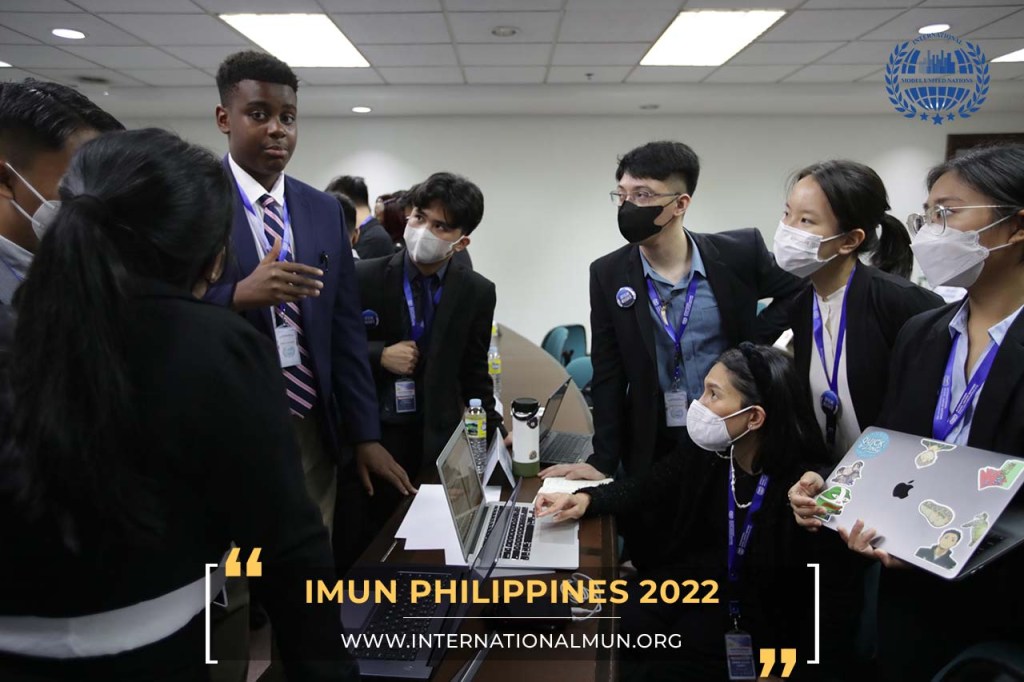
After two long years of holding the International Model United Nations (IMUN) Conferences through a screen, the IMUN is back at it with its second 3-day on-ground conference since the beginning of the pandemic, following the first face-to-face event held last June 2022 in Jakarta, Indonesia. To kickstart the fun, it was proudly hosted in Manila, Philippines, by the University of Asia and the Pacific last November 9 to 11, 2022. 

Understandably, there were mixed emotions from EVC’s delegates, Alchris Marie Ceballos, Kyle Matthew Balasanos, and Joshua Christopher Capada, regarding the return of face-to-face IMUN. Although they were excited and honored, in line with that was the pressure to delight the school.

“We felt pressured to do really well and get awards, since it would be embarrassing to the school if we don’t have something to give back,” Balasanos confessed.

In the span of three days, six simultaneous committee sessions were held for four committees of the UN: United Nations Development Programme (UNDP), World Health Organization (WHO), United Nations Security Council (UNSC), and United Nations Educational, Scientific and Cultural Organization (UNESCO). EVC’s delegates, Alchris, Kyle, and Joshua, participated in the committee sessions of the WHO, UNESCO, and UNDP, respectively.

With the discussion of various pertinent issues, compromise and conflict resolution are the focus of the IMUN conferences. Based on the delegates’ feedback, seeing from others’ perspectives, being open-minded and understanding, working together, expressing your opinions, thinking critically, and analyzing situations are the main points needed on this occasion.

“We have a lot of world problems that urgently need to be solved by doing actions like cooperation, thinking outside of the box, critical thinking, and more,” said Balasanos. 

Despite their initial worries, the delegates acknowledged the conference to be “pretty chill and enjoyable.” Moreover, they have honored the school by bringing home the beacon, with Alchris Ceballos bagging the Best Delegate award for WHO and Kyle Balasanos and Joshua Capada the Verbal Commendation award for their respective committees.

When asked about how he felt after the conference, Capada responded, “I was really happy with what I had achieved not only in terms of the distinction I received but also the improvement in various skills such as speaking, research, and debate.”

At the end of it all, the three delegates agreed that their favorite part of the event was the social interaction, connection, and learning the cultural background of the other delegates from different parts of the world. 

“The bond I’ve built with my co-delegates is definitely my favorite part. Everyone was so supportive of each other, and until now, we still keep in touch despite coming from different parts of the world,” Ceballos shared. 

Truly, the fun activities and learning moments made up for the jitters and pressure the participants felt. IMUN is a learning adventure to engage the younger generation in real-world events—shedding light on the key plans and ideas stored in the brilliant minds of the world’s future leaders.

#SupportLocal, but Locals are Unsupported?

by: Jana Maisei Venigas || Photo Credit: Tiffany Afable

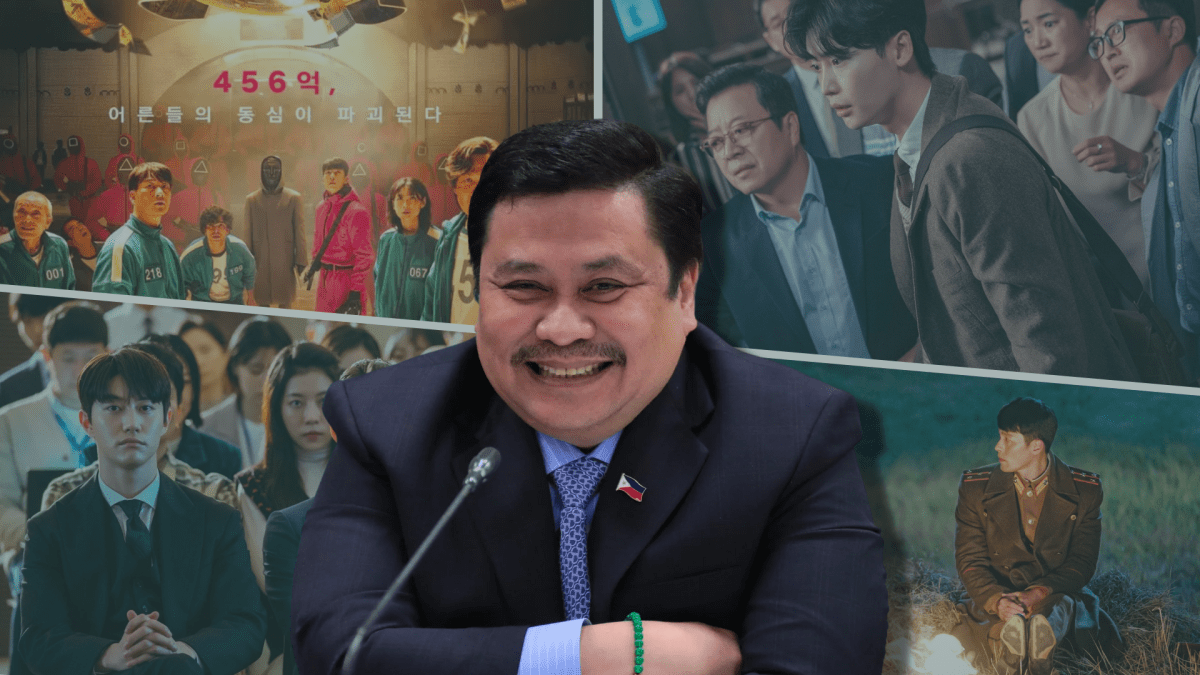
Squid Game, directed by Hwang Dong-hyuk, premiered in September 2021 and quickly became popular among Filipino viewers—ranking first on the Top 10 List of Most Watched Titles. Following this, the most Googled 2021 South Korean dramas were: True Beauty, Vincenzo, Nevertheless, Hometown Cha-Cha-Cha, and many more. This only goes to show the appreciation Filipino viewers have for South Korean dramas, but some are willing to burst this bubble. 

In the budget hearing for the Film Development Council of the Philippines (FDCP), Senator Jinggoy Estrada expressed banning Korean dramas or K-dramas, as he observed a lack of support for locally made films. While it is not a hidden fact that our entertainment industry produces a string of films and shows that sometimes falls flat among local viewers, this is not due to competition from foreign films. 

Filipinos won’t embrace local films. They just won’t have a choice.

Estrada believes that by reducing competition, or international film imports, we can promote local entertainment to its home consumers: the Filipinos. But this is not the case. Left to a narrow number of films and shows, the diversity of the entertainment we consume and create will diminish.

Rather than looking up to quality international production, we are looking myopically into ourselves; into the lousy scriptwriting, lackluster acting, and poorly-shot Philippine soap operas. In fact, forcing people to consume entertainment from solely their home country will not push them to foster a love for it, but would instead just reduce their choices, which seems to be a trend among our lawmakers.

#SupportLocal, but Locals are Unsupported?

The substandard quality of our entertainment is not due to the lack of talent among our Filipino scriptwriters, actors, and directors, but rather to the lack of support they receive. Many indie-quality films have the potential to compete internationally, but they are indie for a reason. The crews of these films are on their own, with meager funding to start with. Despite the flourishing talent present in many of our Filipino creatives, testing the waters and getting experimental through film is risky.

The difference between the Filipino film industry and that of South Korea and other countries is its government’s neglect of the former. Instead of nourishing creativity and allowing Filipino viewers to organically embrace locally-produced entertainment, we are stunting the growth of our filmmakers and suffocating those who wish to consume good cinema. Moreover, our film creatives are scouring to get by, unable to reach their utmost potential because their government does not allow them to shoot for the stars. On top of that, Filipino viewers also sense a class barrier when it comes to viewing. With theater visits at an inaccessible price for some, the déclassé soap operas streamed on TV take up a large percentage of the films viewed by the masses.

After Estrada received heaping backlash from K-drama fans for his comments in the FCDP hearing, he later clarified that he did not actually mean to ban K-drama or foreign films in general, but wished that Filipinos would have the same passion for local films. Still, if he intended to appreciate local creatives, he should have realized that the best support for the industry comes from the government, whether that be through cutting taxes, increasing funding for scriptwriters, directors, and actors, and lowering theater ticket prices. 

Our film industry will never flourish in the entrapping grips of protectionism. Much like how a flower wilts when deprived of water, our aspiring artists cannot produce quality films that Filipinos will genuinely watch and love when they have to worry about putting food on the table.

Here’s to the Burnt Out Gifted Kids

by: Poimen Agnila || Photo Credit: Kyle Nase

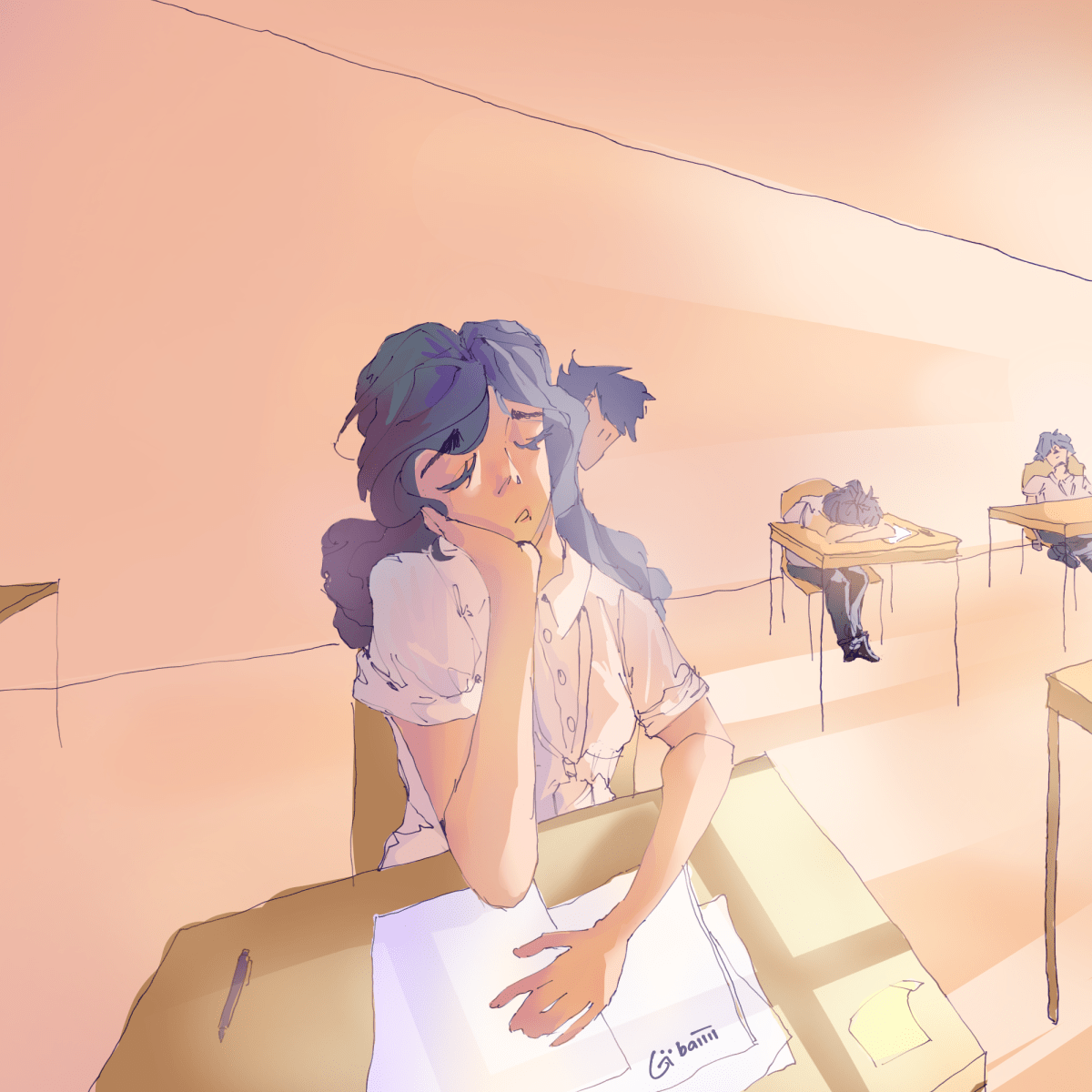
To the math competition delegates and science quizzers, the journalists and essay writers, the pleasures to have in class, the honor roll students, and everyone who was called “gifted” but never felt gifted enough—this one is for you. 

Nobody ever talks about how difficult it is to navigate high school when you’ve always been the “smart kid” your entire elementary school life. The unreal expectation of matching (or even surpassing) previous achievements is a burden that many of us carry behind closed doors. Despite how difficult it is, brave faces are put on, and half-hearted attempts to keep up an image of intellectual perfection continue.

You tirelessly pore over pages of lesson notes instead of sleeping at night, then cry silently in your room when you don’t get a good enough score. 

You join as many extracurriculars as humanly possible to make up for any insecurity you may have inside the classroom, then realize that you’re just as insecure outside of it. 

You try so hard to pay attention in class during a discussion, then get nervous when a classmate understands the topic, but you don’t. 

You don’t want to ask questions because that would be admitting you don’t know. You should have known, right? You should have studied this part, should have understood this topic before, and shouldn’t have any questions. 

You constantly compare yourself to your peers because you’ve been raised to believe that winning only matters when everyone else is losing.

It’s exhausting. Gone are the days when we were enthusiastic go-getters and curious little minds who wanted to learn for wisdom. We don’t process knowledge anymore; we only consume it. That’s when burnout comes in. You start to think you’re not actually smart—you just work really hard. It’s just that now, working hard has become draining and pointless. You’ve become disillusioned with doing your best because your best will never be good enough anyway. 

So many of us want to break free from this cycle of being toxic overachievers, but we still crave the academic validation that comes with it. After all, who doesn’t want to be called smart? When you’re smart, you’re respected. When you’re smart, people will listen. When you’re smart, your most shameful flaws become insignificant. 

There is no clear-cut, step-by-step, one-size-fits-all process when dealing with gifted kid burnout, but there are things you need to know.  

First off, it’s not your fault. People get tired all the time. It’s okay to want to rest. It’s okay to want to take a step back and away from the noises in your head that tell you you’re not good enough. You shouldn’t apologize for wanting to reevaluate your priorities and decide to put yourself first for a change. What the world expects from you because of what you’ve achieved in the past is not your fault. 

Second, it’s okay not to be smart sometimes. Everyone is smart but just at different things at different times. There is so much pressure to be good at everything all the time that you begin to believe that being smart is the only way to live. That is simply not the truth. It’s okay not to know things and to feel sad because you didn’t immediately understand the discussion. The important thing is that you don’t beat yourself up for feeling like you’re less than everyone else just because you don’t feel smart now.

Lastly, you’re not alone. While it’s true that most academic environments are breeding grounds for a constant and sickening fear of failure, a school can also be where you find the people who will share your pain and stick it out with you through thick and thin. Companionship goes a long way when the overwhelming expectation of becoming someone great becomes too much. You may be burnt out, but at least you’re burnt out together. 

At its very core, gifted kid burnout is just the accumulation of years’ worth of self-doubt and hurt from looking for validation in all the wrong places. Your worth as a human being shouldn’t stem from an imperfect education system that thrives on exclusion based on intellect but from an inner understanding that you are—and always will be—worthy despite your medals, certificates, IQ, or GWA. 

So, here’s to you. If you still find yourself sobbing in the middle of the night to the lyrics of Taylor Swift’s mirrorball because you forgot that the Pythagorean Theorem only applies to right triangles, remember, it’s okay to feel sad. 

Burnout is nothing to be ashamed of. When the fire has consumed every fiber of your being, it’s only natural to pull away. After the flame has been extinguished and the light has lost its glow, reignite it again. Hope that this time, it will burn brighter than before, but not too much that it hurts you.

PSHS Ugnayan 2022: Warm bonds in the Cool City of Baguio

by:  Margarette Joelly Nunez || Photos Credit: PSHS System Ugnayan

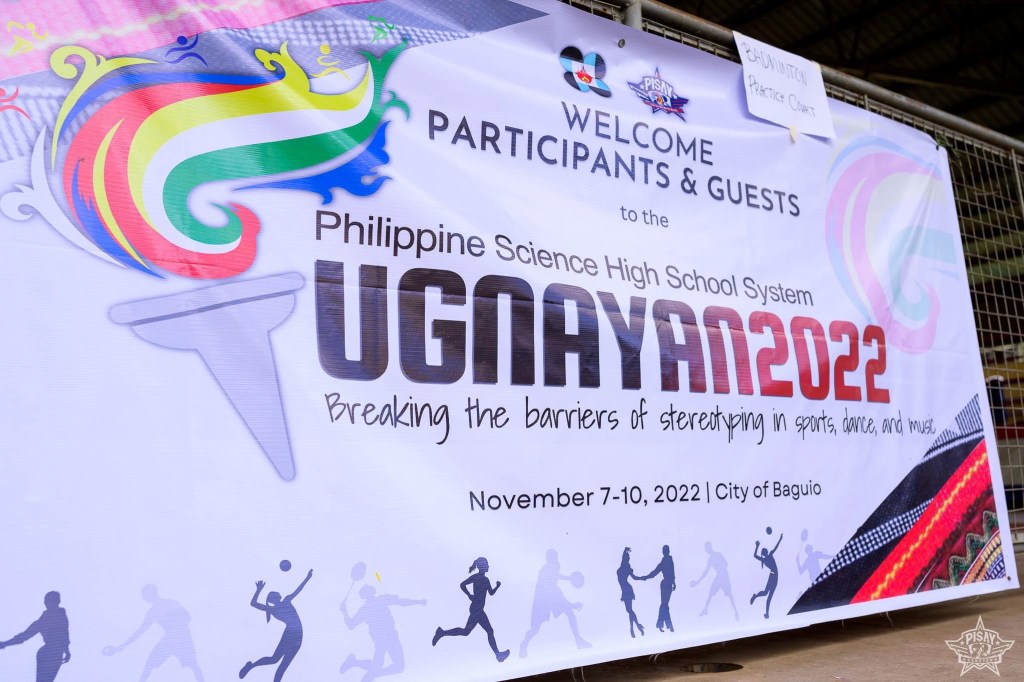
Ugnayan 2022 Theme: “Breaking barriers of stereotyping in sports, dance, and music.”

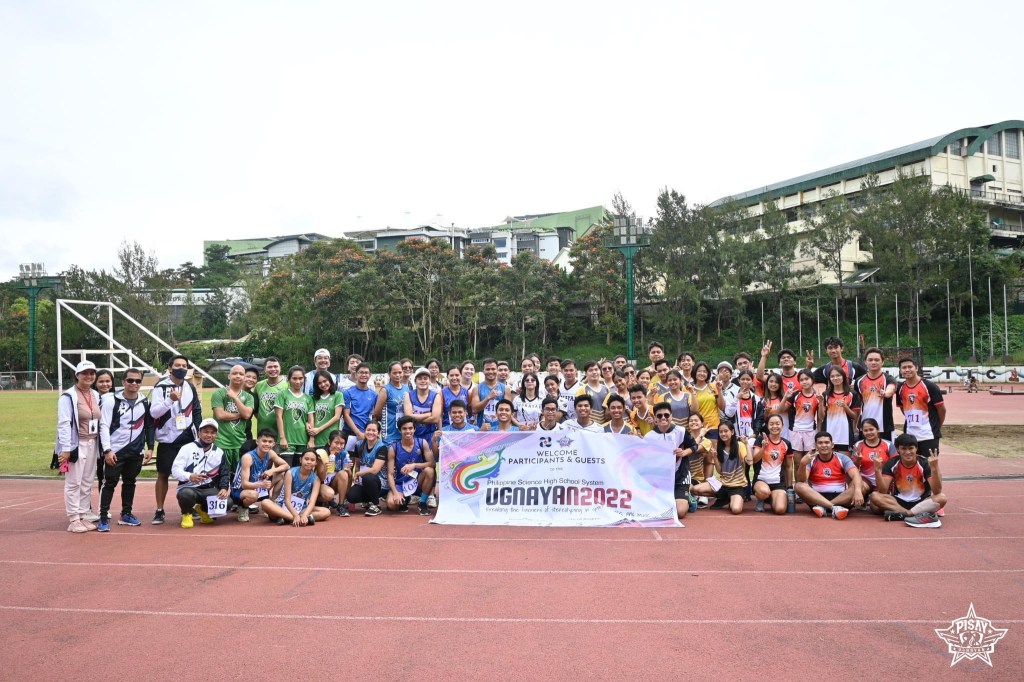
After two years of pandemic pause, the PSHS System kicked off Ugnayan 2022 last November 7-10, 2022, in Baguio City with PSHS – Cordillera Administrative Region Campus as the host. 

The cultural and sporting event consisted of 5 clusters: Yellow Sami-Sami (IRC, MRC, CVisC, SMC), Red Abuyo (CVC, CBZRC, WVC, CRC), White Kullaaw (CLC, MC, EVC, SRC), Blue Tuwato (CARC, BRC, CMC, ZRC), and Green Dudon (OED, ExeCom, BOT, NAA).

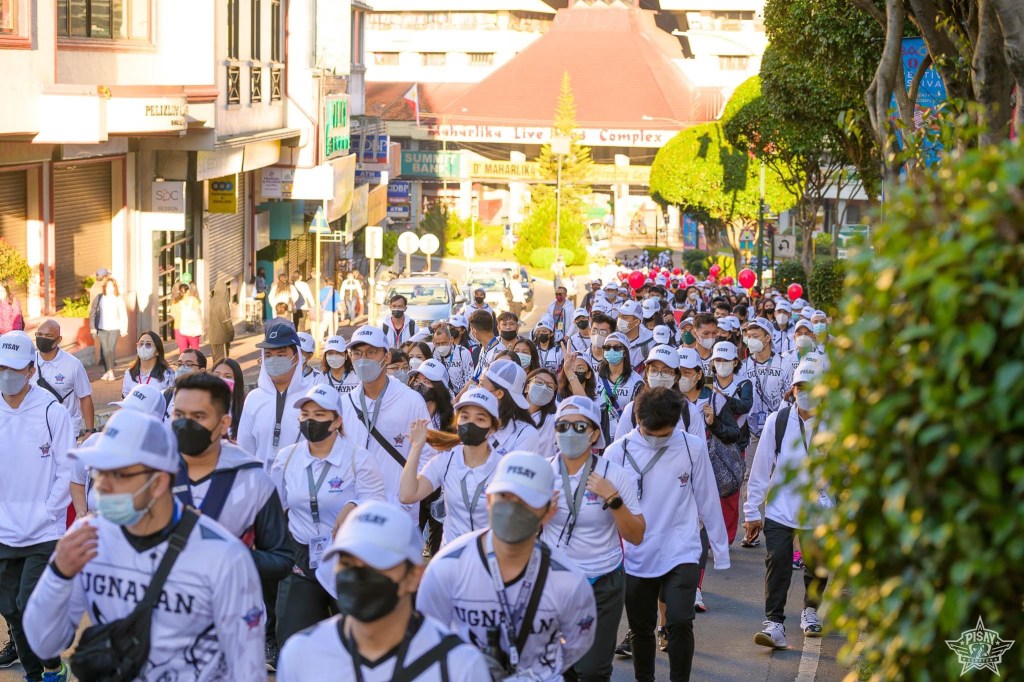
Warming the shivers on the 7th of November, the Ugnayan delegates gathered before sunrise and were accompanied by the Philippine Military Band as they marched from Hill Station to Baguio Convention Center. The parade was followed by the opening program involving Torch Lighting, Kapihan sa Baguio, and the Gender and Development Seminar. 

After the opening program, the Chorale and Dancesport competitions of the PSHS personnel from different campuses began. EVC’s very own chorale group won 5th place with their winning piece, “Leron Leron Sinta.” In dancesport, EVC’s duo, Nomer Gutierrez and Darry Portillo, danced the night away in Cha-cha, Rhumba, and Jive during the qualifying round but failed to progress to the final round; nonetheless, the victorious pair came from the same cluster, White Kullaaw. 

Starting with the ball games, the sports fest commenced on November 8 at Benguet State University. In volleyball, EVC representatives Margarette Nuñez and Tiffany Afable claimed the 4th spot after losing two matches. On the other hand, Leslie Cruto and Herma Morales dominated the court to clinch 1st place in the personnel category of women’s volleyball with a clean sweep. 

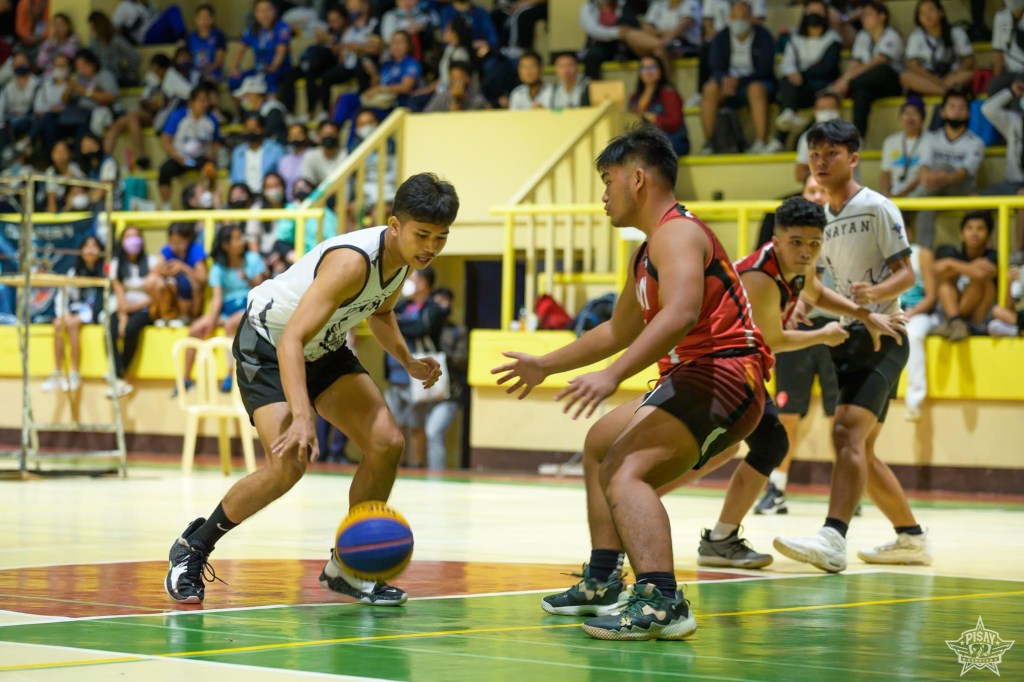
Shooting their shot to the championships, Vince Boonyarat and Job Beau Linao of basketball girls and boys, respectively, secured their silver medals after battling teams from the same cluster, Red Abuyo. The basketball girls won the first game against the champions but failed in the second due to a twice-to-beat advantage. Meanwhile, the men’s basketball team of the personnel category, composed of Francis Ebio and Fernando Asis, landed 4th. 

Held the same day at Baguio Athletic Bowl was the athletics competition, which was joined by Alexandrei Delector, Helena Enero, Dachel Raagas, and Joven Sumayod. Delector ran 200 meters and clinched 4th, while Raagas secured 4th in the 100-meter dash. Meanwhile, Helena Enero won silver and gold in the 100-meter dash and 4×100-meter relay, respectively. Lastly, Joven Sumayod placed silver in the men’s running long jump. 

In chess, EVC representative Quiara Macasa bagged gold after establishing dominance among her opponents. Ana Riza Gozon also claimed her medal as she placed bronze in the personnel’s category.

On the third day, the racket games filled the courts of Benguet State University. EVC’s badminton players went home triumphant after Franze Go fought his way to 3rd place in the boy’s singles division, while Vinci Gabumpa and his mixed doubles pair Antonette Occeña dominated the scene after gaining 0 losses and a gold medal. 

Battling alongside the courts of BSU were the table tennis athletes. In girl’s doubles, Jewess Alban and her partner successfully took home bronze. From the boy’s doubles category, Laurence Abuda landed 4th place after two consecutive losses. Similarly, Jennifer De Los Reyes and Xavier De Los Reyes bagged the 4th spot in the mixed personnel category. 

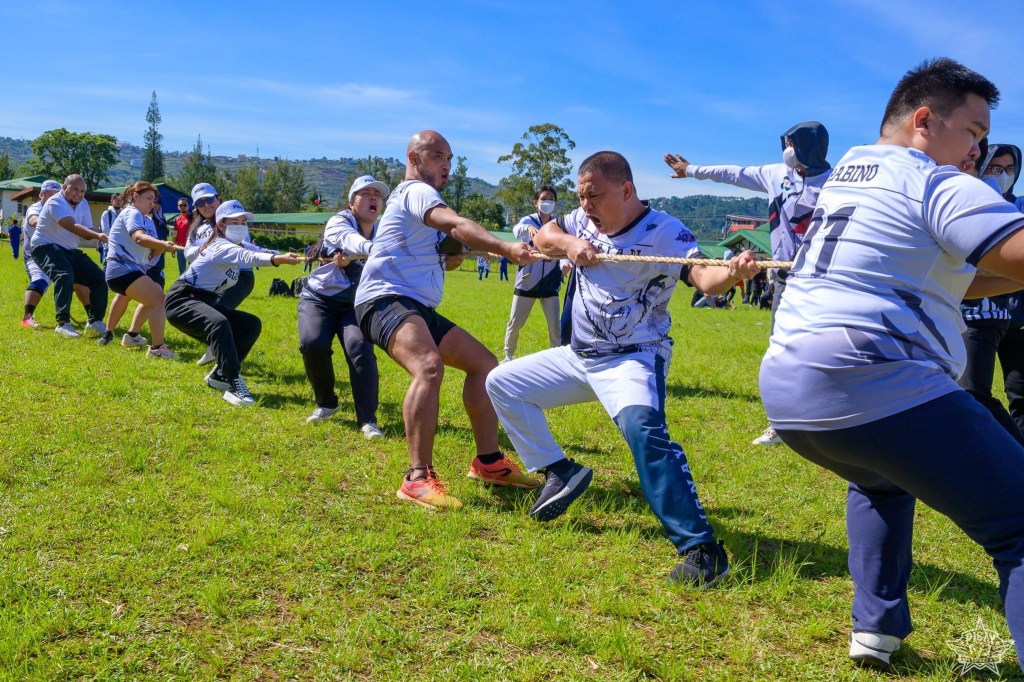
On the last day, the personnel pitched in the Laro ng Lahi, which consisted of familiar Filipino games such as sack race, tug-of-war, and kadang-kadang. Aside from the chorale stage, Neil Rabino and Alexandra Buñales proved prowess in the tug-of-war, where they won 1st place.

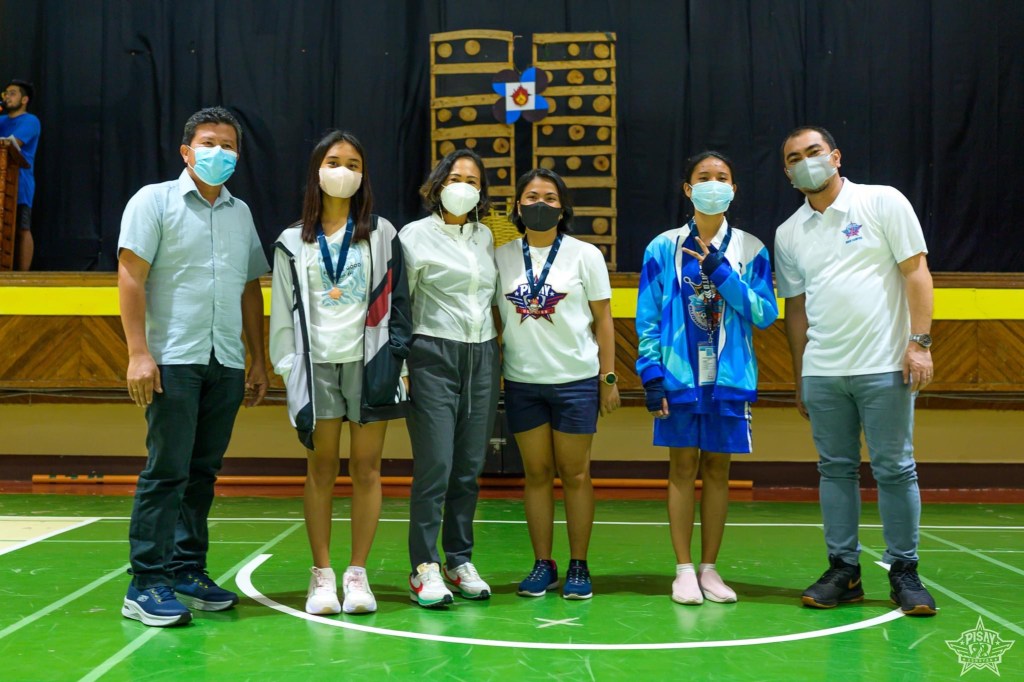
To formally conclude PSHS System Ugnayan 2022, an awarding ceremony was held after Laro ng Lahi. First, the host announced the 5th place in overall points, Cluster 5 – Green Dudon; then, Cluster 3 – White Kullaaw in 4th; and Cluster 1 – Yellow Sami-Sami in 3rd place. Down to two clusters, screams of joy filled the gymnasium as Red Abuyo sealed the overall champion title, handing the 2nd spot to Blue Tuwato.

The chant, “Agyaman kami, CARC! [Thank you, CARC],” poured around Benguet State University as the delegates of Ugnayan 2022 expressed their gratefulness. 

For the final stop, the delegates toured around Philippine Military Academy in Benguet, Baguio. The PMA Band played their hearts out through their drums and trumpets, enchanting the PSHS System. The graduating cadets also showcased their routines that anchored symbols of their values. Finally, alumni of PISAY shared their stories of becoming a cadet, inspiring fellow scholars to join the academy. 

PSHS System Ugnayan 2023 is set to connect the campuses once more in Iloilo as PSHS – Western Visayas Campus accepts the challenge of holding this passionate and exciting event.

Paeng leaves PH in ruins after making landfall as a severe tropical storm

by: Vinci Tamayo || Photo Credit: Eloisa Lopez/Reuters

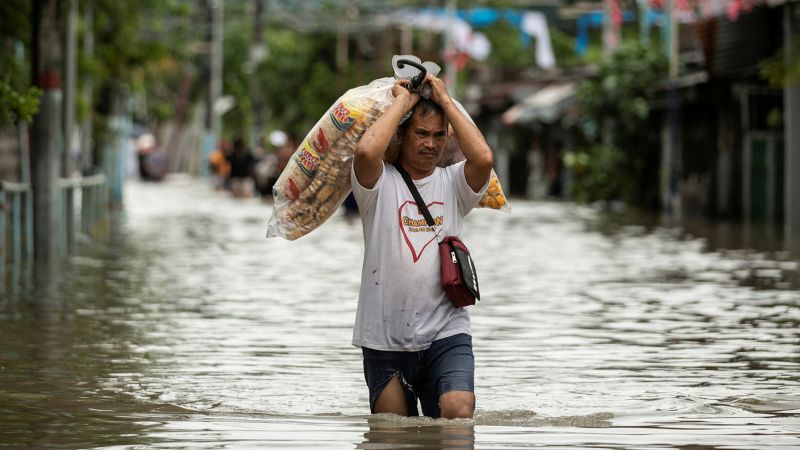
After plowing through the Philippines and affecting the lives of over 3.96 million individuals, Severe Tropical Storm “Paeng” — internationally known as Nalgae — left the Philippine Area of Responsibility (PAR) on Monday noon, October 31, leaving 6,542 damaged residences. The death toll also now sits at 150 as of November 3, 2022, with 63 verified fatalities from the Bangsamoro Autonomous Region in Muslim Mindanao, 23 from Western Visayas, and three from Soccsksargen.

The storm first entered the PAR as a tropical depression, 965 kilometers east of Eastern Visayas at 12:30 PM on October 26 and was given its local name, “Paeng.” It then intensified into a tropical storm a day later. Its first landfall took place in Virac, Catanduanes, as a severe tropical storm at approximately 1 AM on Saturday, October 29, while sustaining winds of up to 95 kph and a gustiness of 160 kph.

During its time in the PAR, STS Paeng made landfall in a total of five different places: Virac, Catanduanes; Caramoan, Camarines Sur; Buenavista, Quezon; Santa Cruz, Marinduque; and San Juan, Batangas, while maintaining its strength and status as a severe tropical storm throughout. After its recent departure from the PAR, however, its winds intensified further in the West Philippine Sea, reportedly packing winds of up to 110 kph and a gustiness of 135 kph on the afternoon of Monday, October 31. This increase in strength led to the expansion of the area covered by the storm, causing numerous regions in the northwestern parts of the country to remain under Signal No. 1 despite STS Paeng already being outside the PAR.

According to the National Disaster Risk Reduction and Management Council (NDRRMC), STS Paeng was one of the most destructive storms to hit the Philippines this year, with infrastructural and agricultural damages reaching an estimated ₱2.83 billion and ₱2.44 billion, respectively as of November 3. 

During a council meeting of the NDRRMC on October 29, President Ferdinand “Bongbong” Marcos Jr. highlighted his concerns regarding the number of deaths, expressing that the death toll seemed “very high for a flooding incident” and wondering why affected individuals were not evacuated immediately.

“I would like to start with the flooding in Maguindanao, simply because we have to already look at it dahil ang daming casualty. It will be important to us to look back and see why this happened, na hindi natin naagapan ito na 67 ang casualty, that seems very high for a flooding incident,” Marcos said during the meeting.

[I would like to start with the flooding in Maguindanao, simply because we have to already look at it because there are many casualties. It will be important to us to look back and see why this happened, that we could not prevent this 67 casualties, that seems very high for a flooding incident.]

“So maybe if we could start with there first, just to give me a better idea of what happened, what caused the flooding and bakit hindi natin sila na-evacuate at nagkaganyan ang casualty, napakataas [why were we not able to evacuate them and that the casualty turned out to be so high]?” the Philippine President expressed.

Horror in Seoul: At Least 151 Killed in Itaewon as Halloween Night turns into Deadly Crowd Crush

by: Frances Katharine Manalo || Photo Credit: Jung Yeon-Je/AFP

An estimated 100,000 people in a surge, costumed partygoers fleeing in terror, desperate first aid attempts on sidewalks, and dead bodies lined up in narrow streets—these were the scenes in the nightlife district of the South Korean capital as a Halloween celebration turned into a tragic night.

At least 151 individuals were reported dead, including 19 foreign nationals, and a further 82 were injured in a crowd surge and stampede in Itaewon, Seoul, on Saturday night. Most victims were teenagers and young adults in their 20s who attended the first major Halloween celebration after 3 years as the country lifted the COVID-19 restrictions and social distancing protocols.

According to Choi Seong-beom, Chief of the Yongsan Fire Department, the death toll could still rise, and the exact number of those in critical condition remains unclear. 

South Korean authorities have not yet provided exact details and are still investigating the specific cause of the incident. However, Yonhap News Agency reported that according to fire officials, dozens of people suffered from “cardiac arrest” and breathing difficulties.

Witnesses and survivors described that it was difficult to move around as partygoers were packed in the narrow streets of Itaewon. Additionally, the police were having trouble maintaining control of the crowds.

“You would see big crowds at Christmas and fireworks … but this was several ten-folds bigger than any of that,” said Park Jung-hoon, a witness from Reuters.

A CNN witness, Sung Sehyun, described the space and chaos in the scenes as a “jammed subway.”

“I saw people going to the left side and I saw the person getting to the opposite side. So, the person in the middle got jammed, they had no way to communicate, they could not breathe,” he stated.

“I was lucky to get through (but an) hour later, I heard people got killed. Because people got stamped on… and people got jammed together,” Sung added.

Many others were similarly unaware of the risk until it was too late.

“There was also a police officer screaming but we couldn’t really tell (if it) was a real police officer because so many people were wearing costumes,” Ah Su Jo disclosed to CNN. 

She elaborated that she had only realized the gravity of the situation when she took a detour and fled to safety, seeing people climb buildings in an attempt to survive. 

Addressing the nation early Sunday, South Korean President Yoon Suk Yeol declared a period of national mourning “until the handling of the accident is concluded.” Afterward, Prime Minister Han Duck-soo stated that the mourning period would conclude at midnight on November 5.

The last time South Korea encountered an incident leaving a high death toll was the sinking of Sewol last 2014, killing 304 individuals, mainly high school students.

“A tragedy and disaster that should not have happened took place in the heart of Seoul last night,” Yoon expressed.

via CNN, Reuters, and Voice of America

Savage: Blacklist International Reclaims MPL PH Crown

by Jesslie Yu || Photo Credit: MPL Philippines​/ABS-CBN News

Blacklist International broke the code again and claimed their third MPL Philippines title after defeating ECHO Philippines in a best-of-7 series, 4-2, on Sunday, October 23, 2022.

EDWARD, the Exp Laner of Blacklist International, was hailed as the Finals MVP for having a diverse hero pool and for being the pillar the agents needed to win the series. This proves his prowess from his pseudonym, Agent Zero, as the first-ever recruit of the team. 

Before the tournament proper, the Royal Duo, Danerie James “Wise” Del Rosario and Jonmar “OhmyV33nus” Villaluna, were welcomed with the MLBB’s Hall of Legends award after their break in Season 9. With recharged energies, they led the agents to victory using unorthodox picks and flawless synergy with Salic “Hadji” Imam, Kiel “OHEB” Soriano, and Edward “EDWARD” Dapadap.

“Thank you for supporting and believing in us throughout the season. Even though we struggled in the regular season, we managed to get back and win this season,” Kristoffer “BON CHAN” Ed Ricaplaza, the coach of Blacklist International, stated in an interview.

In Game 1, Wise thrilled the crowd with a peculiar Valentina jungle pick, pulling two mage heroes in the draft. Not only was ECHO baffled in this game, but also the haters who ridiculed the hero pool of King Wise. 

Bouncing back in Game 2, ECHO shut down the Estes and Faramis hero combo with an awestruck pick in the tournament, Yawi’s Valir, that dismantled the legendary UBE strategy of the Agents, dominating the battlegrounds all the way. 

Persisting their momentum, ECHO gained the upper hand in the series, 2-1, as Yawi picked the Roam Jawhead to dominate in ganks along with KarlTzy’s Jungle Akai. 

However, the iconic Benedetta pick of EDWARD from Blacklist International did wonders in Game 4, carrying the game with split pushes. Agent Zero freely roamed the map while baiting ECHO to commit to the intention that tied the series to 2-2.

In the last two games, Blacklist International established pure dominance by bringing King Wise’s Valentina Jungle for Game 4 and Guinevere Jungle for Game 5 on the table and paired up with the Lolita of OhmyV33nus. The sublime connection and expertise in commanding plays gave them the upper hand, wherein they fully controlled the two games to reclaim the trophy, 4-2.

Despite having phenomenal performances coming from Jungler of the ECHO Philippines, Karl “KarlTzy” Nepomuceno, and the Roamer, Tristan “Yawi” Cabrera, they were bested by the Blacklist International for this series. But, the rivalry between the two teams does not end here as they will face once more in the M4 World Championship in Jakarta, Indonesia.

The Education Crisis: Overwhelmed, Inactive, and Underprepared

by Christian Lawrence Tan || Photo Credit: Kyle Nase

         As the familiar noise of idle chatter and academic activity once again graces the buildings of learning known as schools, a foe also returns and bares its fangs toward the Filipino people. The nightmare that not only haunts the minds of children but even those of the country’s leaders: the education crisis.

         With Vice President Sara Duterte as the acting DepEd Secretary after being offered the position by President Ferdinand Marcos Jr., people are anticipating change because of their promise to improve education in the Philippines. However, not much change is being felt in the country at the moment. Teachers and students alike are overwhelmed by the shift in conditions from online to in-person classes as the quality of education remains substandard. 

         The DepEd Secretary herself has also made promises and plans to solve the education crisis, the reimplementation of Mandatory ROTC training being one of them. Many see it as either pointless or something that should not be a priority given present difficulties. Some expressed how it would simply add another layer of responsibility and burden to a workforce and system that are already stretched paper thin. 

Read: Mandatory ROTC

         Thankfully, Vice President and DepEd Secretary Sara Duterte has already created a list of other potential responses to the crisis, ranging from student profiling to remedial classes. On the other hand, it is uncertain how well she truly understands the obstacles in the way of Philippine education due to having no background or accolades in the said field. Her lack of prior experience as an educator proves to be a concern for some who worry that her enacted plans will only increase the already great strain on the system.

        Vice President Duterte has also mentioned that if DepEd is given 100 billion pesos in its budget, she would take steps to improve the state of education in the country, leading to her six-year plan. However, the exact steps she plans to enact remain unclear, thus leading to a few posing questions about the concrete details of her fix for a problem that has piled up over decades. It also poses a model of concern how plans for something as crucial as the country’s education and the youth’s future remain at the bottom of the list of priorities.

         With education as the foundation of every individual, it is essential to ask if the steps that were and will be taken will bring us to the right direction. Although some may applaud the achievements, it is still a far cry from what could have been done in the past to remedy the situation. Indeed, too much talk with only a few actions has become the Achilles’ heel of the Department of Education and is the cause of the steady progression of the education crisis over the years. 

Two-faced Beauty of Artificial Intelligence

by Kyle Andrew Abello || Photo Credit: Simplilearn

     “OK, Google, open the-science-net.com.”

     Anyone who owns a device, whether it be a smartphone or a laptop, has likely already come across or is familiar with the likes of voice recognition interfaces, such as Google Assistant, Cortana, Siri, or Alexa. One might consider them as the voices of the device, while others might see them as the beings that man the device they’re using. Either way, these are digital assistants powered by Artificial Intelligence.

     “Cortana, what is Artificial Intelligence?”

     According to Britannica, Artificial Intelligence, also known as AI, is the ability of a digital computer or computer-controlled robot to perform tasks usually associated with intelligent beings like humans. The interfaces mentioned, such as Google Assistant, are just a part of what AI could be, as it could also be in the form of computer-controlled robots that deliver parcels, food, and more.

     AI serves to be a powerful tool society could use for numerous purposes. In theory, it is a fascinating thing that can significantly benefit humanity. While there are advantages to utilizing AI, disadvantages also exist despite its sheer beauty.

     “Siri, what are the pros and cons of AI?”

     The first obvious advantage of AI is its convenience. As mentioned, it could act as a digital assistant. Additionally, the simulations of an AI can also run 24/7, eliminating the need for workers to work long hours as it could even help with household chores. Furthermore, repetitive jobs like proofreading can be done by AI. It is also useful in minimizing human errors in tasks, solving complex problems, taking the risks for humans, and more. Essentially, AI can be advantageous for humanity in terms of convenience and assistance to mankind.

     However, despite its glamor, AI also has its disadvantages. The first and most apparent drawback would be its high cost of creation. In line with its value, it requires adequate funds for the hardware, software, and maintenance of these systems and devices. Another downside would be the effect it would have on people, making them more dependent on these devices to fulfill their tasks. Unemployment is also a heavy drawback for AI as millions would be left jobless once it replaces servers, cleaners, and others. As a matter of fact, people are so worried about AI replacing humans and taking over the world that even the late Stephen Hawking said, “I fear that AI may replace humans altogether.”

     AI certainly has its positive and negative sides. It is inevitable that the advancement in technology would continue in the future, so AI will be more integrated into society as time progresses. As AI is becoming an integral part of technology, society is taking steps to minimize the effects of its drawbacks. After all, these interfaces should benefit humanity, not damage it. 

    “Alexa, take me back to my homepage.”

DepEd Spokesman Michael Poa reveals plan to omit Mother Tongue from curriculum still under review

by Vinci Tamayo || Photo Credit: George Calvelo/ABS-CBN News

On October 18, 2022, a day after the Department of Education (DepEd) Undersecretary Epimaco Densing III announced the desertion of Mother Tongue as a subject to ease the K-12 curriculum, DepEd Spokesman Michael Poa clarified during a public briefing that the plan was yet to be finalized.   

On October 17, 2022, Densing III discussed the removal of the subject “Mother Tongue,” where pupils from Kindergarten to Grade 3 learn how to read, write, and speak in their local language. He stated that the subject would be used as a learning medium rather than having 50-minute class discussions dedicated to it.

According to Densing III, the Curriculum and Instruction Division approved of this, as it aims to declutter the curriculum. He also added that declaring the omission of Mother Tongue from the curriculum opens up more time that can be allotted to national reading and math programs.

The following day, however, DepEd Spokesman, Michael Poa, reported that the approval of this plan was not yet certain as DepEd is still in the process of putting it under rigorous review. 

“Our review is not yet over. Once we have the final curriculum, that’s when we will release an announcement about what will happen to the programs, not only [in] Mother Tongue but also in our learning competencies,” Poa said during a recent Laging Handa briefing.

The plan also received backlash, with others asking DepEd to reconsider their decision. According to Dr. Romylyn Metila, an associate at the Assessment, Curriculum and Technology Research Center, Mother Tongue strengthens students’ skills in English and Filipino.

TDC, also known as Teacher’s Dignity Coalition, fully supports the plan but gives DepEd a heads-up that this must be implemented suitably.

“If we can improve their Mother Tongue skills and properly implement the Mother Tongue-Based Multilingual Education (MTB-MLE), this would also affect their mastery in English and Filipino,” Dr. Metila elaborated, adding that theories and studies can support her statement.