
by: Nearlyn Lumayno || Photo Credit: The Premier Volleyball League (PVL)
Making their title as legends, the fiery Petro Gazz Angels overcome Cignal HD Spikers in a romp to earn their 3-peat PVL Reinforced Conference trophy, 25-17, 22-25, 25-12, 25-22, at the PhilSports Arena last December 6, 2022.
The American import and Finals MVP Vander Weide scored 19 points to lead the Angels to the crown, while Remy Palma, Myla Pablo, and MJ Philips racked up the scoreboard with 18, 17, and 12 points, respectively.
Kicking off the match with astounding momentum, the blazing Pablo and Petro Gazz Angels fired on all cylinders to swiftly clinch the first set, 25-17.
In the second set, however, the HD Spikers fought their best to equalize against the Angels with Tai Bierria and Ces Molina’s display of variety in attacks, 22-25.
Regaining composure from a second-set collapse, Djanel Cheng’s exceptional playmaking directed the Angels to dominate and head for an easy win in the third set, 25-12.
Keeping it close until the end, Petro Gazz Angels proved their prowess as champions after a commanding demolition over the dogged Cignal HD Spikers with catastrophic kills from Pablo and Vander Weide to formally seal the title defense, 25-22.
“I mean this environment is like no other, fans are insane, everything is insane, the volleyball’s crazy, it’s the amazing thin here, and I don’t think it’s set in that we just won because it doesn’t feel real.” Angels’ import Vander Weide stated in an interview after the game.
Molina led the Cignal HD spikers with 14 points, followed by Bierria with 12 points in the final three sets. In addition, Roselyn Doria contributed 11 points, and team captain Rachel Anne Daquis contributed 6 points.
As for the bronze medal match, the Creamline Cool Smashers defeated the Chery Tiggo Crossovers in four sets, winning 25-15, 25-19, 23-25, and 25-21 to secure their 10th consecutive podium place.
Petro Gazz finished the elimination round in third place with a 5-3 win-loss card before posting a 2-1 standing in the round-robin semis, and the team reached the finals by advantage in the point system with the help of Cherry Tiggo Crossovers as they forced a 5-setter loss against Creamline Cool Smashers.
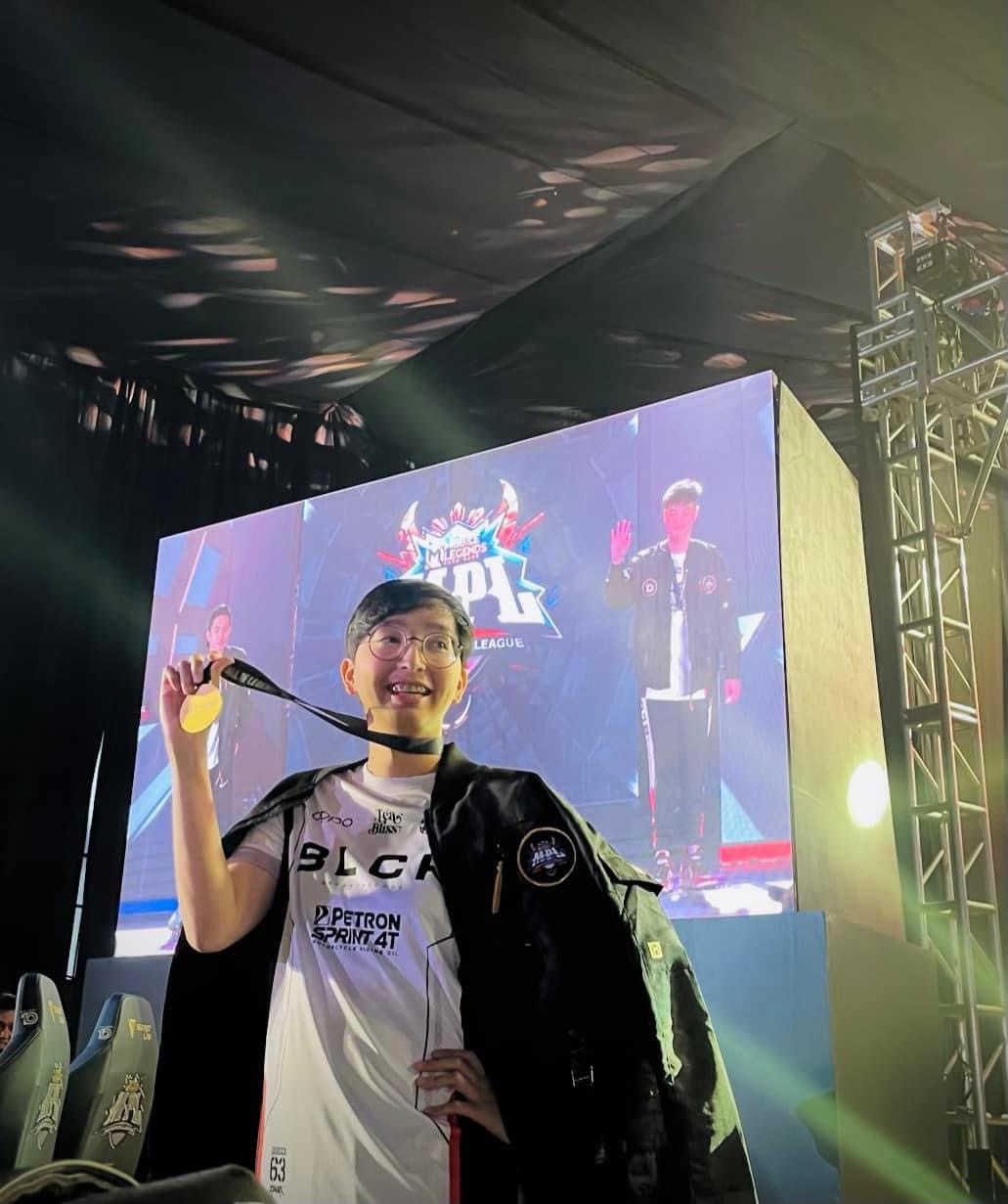
Recently, OhMyV33NUS and the rest of Blacklist International clinched and reclaimed the championship title in MPL Philippines. But, contrary to that milestone, OhMyV33NUS and Wise received numerous homophobic comments rather than kudos, proving the hostility against LGBTQIA+ members who ought to succeed in heteronormative spaces.
As per today’s untainted reality, the hate towards people whose SOGIE falls “outside the normal” subsequently hinders their prime, especially in male-dominated sports. Therefore, when they excel, a brutal amount of wrath through society’s established gender barriers is poured upon them.
Jonmar Villaluna, known with the IGN: OhMyV33NUS, is the first openly professional queer player in Mobile Legends: Bang Bang Professional League Philippines. Initially playing for ONIC Philippines, Villaluna was later traded into Blacklist International, where he plays a significant role in playmaking as team captain and support.
He is globally recognized as a notable captain for developing a distinctive playstyle that won him and his team the M3 World Championship, SEA Games 2021, and MPL PH Seasons 7, 8, and 10. The queen shares these achievements with Danerie James Del Rosario, identified as IGN: Wise, the jungler of Blacklist.
“Love of my life,” said Wise when asked to describe OhMyV33NUS.
Even before joining MLBB, OhMyV33NUS and Wise competed in League of Legends, where their paths first crossed. Later, Wise posted a statement online defending OhMyV33NUS from the homophobes, in which he also proudly announced their romantic relationship.
As an epitome, OhMyV33NUS has driven other queer people to stand up for their worth. Such as Khan Kyaw Zay or OHMYJENNIE, an MLBB player in Myanmar who named himself after Villaluna. OHMYJENNIE emerged as one of Myanmar’s top players as he represented the country in Hanoi SEA Games 2021 and went up against his idol, OhMyV33NUS.
“Being able to represent the LGBTQ+ community in Esports means that someone like me can be visible. I can raise awareness and be of help in changing the misconceptions and derogatory treatment of the LGBTQ+ in our gaming culture,” OhMyV33NUS once stated.
The battle against gender stereotypes in the sporting world is tough and, most of the time, unsettling. But OhMyV33NUS did it anyway; he stood up to remind us that LGBTQIA+ people can thrive in scenes where society has customarily taught everyone they cannot.
The amount of courage it took them, OhMyV33NUS and Wise, was unfathomable. In due course, the LGBTQ community can, too, explore what is brought to the table for conventionally masculine places, as they should.
by: Clarence Jude Tabinas || Photo Credit: New Atlas
Argentinian paleontologists have discovered the remains of Maip macrothorax, the world’s largest raptor dinosaur, at the Chorrillo Formation in Santa Cruz Province, Argentina. Its length ranged between 9 to 10 meters which was longer than other “megaraptors,” whose lengths ranged between 6 to 8 meters. As for its weight, analyses revealed that it weighed about 5 tons, twice that of a rhinoceros.
Its generic name, Maip, comes from Aonikenk mythology, which is known to be an evil entity that represents “the shadow of death” that “kills with cold wind.” Its specific name is macrothorax—macro coming from the Greek word for makrós,which means big, and thorax, the Latin word for chest, in reference to the creature’s wide thoracic cavity, which is estimated to be more than 1.2 meters wide.
During the early years when they still roamed the Earth, they inhabited the continents Asia, Australia, and South America. They had the body structure of elongated skulls, 60 strong teeth that were 8-shaped in cross-section, and long and powerful arms with large sharp claws.
Although megaraptorswere not as big and powerful as the Tyrannosaurus rex, they were a force to be reckoned with. These creatures mainly fed on smaller dinosaurs. With their long, slender legs and light body, catching up to their prey was not difficult. They would grab their meal and rip it apart using their strong arms and deadly claws measuring up to 14 inches. Based on the study conducted by paleontologists, the species ruled Argentina about 70 million years ago during the Cretaceous period.
According to scientists, the extinction of Carcharodontosauridae dinosaurs about 94 million years ago may be the primary reason why these raptors grew to such sizes. As these dinosaurs were the apex predators on the southern continents, their extinction greatly affected the food chain, causing Maip macrothorax to evolve to fill the spot of the apex predator.
As of today, the remains of Maip macrothorax are safely kept at the Bernardino Rivadavia Natural Sciences Argentine Museum in Buenos Aires. As it was well preserved upon its discovery, it provides plenty of information into the anatomy of dinosaurs and their constitution, such as muscles and ligaments.
Even though reports about the discovery were published last April 26, 2022, the discovery comes from way back in 2019, just before the restrictions brought about by COVID-19 were enforced. This coming 2023, the team plans to return to the site in hopes of finding more remains that could help further advance their study.
by: Danielle Bryn Anos || Photo Credit: Joxyne Gravoso
In the lenses of reality, the Philippines stands as a land stricken with crime, poverty, and illusion. Dull skies linger above the cramped houses in the slums while those in power and the rich continue to pursue their selfish aspirations. One might think there is no longer hope for this nation. No remaining hope for their motherland to even prosper in the future. However, amidst this dreary place, a ray of hope strikes the lands—a light source coming from miles away, foreign to the people. Lo and behold it’s… from overseas?
The mammoth Filipino population scattered all around the world should not be surprising now. Being situated in a nation where improvements are hardly evident, those parents working abroad, relatives migrating, and students opting to study at universities overseas actually have valid standpoints for their decisions. The obvious high income and increased opportunities pave the way for these people to help better their lives and to achieve their dreams even if it costs them to leave the country for good.
Although one’s sense of nationalism is acknowledged, the term “Pinoy pride” remains to be a complex puzzle in this viewpoint. If they are so proud of their country, then why is there the need to flee it? What exactly awaits overseas that lures Filipinos to go there? And in those circumstances, do they just embody their pride in the hands of another country?
Going abroad frankly stands as one of the few jutting ways for an individual to thrive. What this country offers is inadequate, and those who solely yearn to be rightfully compensated and to live a better life are not to blame for migrating. These opportunities mean life to them, and prospering is nothing but an upright path to follow.
Hence, why would the people be at fault here? They could still embody the Filipino spirit and rightfully represent us by flourishing and putting themselves out there.
To get a grasp of it, we can take Lea Salonga as an example. At a very young age, she started playing numerous musical roles in the Philippines, exhibiting her passion for performing with an audience. And at 17, she got the leading role in a musical in London that marked her international debut. This then gave her the chance of a lifetime to be able to play on Broadway and many more. She really did get to swim in opportunities abroad that the Philippines could not have provided for her. If she never left the country, it would not have been possible for Salonga to satisfy her love for the stage and perform all over the globe as a world-famous singer.
Another case would be the majority of Filipino nurses working in first-world countries. Considering how the occupation is undervalued and overworked in the country, these individuals choose instead to be overseas just to be treated properly. Unbeknownst to most, the stereotype alone of why parents push their children to pursue this degree is for them to have a pathway to live abroad, directly illustrating the severity of the situation, especially to the nation’s healthcare workers. It is then, of course, worth considering for nurses to apply away from the Philippines to improve their lifestyle with their occupation.
Despite having richness, talent, and ambition present in the country, Filipinos still draw away due to the lack of opportunities and options to flourish. However, this does not provide grounds for blaming them; leaving the country does not automatically mean being unpatriotic. After all, the Filipino spirit in each and every one of us lives on by thriving even at such a distance from home.
Choosing to seek a life abroad is not necessarily an immediate badge of pride nor a definite means of success; rather, it is simply answering the door when opportunities come and knock.
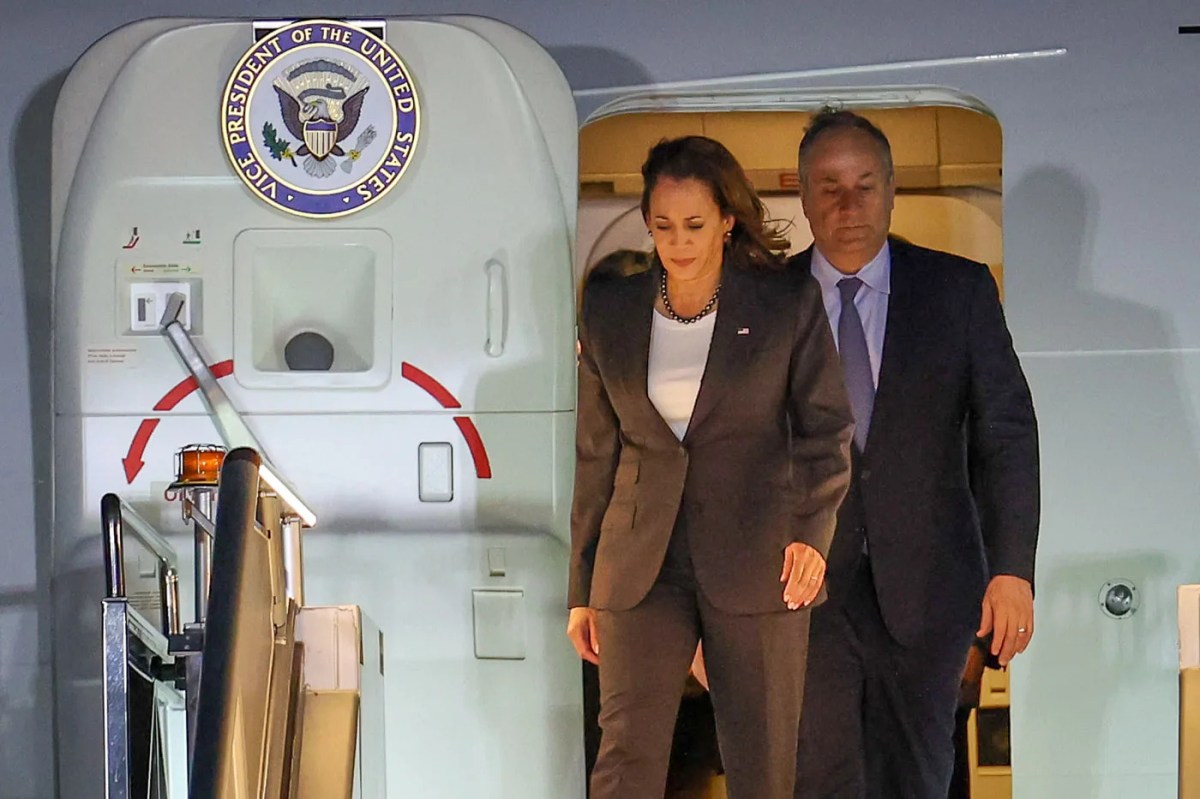
In an effort to bolster the US-Philippines alliance, US Vice President Kamala Harris traveled to the Philippines for a three-day official trip from November 20 to 22, making her the highest-ranking US official to visit the country under the Marcos administration.
Harris arrived on Sunday night, November 20, after participating in the Asia-Pacific Economic Cooperation (APEC) Summit in Bangkok, Thailand.
On Monday, November 21, she met with President Ferdinand Marcos Jr. and Vice President Sara Duterte. During the talk, Harris underscored the mutual commitment of the US-PH alliance regarding economic prosperity and the climate crisis in the country. She also stressed the mutual concerns regarding security for the region and highlighted the US’ commitment to the Philippines concerning the South China Sea dispute.
“We stand with you, in defense of international rules and norms as it relates to the South China Sea; and armed attack on the Philippines, armed forces, public vessels, or aircrafts in the South China Sea would invoke US mutual defense commitments. And that is an unwavering commitment that we have to the Philippines,” Harris stated.
According to the White House, the Vice President emphasized the importance of human rights, which encompassed press freedom and freedom of expression, as well as the importance of reinforcing democratic principles. These matters were also discussed in her talk with 16th Philippine President Rodrigo Duterte, in addition to discussions about the strength of the US-PH alliance, education policy in the country, skills training and internet connectivity, and economic partnership and investment ties.
Harris also connected with Filipino activists, where she expressed solidarity in support of human rights and democracy. She also held a quick town hall with young Filipino women regarding gender equality and women empowerment.
To conclude her stay in the country, the US Vice President visited Tagburos village in Puerto Princesa, Palawan, where she delivered a speech aboard the Philippine Coast Guard’s BRP Teresa Magbanua, situated along the highly disputed South China Sea. She acknowledged the fisheries of Palawan as the “economic lifeblood” of the island, highlighting the threat of illegal fishing on the livelihood of local fishers. Furthermore, she emphasized the US-PH alliance by pledging defense against unlawful behavior in the region and reaffirming the US’ commitment to upholding international laws to protect lives and coastal ecosystems.
“The United States-Philippines alliance is strong. We are committed to you. We are committed to your success. And to all the lives and livelihoods that rely on your work,” Harris expressed.
by: Nathaniel Dela Torre || Photo Credit: fitopardo.com/Moment Open/Getty Images
Heavy rain and possible thunderstorms are expected to greet us as we enter the Christmas season, as reported by the Philippine Atmospheric, Geophysical and Astronomical Services Administration’s (PAGASA) daily weather forecasts.
Cloudy skies, moderate to heavy rain, and thunderstorms are forecasted to occur in most areas of the country. Some of these areas include Northern Luzon, Eastern Visayas, Palawan, Davao Regions of Mindanao, and many others.
Three weather systems will continue to bring rain to the country. The first is the Intertropical Convergence Zone (ITCZ), wherein trade winds from both the northern and southern hemispheres meet, causing thunderstorms to occur. Another are the easterlies, which are hot winds flowing from the Pacific Ocean. The last weather system affecting the country this month is the shear line, wherein the cold trade winds and the hot easterlies meet, also resulting in thunderstorms.
All three weather systems cause rainfall or thunderstorms to occur. The ITCZ will affect most parts of Visayas and Mindanao, the shear line will take effect on parts of Northern Luzon, and lastly, easterlies will strike the eastern portions of the country.
One to two storms are expected to enter the Philippine Area of Responsibility (PAR) for the month of December. The typhoons are to be named Rosal and Samuel, respectively. As of December 5, 2022, no Low-Pressure Areas (LPA) or typhoons are being monitored by the agency within or outside of the PAR.
Gale Warnings were also raised on Northern Luzon, specifically Batanes, Cagayan, Babuyan Islands, and Ilocos Norte. Obet Badrina, a weather specialist from PAGASA, stated, “Inaasahan pa rin po natin na magiging maalon yung karagatan sa may hilagang baybayin po ng Hilagang Luzon … dulot ng pag-iral po ng Northeast Monsoon o ang hanging amihan. Kaya iwasan po muna nating pumalaot dito po sa lugar na ito ng ating bansa.”
[We are expecting wavy seas in the northern coasts of Northern Luzon … due to the Northeast Monsoon. With this, let us avoid sailing in these areas of the country.]
PAGASA continues to warn the citizens living in areas experiencing rainfalls to be careful of landslides and flash floods. These two are the deadliest weather-related hazards in the Philippines. With increased amounts of precipitation, it is expected that these hazards will also occur.
by: Johanna Macababbad || Photo Credit: PBBM’s Official Facebook Page/Xinhua
“Dark clouds loom large if we are not to be prepared. They loom on the economic horizon, and now, more than ever, our governments and economies must work closer and better together as partners in order to find that break in the clouds where the light of hope and progress can shine through.”
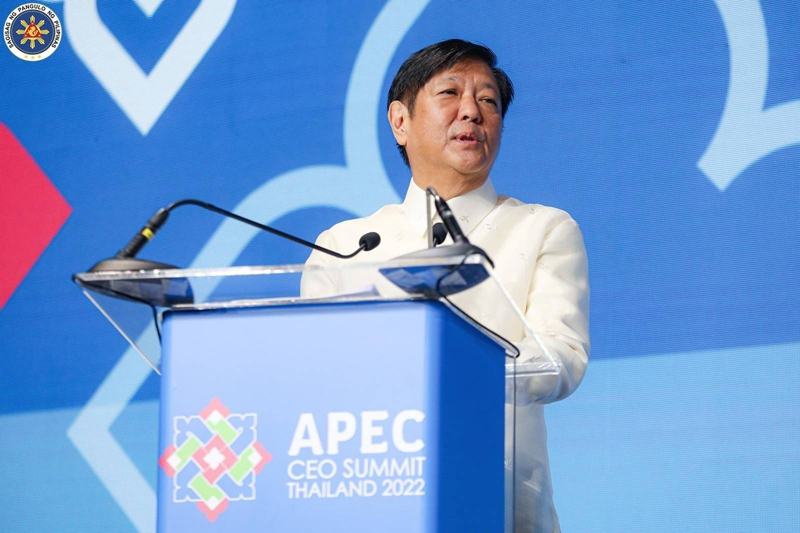
President Ferdinand “Bongbong” Marcos Jr. opened during the Asia-Pacific Economic Cooperation (APEC) CEO Summit 2022 held in Bangkok, Thailand, last November 17, 2022, with the theme “EMBRACE, ENGAGE and ENABLE.”
The APEC CEO Summit is a three-day open forum held from November 16 to 18, where CEOs and top executives discuss issues and possible solutions with APEC leaders. It is an economic forum where 21 countries in the Asia-Pacific gather and discuss economic integration in their respective regions. As for this year’s event, it focused on the plans for a post-COVID-19 economic climate.
Marcos stressed that there are three main hindrances to fostering growth; thus, addressing their structural and policy issues can aid the economy in rapidly recovering from the pandemic.
“Food security must be a top priority for all governments, and developing economies especially must have the policy flexibility needed to ensure an increased domestic food production and diversification, and to improve the local agricultural supply and value chain,” he said regarding the first issue.
He also emphasized the importance of establishing and strengthening global health systems against emerging infectious diseases and improving governments’ pandemic response, in which he proposed ratifying the One-Health approach and improving the health surveillance of new or re-emerging illnesses.
“Climate change, the most pressing existential challenge of our time… Stronger action is required… Diversification into renewables and other resources is imperative… The Philippine government will work closely with the private sector to improve the resilience of people and businesses by leveraging the tools for sustainability,” Marcos noted while referring to programs such as Thailand’s Bio-Circular-Green Economy model.
The Philippine President concluded his talk by recognizing the purpose and importance of the APEC and its open environment in formulating economic and trade ideas and solutions to pressing global problems.
“Prosperity and progress is [are] only possible in a world that is at peace because we, as nations of the world, can never reach our full potential unless we do it together,” he added.
by Nearlyn Lumayno || Photo Credit: Sarah Jane Canalita Robrigado/Good News Pilipinas
Bince Rafael Operiano, a chess genius from Albay, Philippines, won a trophy and four medals from the recently concluded 6th Eastern Asia Youth Chess Championship held in Bangkok, Thailand. However, his journey to compete in a foreign country included sleeping at the Thailand airport for three nights due to the lack of lodging funds.
“We don’t have enough money to meet the needs of my son during the competition. In fact, we sourced out funds by soliciting from friends and local officials,” stated his mother, Rosemary Operiano, after Bince almost did not fly to Thailand.
In the post of the Albay 3rd District Representative Fernando Cabredo, he explained, “Due to limited funds and while waiting for the plane ticket sponsored by the Philippine Sports Commission, Bince and his father spent three nights at the airport with those benches as their bed.” He then added that Bince had to fly to Thailand first without the company of his father.
Later, his mother revealed that the parents of other contestants saw the little boy crying because he missed his father, Mr. Ben Operiano. As a 9-year-old boy, it was difficult for him to be in a foreign country without any of his parents to accompany him—all while competing internationally.
Although Bince withstood the first game with no parent around to root for him, he soon felt pressured and dropped his first game. Luckily, his father arrived in Thailand early enough to root for Bince in his next games. From that time, Bince was more comfortable and eager to win the games.
Since his father’s arrival, Bince had won the succeeding rounds and made it to the top. According to Mr. Operiano, his son was more motivated and driven to bag the championship title. The little boy ranked first in the U-10—under ten years old—category after overthrowing 20 other contestants from different countries.
Mr. Operiano is absolutely proud of Bince’s achievements and solid commitment to do his best in the games despite all the challenges. This 9-year-old boy undoubtedly made everyone in his hometown and country proud.
The struggles that Bince had to resist to win the Chess Championship are unsettling because he endured them young. However, this only exposes how the Philippine government does not give its athletes the best support. In fact, it is one of the most pressing issues that athletes who participate on the international stage face constantly—and this must soon change. It is just fitting that the government should provide extensive care to the country’s athletes, as they need to be in the best condition to compete.
Climate change is a story we’ve all heard and a tune we can sing in harmony. Scientists have warned us of the consequences of it, yet we never seem to fail to look the other way. Although 2022 may not have been the most disastrous year of severe forecasts, we are indisputably witnessing the effects of climate change and the impacts of one natural catastrophe after another. According to the UN Secretary-General, the world is in a state of climate emergency—they dub it “a code red for humanity.”
Acode red for humanity sounds intimidating. It doesn’t mean that lunar eclipses would wake zombies nor would any siren-infested tsunamis grace the world. It simply means that the Earth is becoming so hot that temperatures in about a decade will almost likely exceed an extent of warming that international leaders have aimed to avoid.
Cities across the globe have been experiencing too-hot summers and breaking temperature records left and right, and with schools reestablishing face-to-face classes, this can prove to be an obstacle to learning.
Floods, forest fires, storms, tornadoes, and many more have wreaked havoc on many schools. A four-day break can turn into a month in a blink of an eye because of damage done to buildings, classrooms, books, and other materials which become beyond use. Students severely affected by these calamities may find it difficult to even think about school when they have to worry about their own survival. Why worry about the canceled play when you don’t even have a house? Why worry about your drowned project when you’ve lost a family member? Why worry about graduating from school when you don’t even have enough money to buy sardines?
The consequences of climate change are alarming. Countless ordinances and programs have been established to help lessen the effects of climate change, but these alone wouldn’t be enough. What could you do, dear reader? A few ways everyone can help would be to invest in renewable energy, reduce plastic use, recycle, and raise awareness. These are keys to helping not only the Earth and community, but education as well.
As the pandemic slowly loses its reins on travel restrictions, the events held online over the past two years have gradually transitioned back to face-to-face. One of these is the Rits Super Global Forum (RSGF), which invites students worldwide to discuss solutions in line with the Sustainable Development Goals for 2030. Having attended the RSGF twice—online and in-person—my experiences from these two modes were completely different. Why don’t I take you on this journey with me?
When I was first messaged by Ma’am Nikki last year, the invitation stated that the event would be held online once again. It was an opportunity not meant to be wasted, but I somewhat felt downhearted that I wouldn’t be able to attend the event face-to-face—like the previous years before the pandemic. However, I looked at the bright side: I have been considered to represent the school, and the Philippines, at this event.
For five days, I and six other students, namely Kyle Balasanos, Katharine Manalo, Sebastian Mercado, Justin Misagal, Calina Pamplona, and Justin Emmanuel Tabao, set out to attend the event online. With last year’s theme, “Designing a Sustainable Future — Creating a Virtual Country as a Model for Possible Future Action,” we were tasked to take on different roles in setting up a virtual country. I particularly liked this setup as it allowed me to be completely immersed and to look at different perspectives in the parts I was given. Moreover, we took pride in the posters we had created as we were able to showcase our knowledge on the topics provided.
As the closing ceremony began, I realized how much of the event I had taken for granted due to my lack of motivation. Although I made new friends, I didn’t feel as though I had fulfilled something. I vowed to put myself out more in events like these if I were to be chosen again in the future.
“Have you attended any Rits events in Japan before? Not online.” The message from Ma’am Nikki blared at me through my phone’s lock screen before I decided to reply.
At first, I was hesitant to attend the event once again in fear of repeating my mistakes from last year, but my excitement got the best of me. I decided to give it a go once more. To my luck, the school decided to attend the event in person! Together with Claire Carles, Sebastian Mercado, Kaliah Murillo, and Juliana Trocino, we represented PSHS-EVC at the Ritsumeikan High School in Kyoto, Japan, taking part in this year’s event with the theme, “Sustainable Food for Our All – How Can We Overcome the Food Problems Related to the Environmental Issues?”
The first day was all excitement and nervousness, like first-day jitters when you first entered daycare. Everyone was buzzing with excitement but also equally nervous about interacting and making the first move. Thankfully, the ice-breaking activities made us warm up to each other. Many overseas students also found it surprising that we Filipino students spoke English very well. They complimented our lack of accents and perfect diction despite it being our second language.
On the second day, the itinerary included the first two mini-plenary discussions. My group members and I had to put our heads together and brainstorm solutions for our given topic. With the help of our teacher assistants, we were able to come up with cohesive ideas while incorporating a few of everyone’s thoughts. In the afternoon, they gave us a tour of the school and got us to experience a little bit of Japanese culture. In my case, I was able to witness the martial art Kendo, see popular Japanese toys such as kendama, fold origami, and try calligraphy writing.
The third day was my personal favorite. Right after our respective mini-plenary sessions, groups were separated into teams to go to our assigned locations for fieldwork. My team and I visited the Kyoto Food Cultural Museum and learned about the history of Japanese cuisine. They got us to taste dashi, a variety of Japanese soup stock made predominantly of nori, tuna, mackerel, and more. After which, we took a bus to get to the city proper, where we went to this Japanese delicacy shop I can’t seem to remember the name of. They showed us where they made yatsuhashi, a Japanese confection made of cinnamon, rice flour, and sugar. At night, we also visited a night market where we roamed the streets of Kyoto and explored various arrays of specialty shops. Needless to say, it was definitely one of the best field works I had ever experienced.
Day 4 had us in complete disarray. We were set to deliver our presentations in front of a panel. Fortunately, our group was voted as one of the six groups to present in the plenary session the next day. Later on, it was time for the cultural presentations of each school. We initially didn’t have any presentation prepared, but we did practice a simple song to perform. As we sang “With a Smile” by Eraserheads on the theater-like stage, the audience clapped along to the song and started a wave of flashlights—enjoying the simple ballad. I also loved witnessing the performances of other schools as it allowed us to earn a glimpse of their culture. Even if I couldn’t understand what the lyrics meant or what they were saying in their native language, I still felt the pride and confidence they had for the place they called home.
Inevitably, the last day came. Our presentation was met with positive remarks by the panel of teachers, and we enjoyed a bittersweet farewell lunch party together. Courtesy of the Student Planning Committee, we had a surprise dance party and got to exchange gifts with each other as keepsakes. During the closing ceremony, I was tasked to deliver a short speech right after accepting the certificates from the principal. I didn’t have a speech prepared, so I just decided to say what was on my mind: “The first step to solving world problems is by working together, and I believe that is what RSGF has achieved. Thank you for having us. It is an honor to be here.”
Throughout the course of RSGF 2022, we were met with a great deal of boundaries. But from face masks, to language barriers, and to cultural differences, we were still able to find common ground and work together. Attending in person was a totally different experience from attending online, but what both forums had in common was that the time spent interacting with our newfound friends turned out to not be enough. Teary-eyed or not, everyone left with a heavy heart that day, not knowing when we’ll all be able to meet each other again.