Catastrophic floods continue to ravage Pakistan

by Vinci Tamayo || Photo Credit: Akhtar Soomro/The Guardian

Since mid-June 2022, extreme monsoon rainfall and bursting glacial lakes have caused disastrous floods to wreak havoc in Pakistan. Weeks of torrential rain disrupted the lives of 33 million people and resulted in approximately 1,500 deaths as of September 16, 2022. The government has declared the situation a “national emergency” as the flooding continues to cause devastation to the country amidst its economic crisis. Pakistan’s Prime Minister, Shehbaz Sharif, described the flooding as the “worst in Pakistan’s history.” 

Although seasonal monsoons are known to usually bring large amounts of rain over the entire country, rainfall for this year’s monsoon season appeared to be much more than expected. Between July to August 2022 alone, Pakistan experienced 190% more rain than the 30-year average. According to Pakistan’s Minister of Climate Change, Sherry Rehman, Sindh and Balochistan—two of the country’s provinces—are currently experiencing the brunt of this disaster, seeing a staggering 784% and 500% increase in rainfall, respectively. This torrential rain has left about one-third of the country inundated as it destroyed homes, automobiles, crops, and livestock, bringing about an estimated $30 billion in damage.

Due to the severity of the situation, the United Nations (UN) launched a $160-million appeal to aid the millions affected by the catastrophe. The organization’s Secretary-General, António Guterres, disclosed to the public that Pakistan is in need of massive financial support as he called for the help of other countries. He further expounded that Pakistan’s flooding was a signal to the rest of the world to step up in combatting climate change. 

“Let’s stop sleepwalking towards the destruction of our planet by climate change. Today, it’s Pakistan. Tomorrow, it could be your country,” Guterres remarked.

Pakistan health authorities also continue to warn the citizens of a looming health crisis in the country as dengue and malaria cases surge due to countless displaced individuals living near stagnant water. Health officials in southern Sindh province have reported 3,830 cases of dengue fever, with at least nine deaths. However, Dr. Abdul Ghafoor Shoro, Secretary-General of the Pakistan Medical Association, fears that these numbers do not accurately reflect the severity of the issue and that cases will continue to rise.

—–

Pakistan, a nation contributing only less than 1% of global carbon emissions, is experiencing a climate disaster. Various factors cause flooding, but the warming of the atmosphere as a result of climate change increases the likelihood of extreme rainfall. Since the start of the industrial period, the world has already warmed by about 1.2°C, and temperatures will continue to rise unless governments and large corporations drastically reduce emissions.


Philippines experiences a surge in scam messages

by April Closa || Photo Credit: Tiffany Afable

The Philippines is currently experiencing a spike in fraud messages, which have recently become more rampant and aggressive, with some texts accurately including people’s first names.

The alarming surge has urged telecommunications companies to take action, with PLDT and Smart Communications blocking 23 million scam messages from June 11 to 14, 2022; and Globe Telecom Inc. blocking a total of 784 million unsolicited texts and scams, deactivating 14,058 scam-linked numbers, and blocklisting 8,973 numbers from January to July of the same year.

Last September 8, 2022, GCash updated its system and now censors letters in the recipient’s first names when sending money, compared to its previous version where inputting the recipient’s number completely reveals the corresponding first name and last name initial.

GCash’s new system update now censors the recipient’s name.

Through its initial investigation, the National Privacy Commission (NPC) suggested that the targeted scam messages seem to have been sourced from mobile numbers registered to text services instead of data aggregators.

“Contrary to a P2P transmission, data aggregators use an application-to-phone (A2P) transmission. The messages received through this transmission will not appear to have come from specific mobile numbers. Instead, it will come from a sender with [an] SMS ID (i.e., bank names, organization names, etc.) which identifies the data aggregator, or the brand or business name using the data aggregator’s service,” it said.

During the Committee on Public Services’ hearing last September 8, 2022, presided by Sen. Grace Poe, six senate bills presenting a mandatory SIM card registration were proposed, along with two resolutions to investigate the increasing number of scam messages. Department of Information and Communications Technology (DICT) Secretary Ivan John Uy also revealed the Memorandum of Understanding (MOU) signed by the ICT Ministry of Singapore that entails a collaboration between DICT and the ICT Ministry of Singapore on cybersecurity. Furthermore, Uy disclosed that Singapore is only one of the countries that the Philippines is eyeing to partner with in fortifying cybersecurity in the country.

Meanwhile, the NPC continues to investigate the sources for these targeted scam messages, examining format in name patterns registered in payment applications, mobile wallets, and messaging applications. The National Telecommunications Commission (NTC) has also ordered telecommunication companies to text blast their consumers, alerting them about these text scams.

“As part of its next steps, the NPC will convene a meeting with representatives from the Telcos and government agencies, which include the NTC, the Cybercrime Investigation and Coordinating Center, the Philippine National Police, and the National Bureau of Investigation, on September 13, 2022,” the NPC stated.

The NPC alerts citizens to remain vigilant in protecting their private information.

Queen Elizabeth II dies at 96, ending a reign longer than any British monarch

by Katharine Manalo || Photo Credit: Chris Jackson/Good Morning America

Queen Elizabeth II, Britain’s longest-ruling monarch, died at the age of 96 at Balmoral Castle last September 8, 2022, after more than seven decades of an era-defining reign.

The news of her peaceful passing followed hours after Buckingham Palace announced that doctors were concerned about the deteriorating health of Britain’s Queen, which led her relatives to rush to Balmoral Castle in Scotland to bid their final goodbyes.

The Queen’s 73-year-old eldest son, the next in line to the throne, was proclaimed King Charles III hours after her death, making him the new monarch of the United Kingdom and the head of state of 14 other realms, including Australia, Canada, and New Zealand.

“The death of my beloved Mother, Her Majesty The Queen, is a moment of the greatest sadness for me and all members of my family,” King Charles III said in his first statement as monarch.

“I know her loss will be deeply felt throughout the country, the Realms and the Commonwealth, and by countless people around the world,” the new monarch added.

Thousands of people gathered in front of Buckingham Place, where a startling quiet ensued when the flag was lowered to half-mast. As soon as the sign about the passing of the only monarch most Britons had ever known was attached to the black iron gates, the crowd rushed to the entrance.

Queen Elizabeth II’s death will be commemorated by a solemn ceremony. No government announcements will be made until after her funeral, which will be recognized as a public holiday in approximately ten days.

PSHS-EVC implements limited in-person classes for AY 2022-2023

by Aya Ecaldre || Photo Credit: Floydalyn Nitura

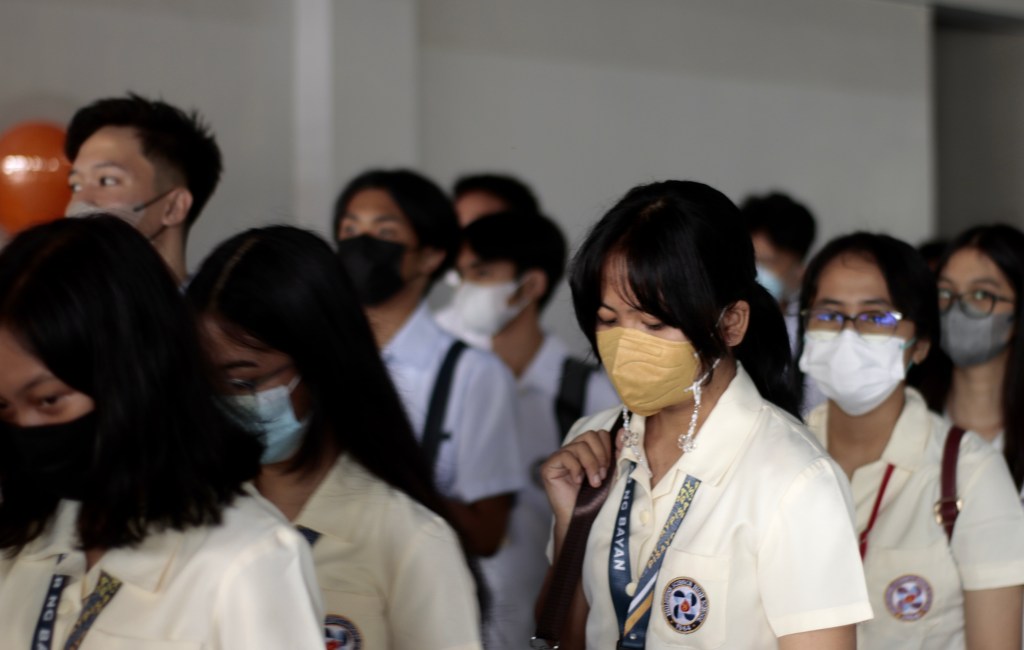
After two academic years of virtual learning, the Philippine Science High School – Eastern Visayas Campus (PSHS-EVC) finally opened its doors to Grades 10-12 students for limited in-person classes last September 5, 2022.

Prior to the opening of classes, virtual orientations for students were held via Zoom, last August 3, 2022 to September 2, 2022.

The first day of the orientation centered on ALA (Alternative Learning Activity) and SCALE (Service, Creativity, Action, and Leadership Enhancement) talks. Headed by Mr. Dennis Juabot, the ALA Coordinator, the orientation included presentations from representatives and advisers of each group. After two academic years of no implementation, the school’s existing (i.e., Pisayaw, SUGA, ACTS, Muskianta) and new (MUN, Rondalla, and Sikatala) ALAs now welcome students from Grades 7 to 10. In the afternoon, Ms. Nikki Rabe led the SCALE Talk for the SYP students.

On the second day of the virtual orientations, September 1, 2022, different units such as the Guidance and Counseling Unit (GCU), Health Services Unit (HSU), Registrar, Discipline Office (DO), and Residence Hall Unit (RHU) laid the foundation for their respective departments by conducting separate orientation sessions.

The Salubong: Pisay Spirit Day, facilitated by the Student Alliance (SA) last September 2, 2022, concluded the orientation week. The event consisted of games, elections, and organizational meetings that aimed to ignite the Pisay spirit among the batches, provide an avenue for scholars to interact, and offer helpful insights to each other. As the event was coming to an end, an open forum where students exchanged their inquiries and concerns regarding Pisay followed the program.

In-campus classes formally opened on September 5, 2022, at the PSHS-EVC Gymnasium. The flag ceremony was preceded by a short program that included the induction of the Student Alliance, batch, class, and club officers led by Ms. Yvonne Esperas, the Campus Director. Kendra Osias, the SA President, also delivered her inaugural message and quoted, “It is because of a collective effort that we have made it this far, and it will be because of a collective effort that we’ll do it again.” The introduction of faculty and staff from different units followed, headed by Mrs. Anariza Gozon, the CID Chief.

On campus, students, faculty, and staff are still required to follow health protocols such as completion of health declaration forms upon entry, wearing masks, and social distancing.

For the first two weeks of September, Grades 10 to 12 students will attend in-person classes, while Grades 7 to 9 will have their classes virtually. After those two weeks, the cycle repeats, but this time, students in Grades 7 to 9 will have in-person classes, while students in Grades 10 to 12 will attend online classes. The implementation of this alternating schedule is to ensure that there is no overcrowding on the campus as per health protocols. However, due to the unstable electrical connection on the campus, Schedule 2 (half-day classes) is currently being followed. According to the Office of the Campus Director, Schedule 1 (whole-day classes) will be implemented once a stable electricity supply is restored.

Despite the challenge of readjusting to blended learning, scholars express their excitement as they once again experience in-person classes.

Jade Mendiola, a Grade 12 student, shared that despite her nervousness about the new school year and college applications, she is excited to finally meet her batchmates and other people at school after more than two years.

According to a Grade 9 student, Natalie Narrido, she looks forward to having better academic discussions in-person compared to the online setup. “I’ll have a chance to spend more time with my friends who live far [away],” she added.

“The discussions will also be much clearer and easier to understand because we won’t struggle with the internet connection,” Samantha Corona from Grade 8 remarked.

Grade 10 student Sachi Adricula stated that she’s happy because, unlike in online learning, where you have to go through everything alone, you at least have your friends and peers with you in face-to-face classes.

Photo by: Floydalyn Nitura

PSHS-EVC conducts in-person enrollment for SY 2022-2023

by: Katharine Manalo || Photo Credit: Frances Canicon

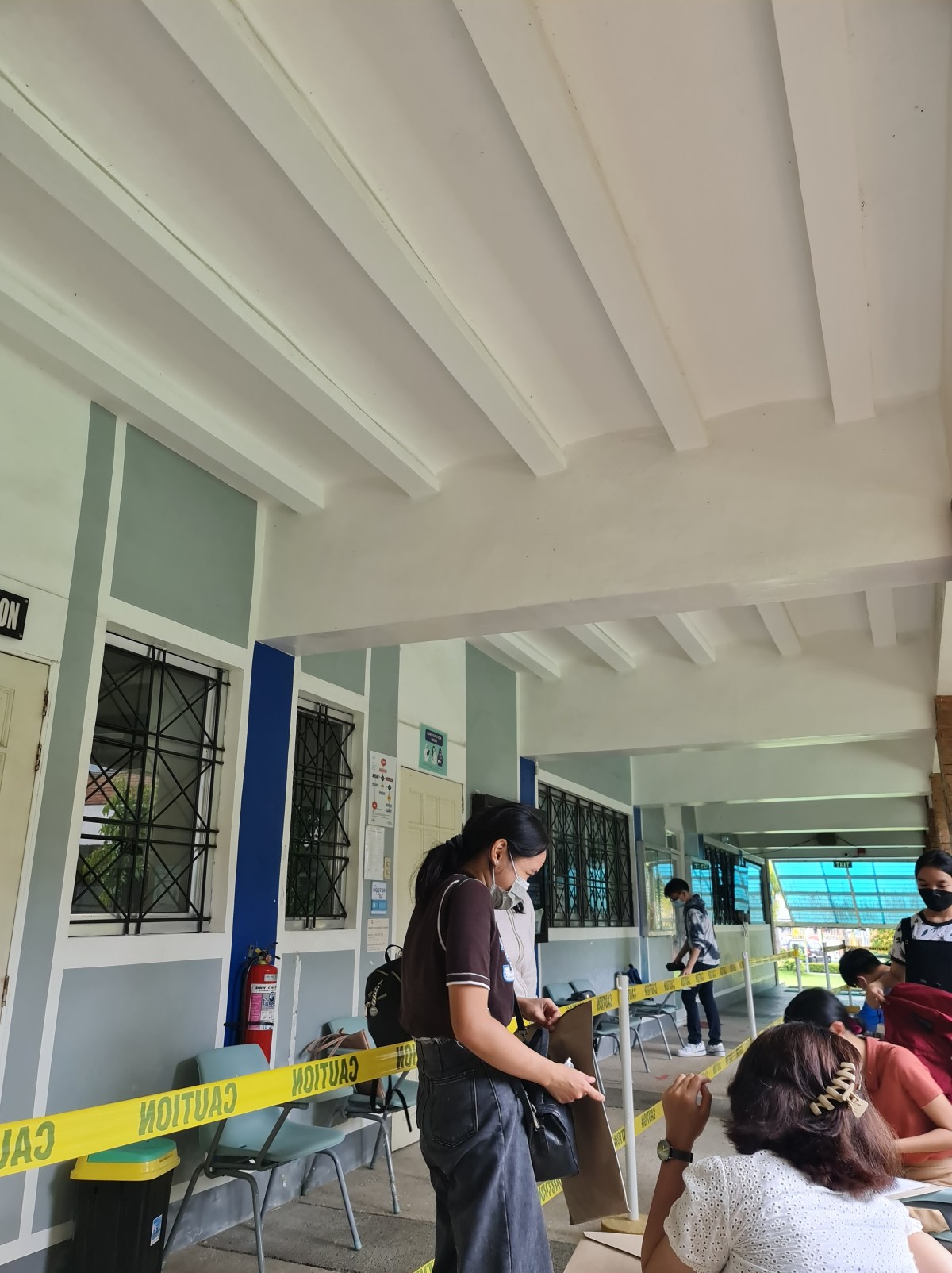
After two academic years of implementing virtual and remote enrollment, the Philippine Science High School – Eastern Visayas Campus (PSHS-EVC) finally conducted in-person clearance signing and enrollment of incoming Grades 8 to 12 scholars for SY 2022-2023 at the school campus last July 18 to August 19, as per the schedule provided by the Clearance and Enrollment Committee.

Prior to the enrollment, a schedule was distributed to the student body, informing them of their assigned dates corresponding to their year and section. Additionally, all Student Services Division (SSD) units—registrar, library, residence hall, guidance counseling, and health services—sent their clearance forms and guidelines through email ahead of schedule for the students to accomplish.

On campus, clearance signing was conducted on a first-come, first-served basis, where scholars were given priority numbers after submitting their health declaration forms. The students were then stationed outside the Multimedia Center (MMC) while they waited for their priority number to be called to proceed to the MMC for clearance signing.

“The overall clearance and enrolment process is exhausting. Most of the students in the lower years are not yet adept at accomplishing the ISO-coded enrolment forms. With this, we did individual re-orientation right there and then, and we let these students redo the erroneous forms. This delayed the flow of enrolment and resulted in extended working hours. Despite these, I am relieved and satisfied, to be able to do these core functions in-person with the rest of the SSD units,” Mr. Jhun-Jheff Cobacha, the school registrar and head of the committee, said in an interview.

“It’s good to see again your faces, especially the faces of those students who were never given a chance to set foot on campus due to the strict COVID-19 protocols. If my memory serves me well, these are the batches 2026 and 2027,” he noted.

Regarding the compliance and implementation of health protocols during the enrollment activity, Ms. Marilee Gorres, the school nurse, observed that there had been inconsistencies in following the social distancing protocols between students.

“They tend to catch up with each other in face-to-face conversation. Nevertheless, the triage process facilitates a good health screening assessment for enrollees with their companion through accomplishing the Health Check Declaration form, resulting in safe transaction activity,” she added.

As the school opens the upcoming school year this September 5 with limited face-to-face classes, Mr. Cobacha asks the scholars to continue following the minimum health standard to put an end to the pandemic.

“During and with the online learning modality, we’ve seen that many students have struggled and had difficult time adjusting. So, now that we are to take these baby steps toward having full face-to-face classes, let’s all cooperate and work together to bring back a once zero-virus community,” he stressed in his message.

In relation to this, Ms. Gorres’ message to the scholars is to go F.O.R.W.A.R.D., which stands for:

  • Fearless to face any challenges that may come your way because you can be.
  • Objective in your perspective as a highly intellectual individual.
  • Reach your dreams by playing fair with others in achieving your academic and life endeavors.
  • Whole-heartedly embrace and embody the Scholars’ Pledge to be the lighting torch of hope as future Filipino scientists and leaders.
  • Altruistic to give back to the Filipino people to whom you owe the gift of your education.
  • Radiate the scientific spirit and humanitarian values to the young individuals of today and tomorrow.
  • Discern for inner peace and spiritual connection to find meaning and purpose in life.

“Two years of the pandemic had never been easy for all of us. We had different and various good and not-so-good experiences. We were tested and challenged with the feeling of isolation, psychological warfare, and discrimination in a different sense of it. But despite all of it, we will always see the light of hope in our journey in this pandemic, and that hope is the upcoming limited face-to-face classes come September 5, 2022,” she remarked.

Photo by: Kendra Osias

Marcos: The state of the nation is sound

by Samantha Macabit || Photo Credit: Veejay Villafranca/Bloomberg

President Ferdinand “Bongbong” Marcos Jr. delivered his first State of the Nation Address (SONA) in Batasang Pambansa Complex last July 25 at 4 p.m. He set forth the government’s agenda for his six-year term in office, while the country continues to face the crippling effects of the pandemic and the economic crisis.

“We live in difficult times brought about by some forces of our own making, but certainly, also by forces that are beyond our control—but we have, and we will continue to find solutions,” he said.

To strengthen the country’s economy, Marcos vowed to implement a sound fiscal management, with one of the main components being the Medium-Term Fiscal Strategy (MTFF) which will serve as an “anchor” for the annual spending and financing plan of the Congress and National Government when it comes to the annual budget preparation.

Additionally, he stated that the Philippines must become an investment destination, maximizing the Corporate Recovery and Tax Incentives for Enterprises (CREATE) Law and the economic liberalization laws.

“Hindi ito magagawa sa isang araw, hindi magagawa sa isang buwan, o isang taon lamang. Ngunit kailangan na natin simulan ngayon [It can’t be done in just a day, a month, or a year. But, we need to start now],” he emphasized, referring to the urgency of solving problems in the agricultural sector.

Under the Marcos administration, loans and financial assistance to farmers and fishermen will become an institution and a policy, alongside the intent to prioritize the modernization of farms through innovative technology and the use of science to increase agricultural production.

“As for the Filipino brand, ours is deeply rooted in our rich cultural heritage, and the tourism sector plays an invaluable role in the promotion of the Filipino brand,” he said.

To boost the country’s tourism, Marcos declared to first focus on making road improvements for convenient access to tourist landmarks and building more international airports to dissolve the congestion in the Manila International Airport, also referred to as the Ninoy Aquino International Airport.

“Pero hindi na natin kakayanin ang isa pang lockdown. Wala na tayong gagawing lockdown [We can’t handle another lockdown. We will not be implementing lockdowns anymore],” he highlighted, in accordance to the COVID-19 situation in the Philippines.

Marcos also asserted that students should finally return to full face-to-face classes, and classrooms must be safe for the entire academic community when they resume in-person classes.

In the matter of continuing the K-12 Program, he stated that it is currently in the process of a careful review, considering all the necessary inputs and points of view.

According to Marcos, he won’t suspend any of the ongoing infrastructure projects from the Duterte administration as they have proved to be beneficial to the public.

“My order to the Department of Transportation or DOTr is really very simple: full speed ahead!” he added.

Aside from that, Marcos mentioned that the level of energy production must be increased since he intends to re-examine the strategy of building nuclear power plants in the country.

Regarding the climate agenda, he said that renewable energy is the administration’s focus, with the aim to increase sources such as hydropower, geothermal power, and solar and wind energy.

Marcos called on the Department of Migrant Workers (DMW) and the Department of Information and Communications (DICT) to prioritize the digitalization of employment papers and certifications for OFWs. Moreover, he announced the future launch of One Repatriation Command Center (ORCC), which will serve as assistance to OFWs facing harm and abuse.

“On the area of foreign policy, I will not preside over any process that will abandon even one square inch of territory of the Republic of the Philippines to any foreign power,” he stressed.

Lastly, Marcos proposed multiple programs up for legislation, including, but are not limited to, the Mandatory Reserve Officers’ Training Corps (ROTC) and National Service Training Program (NSTP), which aims to bring back the ROTC program as a requirement for senior high school in all educational institutions.

PSMUNYS 2022: PSHS-EVC holds its first MUN

by Johanna Macababbad || Photo Credit: PSHS – EVC MUN Club

“The world needs your [youth’s] energy, courage, and commitment. I draw hope from seeing your generation challenge the status quo and call for transformative change.”

Antonio Guterres, United Nations Secretary-General emphasized during his message in the opening program for the first Model United Nations Youth Summit (MUNYS) independently organized by the Philippine Science-Eastern Visayas Campus (PSHS-EVC).

To aid scholars in enhancing their public speaking skills as well as tackling relevant current issues, the Pisay Sinirangan MUNYS (PSMUNYS) was conducted last July 6 to 8, 2022, through Zoom, with this year’s theme being “Evaluating and ensuring environmental sustainability of emerging technologies.”

Participants consisted of students from different PSHS campuses, wherein the selected PSHS-EVC students were delegates for each of the 27 countries, while scholars from other campuses were the observers of the procedural meetings and debates.

Day 1

PSHS-EVC opened the summit with a program, primarily focusing on informing the audience on this year’s theme which coincides with Sustainable Development Goal (SDG) #13: Climate Action.

Elyzah Amboy Parcon, the environmental specialist and keynote speaker, discussed the environmental cons of blockchain technology, more specifically: non-fungible tokens. “The choice will always be yours, ours and the collective movement,” she added, referring to the standing concern of adapting to this technology.

After the opening program, the summit was then followed by the commencement of the General Assembly where the delegates gave their opening messages, including their stances on the topic and proposed solutions.

To summarize, nine of the delegates proposed a shift to renewable energy, while some of the countries opted for stricter regulations, or possibly, centralization of the currency.

In the afternoon, the General Assembly continued with a series of moderated and unmoderated caucuses so that the delegates can elaborate, give feedback, and press concerns regarding their or each other’s plan of action.

Day 2

Continuously, on the second day of the summit, the procedural meeting continued in which two draft resolutions were made with the topics namely, “Regulating blockchain technology by establishing a government-supervised cryptocurrency” and “International cooperation between developed and underdeveloped countries for the switch to renewable and sustainable energy.”

After the “Con” side’s speeches had been declared, the draft resolutions were voted upon for approval, wherein the draft regarding international cooperation for transitioning to renewable energy was favored by the simple majority and was passed.

Day 3

On the last day of the summit, Mark Caranzo, a PSHS-EVC alumni, relayed tips on college applications while Noemi Agner, a coach for the PMUNYS, grounded the delegates on public speaking. An awarding ceremony then followed these meaningful speeches.

For Best Summit Speaker, Kyle Andrew Abello, delegate of the Democratic People’s Republic of Korea won gold, while Troyann Justin Pallones, delegate of China, and, Margarette Joelly Nuñez, delegate of United Arab Emirates, placed second and third place respectively.

For the Best Position Paper Award, Zemuel Abrito, delegate of the Philippines, Rafahil Palompon, delegate of Japan, Alexis Celine Morabe, delegate of Slovakia Republic, garnered first, second and third places, respectively.

For the final award, the Best Summit Delegate, Pallones was declared the champion, while Zenas Praise Agnila, delegate of French Republic, placed second, and Poimen Deb Agnila, delegate of the Principality of Liechtenstein, placed third.

To conclude the summit, Ruan Tady Baillo, the PSMUNYS 2022 Secretary-General, expressed his hope that this summit could be used as an inspiration to host upcoming conferences wherein students can learn from and discuss with one another. He finally closed the event by saying, “And as our club motto goes: Est quod est. It is what it is.”

PSHS-EVC finally holds in-person graduation for Batch Sidlak

by Patricia Galapon || Photo Credit: Sidlak: Bente dos FB Page

After two academic years of conducting virtual graduation ceremonies, Philippine Science High School – Eastern Visayas Campus (PSHS-EVC) held its 23rd Graduation Program for Batch 2022 at the school’s gymnasium, while simultaneously airing it on the EVC Direct Facebook page, last June 10.

PSHS-EVC’s Class of 2022 named their batch “Sidlak,” which they defined as “one’s hope for the sun to shine.” The name attested to the graduates’ completion of the six-year PSHS curriculum, as Batch Sidlak’s light continues to burn for hope even at the end of their PSHS journey. 

The ceremony began with the processional of the graduating students, teachers, and staff and was followed by the opening prayer led by Benedict Joaquin H. Chua, a graduate with high honors.

Bryan Justine Dela Cruz, a graduate with high honors, opened the program with a speech. He greeted the revered guests, officials of the PSHS System, personnel, teachers, and all the students and their parents present in the gymnasium. He mentioned that all these people contributed to shaping them into becoming the individuals they are today. 

As Dela Cruz reminisced the memorable highlights throughout their secondary years, he also stated that he and his batchmates should applaud themselves for finally graduating after years of facing challenges with continuous tireless efforts. 

The Executive Director of the PSHS System, Ms. Lilia T. Habacon, congratulated the graduates and expressed her appreciation for the students’ efforts in adapting to remote learning, given its trials. She also reminded them that “the world is not a bed of roses”; thus, as the graduates welcome a new chapter in life, they should not allow setbacks to deter them from pursuing their passion as future leaders in science, technology, and innovation. 

Ms. Yvonne M. Esperas, the Campus Director, presented Batch Sidlak’s graduating students — who then shifted their tassels as a symbol of officially being recognized as high school completers. Mr. Jhun-Jeff C. Cobacha, the campus registrar, awarded them with their diplomas, while the honors and awardees were presented by PSHS-EVC’s CID Chief, Mrs. Ana Riza Gozon. 

The Secretary of DOST, Fortunato T. De la Peña said he is optimistic that the PSHS Curriculum has already equipped the students to pursue a higher degree of education. He encouraged the graduates to leave their marks in our society and to pass on excellence to future generations. 

“Padayon Batch 2022! Stand with the people for truth, excellence, and service to the nation,” Sec. De la Peña stressed.

Finally, Batch Sidlak’s Highest Honor, Jim Yvene S. Cadion, delivered his thanksgiving speech, wherein he expressed gratitude towards teachers and staff of the campus, the PSHS system, parents, batchmates, and the Creator, also adding that Pisay molded them to reflect the spirit of service to the people.

PSHS-EVC COMELEC announces S.A. officers for S.Y. 2022-2023

by: Samantha Macabit || Photo Credits: PSHS-EVC Comelec

The Philippine Science High School-Eastern Visayas Campus (PSHS-EVC) Commission on Elections (COMELEC) declared the set of newly elected Student Alliance (SA) officers for the upcoming school year on their official Facebook page last Wednesday, June 8.  

For this year’s SAGE, two parties, namely Student Leaders Advocating for Youth Empowerment (SLAY) Party and Well-being, Enrichment, Linkages, Communication, Openness, Management and Empowerment (WELCOME) Party, campaigned over the course of nine days, from May 29 to June 6, as they aspired to be the future student alliance of PSHS-EVC.  

The campaign period concluded with the live presentation of the Miting de Avance and Debate was conducted last June 6 which involved segments such as presentation of platforms, and interviews from the school publications (SciNet and An Pukot), Townhall, Cross-Examination, and Fast Talk.  

The elections were then held virtually the following day, June 7, with the voting open until 5 o’clock in the afternoon.  

Garnering a range of 53% to 67% of the votes, the entire SLAY Party obtained spots in the SA: Kendra Leigh Osias for President, Alchris Marie Ceballos for Vice-President, Ranya Ecaldre for Secretary, Patricia Niña Galapon for Treasurer, Franze Christian Go for Auditor, and Ivory Dawn Castro for P.I.O. 

In an interview, each of the winning candidates expressed their excitement and gratitude to be given the responsibility to become the face and leaders of the student body.  

“The overall experience was nerve-wracking, but at the same time fun, because I knew I was surrounded by people I can trust,” Castro said. 

Go mentioned how it felt like an emotional rollercoaster due to the exhaustion from academic requirements, agitation because it was his first time running, and excitement on account of his desire to serve the student body. 

“I am proud that we were able to overcome all of those despite the tight schedules of campaigning simultaneously with examinations,” Galapon stated. 

Meanwhile, Ecaldre stressed that the whole thing was tiring, but worth it because of the multiple friendships formed and lessons learned.  

“During our term, the students could look forward to a more active academic year,” Ceballos emphasized. 

Osias explained how they want to empower the student body by giving them a voice and to become the type of leader that can accommodate the students’ needs through prioritizing their welfare with everything the SA intends to do. 

“All in all, I think the best way to describe what we’re feeling right now is: ready. Ready for what’s to come, ready for the responsibilities, and ready to serve the student body to the best of our ability,” Osias added.

Pisay opens doors to students for pilot in-person classes

by: Ranya Ecaldre || Photo credit: Ranya Ecaldre

After almost two school years of online learning, the Philippine Science High School – Eastern Visayas Campus (PSHS – EVC) finally implemented the pilot in-person classes last April 4 and 6. The pilot batch consisted of sixteen Grade 11 students divided into three sections based on their science core subjects: Biology, Chemistry, and Physics.  

Following a blended learning system, students underwent face-to-face sessions for their science core subjects and online classes for their humanities subjects. Sessions were conducted while observing health protocols such as wearing masks, handwashing, and social distancing. The students were also given health kits containing face masks, sanitizers, tissues, and face shields. 

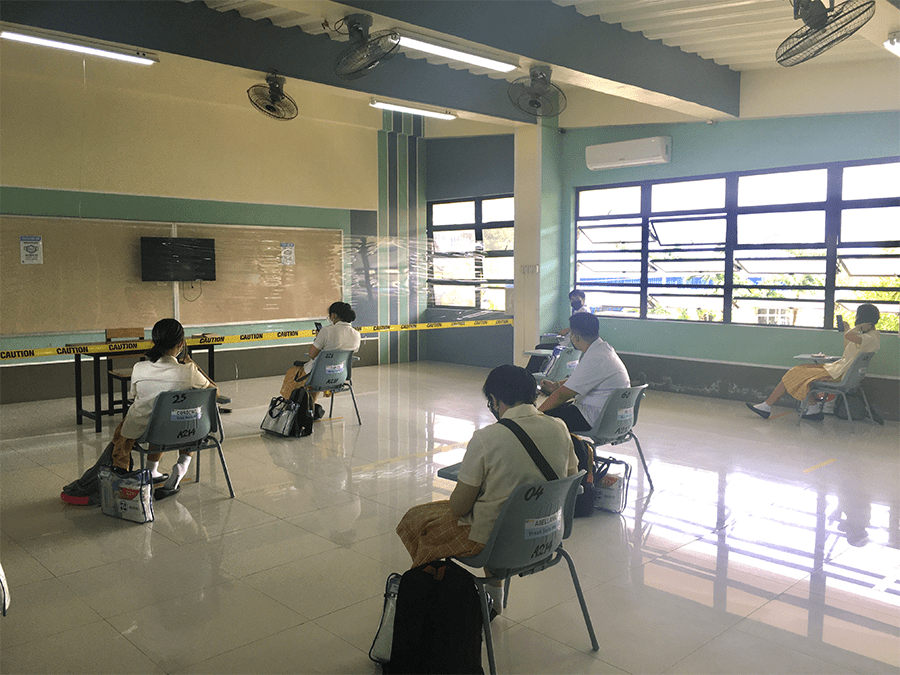
In their respective classes, all students were assigned their permanent seats spaced out within the classroom to avoid physical contact. A plastic barrier was also installed on the teacher’s table to avoid the possible transmission of the virus. Each classroom was further equipped with two alcohol dispensers for sanitizing and exhaust fans to improve ventilation. 

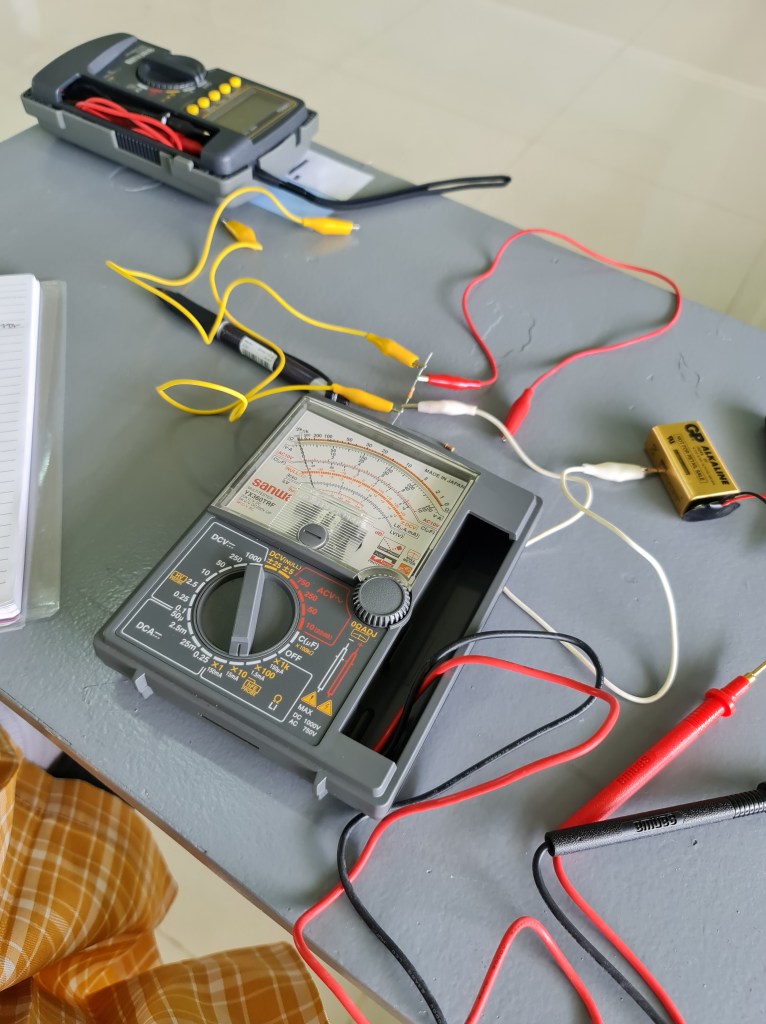
Sessions for online and in-person students were done simultaneously. Some activities, however, were exclusive to the face-to-face students. Physics students conducted a laboratory activity regarding their topic on relativity, while Biology students roamed around the campus for their exploratory activity on their lessons in bryophytes and nonvascular plants. Chemistry core students also experienced interactive discussions with the help of physical molecular models. 

According to the students, the face-to-face discussions were more interactive and effective than online classes. Jhun Kenneth Iniego, a Chemistry core student, said that it was good to finally meet his friends after two years. Frances Canicon, a Physics core student, expressed that, compared to the online setup, face-to-face classes were more effective because they get to concentrate and focus well in the classroom due to the absence of distractions as compared to in their household.  Job Beau Linao said that it was easier and more enjoyable because they had the chance to bond with the other students. 

“It also allows a direct confrontation with the teacher, so slow internet does not become a hindrance when learning,” Jude Lagramada added. 

While the overall response was positive, students also expressed their concerns about the slow internet connection, the prohibition of roaming within the campus, the short amount of time spent in school, and the slight inaudibility of teachers during discussions. 

Unfortunately, due to Typhoon Agaton, the second week of face-to-face classes was canceled and will resume in May for Block B of the fourth quarter.