Her Kept Promise

Ricci Jilliane Faelnar ||

Photo Credit: Memo Clips

She woke up to the sound of constant ringing. Still half-asleep, she fumbled to reach her phone. She pressed answer on the video call flashing on-screen, thinking nothing of it. With a classic case of bedhead and sleep heavy eyes, she accidentally answered to the Pintados Foundation. Little did she know, she was about to hear that she was selected to proceed to the pageant she was most eager for. Etched on Czarinah Cameron Castro’s face was a small sheepish grin, taken aback by the lovely news. 

“It was embarrassing but I felt overjoyed. I fondly recall this memory every time I reminisce my experience,”

said Castro. She lit up with her dreamland smile, now a step closer to her goal. 

This was her second time joining the pageant. She joined in 2018 at 13, setting zero expectations, only hoping to experience and learn. Her not placing didn’t discourage her, she knew it was because she hadn’t prepared enough. She dipped her toes into the water, but she hoped to dive. 

“I promised, sitting backstage I looked in the mirror and told my reflection I’ll come back more prepared and aim not only to place but to wear the crown itself,”

shared Castro. 

Fast forward to 2020, she has her hand rested delicately on her waist, her almond eyes twinkling, her rich olive skin glowing as it had been rightfully complimented with her sequined royal blue gown. She stands poised and radiating, a complete stunner on the stage of the pageant. 

More than what meets the eye, Castro knows how to enthrall people with her sharp wit and inherent grace. The 15-year-old is wise beyond her years, which made her stand out in the pool of young women. There is an apparent depth in her character—the substance to match her beauty, and this was greatly appreciated by the judges. 

“During the pageant, I wasn’t as nervous as I thought I would be. I just kept chanting in my head that I can do this and that whatever the result I would still treat myself to a lot of cake,”

quipped Castro.

Welling up within her was confidence and faith in her growth as a contestant. Deep down, she had the courage to face whatever may be thrown at her. She had prepared herself in more ways than one. 

A long moment passed. She then heard her name called as the Miss Teen Pintados 2020, and a wide dimpled smile started forming on her lips. Bowing in utter glee, she had just fulfilled the promise she kept to herself. With the studded crown perched on her head, she beamed ever brightly. What once was a dream was on top of her pretty little head now.  

“I am able to help a lot more people and it’s heartwarming to somehow be someone the youth can look up to. After my reign, I plan to not only limit myself and my reach solely through the stage but also to other platforms where I can communicate my advocacies and fight for the causes I believe in,”

she shared. 

With her charisma and appeal, Castro shines as a role model. She keeps herself busy with the plentiful commitments and causes she never fails to attend to. She is a force of nature, her eyes dead straight on endeavors she had set her mind to. She might go through and win more crowns on her head. 

One thing’s for certain, Czarinah Cameron Castro has a blindingly bright future ahead of her. 

Photo Credit: Memo Clips

Can Tiktok be dangerous when we’re just having fun?

Jana Venigas ||

Photo Credit : lightpocket

The widely known video-sharing app, Tiktok, is used by multiple teenagers and adults alike. The application allows users to film and share videos up to 60 seconds. The usual media is curated in a system called the “For-you page”, which, as the name states, provides similar content as that of which a user interacts with previously. Its backbone is an algorithm that provides a subconscious option to personalize, by liking, commenting, and sharing videos to push more related videos. Because of the amount of publicity it is getting, the app isn’t much of a safe space as most teenagers would treat it as. There have been multiple coverages and issues raised regarding this application, each of which is quite soul-shattering.

One of the most common issues expressed by concerned parents about Tiktok is its methods on attracting and attaching to teenagers. It is addictive, but for a reason. The moment the application is opened, videos immediately start to play, earning the attraction of the person behind the screen. Like every other social media platform, Tiktok earns its revenue through the amount of attention they steal from its users. By pushing advertisements to your field of vision while you are locked in its cage of attention, it is basically like opening your wallet for potential money profited from your obsession. Unnecessary attachment to social media can interrupt a person’s day-to-day life. Some will resort to committing hours upon hours on Tiktok rather than their responsibilities. While there is no harm to using the app for entertainment, the way Tiktok is designed to be addictive in order to profit off from that is unhealthy and unfair.

There have also been concerns about the app becoming a place for grown adults to prey on young teenagers who take on trends such as dancing and lip-syncing. Along with the popularity of the app, it has also become a breeding ground for groomers and those who impose sexualization on minors. The hypersexualization of teenagers is often considered “validation”, topped with their inability to logically comprehend the intent behind those actions. Grooming has become very common, and several teenage girls have gone to extents to impose hypersexualization on themselves. Recently, there has been a trend of young adult girls settling down and getting into sex work. While there is no issue with sex work in itself, the normalization and idea of the sex industry as an easier way to make money is a result of grooming.

Sometimes, it doesn’t even take adults for teenagers to belittle themselves. Like in every other social media platform, there are cases of bullying on the application. As Tiktok is open to plenty of teenagers, these teenagers would film dances, lip-syncing, and clips of their daily lives, and get attacked by anonymous users on the comment section. Hate commenting can directly affect teenagers, especially as they are young adolescents who have very fragile self-esteem. On top of that, Tiktok often creates a subconscious competition that puts labels comparing body image, sexualities, race, and the like. Teenage users would go to impossible and unhealthy extents to meet those expectations that the app has set for them. 

Tiktok can be an entertaining way to have fun through short videos. But there are also cons as much as there are perks. While teenagers may take it as inspiration for style and aesthetics, it can also potentially damage their self-esteem and make them want more than they should, envying others who do have what they want. Guardians should also pay attention and impose healthy limitations as the app is too open and possibly damaging. Hopefully, there comes a day where Tiktok and social media in general can just be a fun place to be entertaining and inspiring again. 

The Home, The Universe Rather

Elijah Kesh Rosales ||

The Universe is a pretty vast place. With the gazillion colossal stars and planets that it holds and the seemingly infinite void that is outer space, it almost seems like it could go on and on and on forever, or so I used to believe. It’s funny because, for the past eight months or so I have completely proved modern science wrong, my universe wasn’t at all vast, it wasn’t infinite, nor did it contain large planets and stars made of big gasses and huge rocks. For the past eight months, my universe was a mere 160 square meters filled with itty bitty planets and stars made of wood, cotton, polyester, and a minuscule population of four. 

I have known this universe all my life. From the day I took my first breath, until the very moment I am writing this here, even until the instance that you, the reader, are reading this now. But for the first time in my life, I was bound to this one universe alone. Gone were the days where I traveled through wormholes to get to other Universes, to frolic in the asteroid fields of the vast worlds that surround my own. I was stuck, like an astronaut without a working rocket ship, a dwarf star bound by the gravity of unknown forces outside its meager power. For all the time I have spent bound to it, I surely have come up with many theories about its several mysteries and unknowable enigmas that surround it, but they were only theories, just theories. However, despite the great wall that those mysteries have built and the ginormous hurdle that is the little brain cells I had left, I, in all my glory, have come to a eureka! moment. For the first time in history, I have discovered one true indisputable fact about the universe.  

This is how it happened, the first few days of being stuck were surreal. With vacation coming in faster than your local Foodpanda order, whatever requirements I had left were swept like sandcastles demolished by the gaping mouth of the ocean waves. Every day was a party of one, watching series after series of whatever to entertain my eyeballs, playing game after computer game until my arms gave out. “Ah, this was bliss!”, I said to myself as I’d spend 70% of my time confined to the small but ever so comfy bedroom galaxy and only occasionally making my way to the Kitchen sector to get my fill of sustenance. I was engrossed in doing all sorts of fun, living life like a carnival ride. Life was pretty great. 

That… didn’t last long. At this point, I didn’t even know how long I spent my days doing nothing but that. Days turned to weeks and weeks turned into months. The pages of the calendar seemed to tear and fly so fast. I was staring at the abyss that is my computer monitor when something didn’t feel right, a chill hits my spine as I felt something horrifying lingering in the background, unseen, unknown, unnoticed for God knows how long. That’s when it started though, pretty much when I finally knew, that “woohoo!” eureka! moment, except it, wasn’t really “woohoo!”. My mind was so preoccupied with being hypnotized by the different screens always in front of me that I have completely ignored what happened around me, almost as if I was trying on purpose. What once looked like a small and humble paradise now looked like a prison cell painted haphazardly to look like a getaway resort. The paint peeled off as it revealed the stench of miserableness and suffering, always there, hidden by the corners of the eye chosen to be blind to.

It dawned on me, however, I was nothing but a dwarf star in a universe on the brink of implosion. Chaos reigned as the nebulas shouted and screamed at each other with emotions so complex only God would ever know. The planets shook, moved, and danced to the rage music of the bite-sized heavenly bodies that were around it. Among all of the noise of the heavens was but I, the feeble dwarf star, sitting in silence in the solace of the bedroom galaxy burning an ever so beautiful red – a stark contrast to the usual blue that the Nebulas and astronomers would usually adore and observe. I close my eyes and see the darkness, the cold shivering loneliness one could only ever feel when truly alone, with the nearest stars billions of lightyears away, and escape only to be the frightening blaze of a supernova. I open my eyes and look.  I observed around me for the first time I did in a while. The walls have come closer now, moving ever so slowly, only a millimeter a day. Small enough to not notice then, but big enough to be quite observable. The universe quickly went from what was already small but cozy to an insanely suffocating chamber of sad loneliness. This was it, for the first time in history, I, have regrettably discovered one true yet depressingly indisputable fact about the universe. 

The universe is rapidly shrinking and I couldn’t do anything about it.

RSGF 2020: Experiencing it all online

Julianna Rosh Nebrija ||

Photo by: Julianna Rosh Nebrija

For years now, the Rits Super Global Forum served as an inviting gateway for students from all over the world to the Japanese culture—giving them the opportunity to experience firsthand the country’s school life, traditions, architecture, technology, and so much more. Unlike the previous years, though, a new problem brought by the coronavirus emerged for its organizers: bringing the event to life whilst socially-distanced. 

I, along with sixteen other students, was invited to join this one-of-a-kind reworking of a long-running global school affair. Because this was my first time joining, I didn’t have a particular expectation as to how it would go. All I thought of was how excited I was to be able to meet people my age from different countries and to hear their stories, at least virtually. Still, I was curious to see how the event’s flow would go.

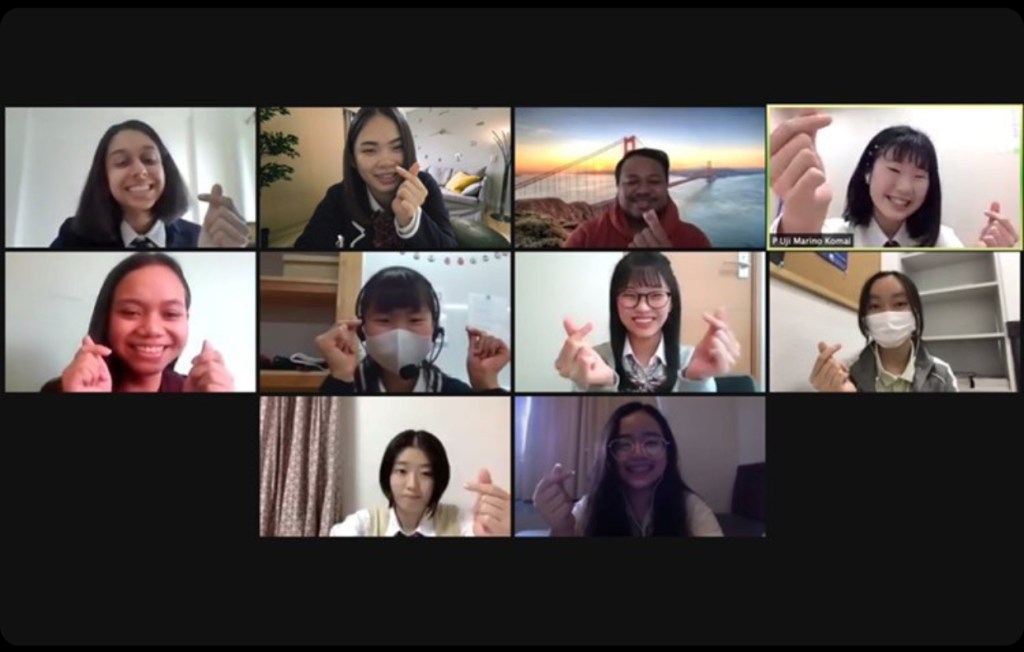
On our first day, an opening ceremony was held live on Youtube. As the program commenced, dozens of messages popped up in the comments section, students and teachers alike eagerly greeting everyone and complimenting the performing Japanese students. The excitement was certainly contagious, as I too spammed the comments section with a barrage of emojis and enthusiastic exclamations. Though I was only seeing the program through a screen, I was fully entranced with their colorful and lively performances of music, dancing, and more.

The coming days were comprised of the main event, which was grouping together with other delegates to discuss their countries’ situations due to COVID-19. Each day had a particular subtopic to focus on; such as how the virus affected each country’s socio-economic life, education, and environment. While it was interesting to hear how other countries handle emerging problems amid the pandemic, the whole ordeal was quite anxiety-inducing for me and possibly for others as well. This was because each day, we were assigned a new group with new members, and we had to quickly get over our nerves because we had to create a presentation detailing possible solutions to the given topic—all within a few hours. Even though I woke up every day feeling antsy, I was determined to make the most of the discussions despite my nervousness.

Then, a cultural day was held on the third day. All of the cultural presentations were prepared beforehand and was premiered through Youtube Live. This was one of the highlights of my week, seeing the people I’ve come to know through our discussions show off their culture with pride and love. Naturally, I bombarded the comments section once again with words of appreciation and emojis.

By the end of the week, we had our final presentations delivered through Zoom and Youtube Live, which was then followed by a closing ceremony. They were bittersweet to watch because, in the course of that one week, I have grown in confidence, learned new and surprising things, and gained new friends.

I was filled with pride knowing that we were able to create cohesive and informative presentations despite the hurdles we encountered along the way. All of us went in essentially with nothing in common, save for being in the same age bracket. As the discussions progressed, we would discover how similar we were after all. It didn’t matter whether our countries were considered progressive or not—each country was fighting its own battles. Though separated by screens and time-zones, we were bonded through our universal experiences all the while.

I don’t normally consider myself a confident and extroverted person. Most of the time, I’d prefer to stay on the sidelines and be content with it. Against my initial thoughts, I decided to participate in this year’s RSGF because I wanted to try being a sociable person for a while. It was extremely difficult to face, but it was immensely rewarding as well. Despite the stress and anxiety that accumulated starting from the preparation to the actual event, I know for a fact that I don’t regret joining it a single bit. I gained more than I’d lost. Someday, I hope we’ll be able to meet—without the barrier of screens.

Project Alunig: Youth for Those in Need

Ricci Jilliane Faelnar ||

It all started with a ping of a new message:

“frend, baka gusto mo mag-organize ng fundraising eme”

Photo by: Jannah Nuevas

12th-grade student from Philippine Science High School- EVC Jannah Veron Nuevas had messaged Marifel Balbarona, seeking help in bringing an idea into life. The two eventually founded “Project Alunig”, a fundraising and donation initiative aiming to assist schools in Region 8 adapt to the new normal.

“A lot of people are suffering because of the new norm we are in. We started this drive to help the schools most impacted by the pandemic. They lack the supplies needed to cope with the changes in the learning modes. The teachers are using their own money to produce modules required by distance learning,” Balbarona told The Science Net.

Balbarona and Nuevas encouraged their batchmates to participate in the organization. With 21 core members committed to the cause, Project Alunig was set to action. 

Photo by: KC Loreto

The organization used social media as a platform to call for donations, rolling out activities that broadened their reach online. PanALUNIG Raffle, ambassador search, and PowerPoint service were a few of their initiatives that encouraged people to donate. 

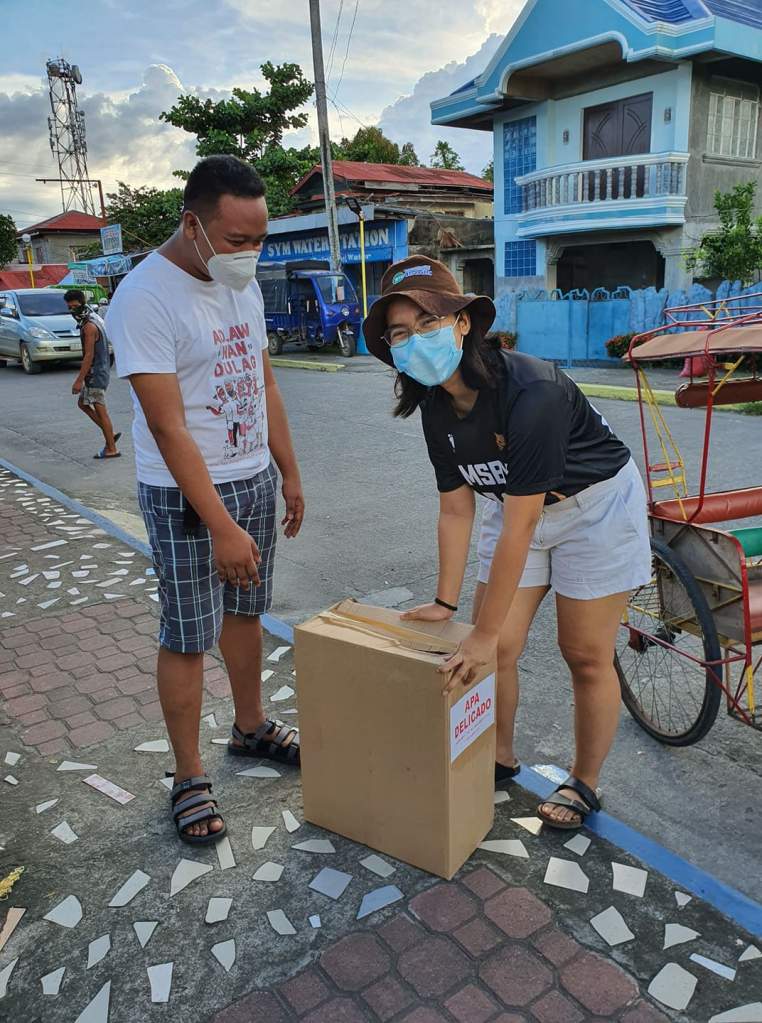
The first phase of the project, which took off last September, raised P24,000 in donations. Project Alunig then successfully distributed bond paper, printer ink, face masks, and face shields to eleven schools in the region.

The second phase continues on today, generating funds in order to provide supplies to schools that badly need them. 

“No help is too small. We encourage you to donate at least P20 and share our cause with the next person. Your P20 when pooled together with the others, can make a huge difference,” Balbarona expressed. 

This youth-led organization stands as an inspiration for having the initiative and energy to better their community. These volunteers are tackling tough problems with their own ideas and solutions. They want you and the rest of the youth to get involved too. 

Don’t wait for a ping of a new message, go send it!

Photo by: Jezca Radaza

A Letter From the Editor

Dear reader, 

Please support Project Alunig and their cause. 

To donate, click here.
Follow their Twitter and Facebook pages for updates. 

Out Like a Light: How to Overcome Study Slump

Ricci Jilliane Faelnar ||

I lie awake tonight. My hands are tightly folded on my stomach as I stare at the darkened ceiling. In an attempt to distract myself, I try to make out the silhouettes of the unopened light bulb, the strange black line stretched above, and the edges where the walls meet. My thoughts are pounding at the back of my head, troubling me about all the things needed to be done. 

Burned through the ceiling above me is an endless list. I can feel it glaring at me, shaping into the taunting eyes of a lurking demon. My skin crawls as they morph into pallid faces and into the room float choirs of self-doubt and ticking time. I am haunted by the portal of endless papers, assessments, and projects. My sunken spirit is suffocated from the weekly avalanche of heavy load requirements.

It’s been months of this mental congestion. Schoolwork goes on and on and never seems to end. Every day feels the same; we hunch over our laptops, chasing deadlines, and working over weekends. We tick off a finished requirement but add five new ones. Tick, add. Tick, add. It’s a tiring cycle. 

It doesn’t take much for us to lose our energy and motivation for school. I’ve had my fair share of study slumps that took me days to get out of. Here are a couple of reminders that helped me dig myself out of productivity ruts and demotivation:

  1. Fix your sleeping schedule. 

Online class allows us to stay up later than usual because school days have much less structure. I am guilty of staying up as late as 4 AM, messing up my internal clock. To avoid this problem, set a fixed wake-up time that is non-negotiable. It’s easier said than done but please prioritize getting sufficient sleep every day. 

  1. Go outside. 

No, I don’t mean you should break quarantine protocol. Just open your door and hang out in the sunlight and fresh air. Spending a minimum of 30 minutes outdoors can drastically improve your mood. Getting some sun increases your serotonin —reducing your stress, anxiety, and increasing mental clarity. Have a change in your scenery, read in the sun, and gaze at the green around you. Remind yourself that there is life outside school. Find a spot and enjoy some quiet reflective time. 

  1. Ask for help.

As I comb through the countless Messenger group chats that have been created for online classes, I have learned that I’m not alone in this scuffle. Find accountability buddies that motivate you and help you gauge difficult topics. I tried calling my friends while studying and it made the session lighter and more bearable.

Sometimes the reason for not feeling like studying is the perceived difficulty. If the subject is too difficult, we avoid studying. Get friends to study with you in such cases. They’re always there for you, seek them out.

4. Look after yourself. 

There have been days when I felt burnt out and I punished myself for it. I went through days without eating because I felt like I didn’t deserve it. Don’t do this to yourself. You are human —not a robot. Make sure you are taking care of yourself, physically and mentally. 

• Eat well and exercise regularly: Just, please.

• Take a break from social media: This is a sign that you should take one now. Social media provides 24/7 stress and negativity from the news and current events. It’s okay to get overwhelmed by reoccurring societal issues, such as climate disasters, political protests, and of course, the pandemic. Uninstall every application and take your overdue detox. 

• Make plans to look forward to: Reward yourself for all the draining tasks you’ve done. 

Even during your study session, you should take short breaks to refresh your brain. Don’t immerse yourself in games, social media, or Netflix, it will tire you out. Your short break will elongate from minutes to hours. Online education has mandatory hours and hours of screen time, get away from that vortex of screen time, and truly rest by doing activities that are based in the physical world, rather than the digital world. Avoid all screens in your break time. 

  1. Get up. 

If you’re going through a bit of a rut right now, process your feelings. Figure out if you just can’t be bothered to study or if you’re really burned out. The next morning, shock yourself. Change one big thing to get things going. Show up for yourself and remove all mental resistance and doubt. Do you need to write another essay? Start by opening the document and writing whatever comes to mind for a whole minute. Once you start writing, you will want to finish it. Just take a step and the rest will follow suit.

Get up! Dig yourself out of that slump. 

We’ll get through this, just stick to the reset routine. Take it week by week, night by night. Remind yourself that things will seem much better in the morning light.


A Letter from the Editor

Dear Reader,

If you feel like academic stress is heavily affecting your mental health, please don’t hesitate to reach out to the Guidance Office. Click here to contact our councilors,

Flicker in the City’s Flame

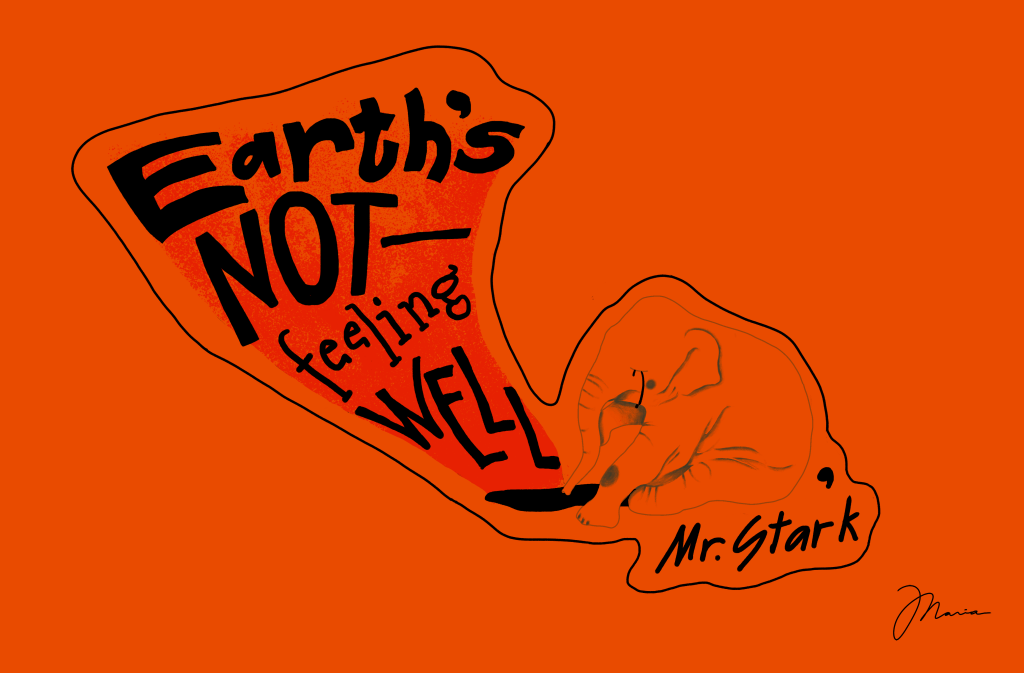
Typhoon Ulysses submerged the once fiery Tuguegarao City in murky waters.

Ricci Jilliane Faelnar ||

Nestled in golden fields and napalm skies, Tuguegarao is regarded as the hottest city in the country. Its extreme heat doesn’t only refer to the area’s temperature, it also tells stories of its radiant residents. In burning appreciation of fire and day, they dedicate a whole festival of fire-breathing and torch-lit dances. Sunburnt residents would give you their brightest smiles, offering their best. For the longest time, they have kindled and radiated the warmth of their community. 

Their vibrant spirits set the city ablaze for years on end. 

Until it all fizzled on the dawn of November 13, 2020. 

Torrential downpours and flash floods drenched much of the incandescent city. With the ferocious entry of gushing water, Typhoon Ulysses extinguished Tuguegarao’s blaze in its entirety. It left its plains damp, muddy, and cold. 

People climbed up their roofs, with soaked clothes slung on their bodies. Rain spattered on them as they watched the murky brown floodwater start to surround them. All the water from open spillway gates rushed to consume the city. Families had their throats run dry from shrieking pleas for rescue, but none came by. The muddy sea kept rising, drowning anything out of sight. The residents, used to the extreme heat of the place, slunk down with shivering backs. They choked in anguish as the unrelenting storm welled up against the walls of their homes, crashed through churches, melted schools, and flushed away crops. They camped out on their rooftops, waiting for rescue that soon came very late. 

Another problem arose, evacuation centers were flooded, forcing rescued residents to stay on the streets. Rescue efforts were slowed down by intermittent rain and by live electrical lines. It took the rescue teams a few days to complete the evacuation. 

The raging typhoon had shut off the residents’ vibrant spirits. Thousands of families were displaced, distressed, and suffering loss. The bustling city became a wallowing spot where residents returned to retrieve what was left. 

With the water steadily receding, Tuguegarao begins to rebuild itself today. There is a small glimmer of hope in the air, assuring the city it will burn bright again. There is a promise for a full recovery from the flicker in the city’s flame.


A Letter From The editor

Dear reader, 

Please help out in providing relief and assistance to the victims of Typhoon Ulysses.

DONATE. It’s not too late. 

Climate change makes disasters like this more ferocious and more frequent. It is time to take action.