A Fight for Our Eagles

Bryan Justine Dela Cruz ||
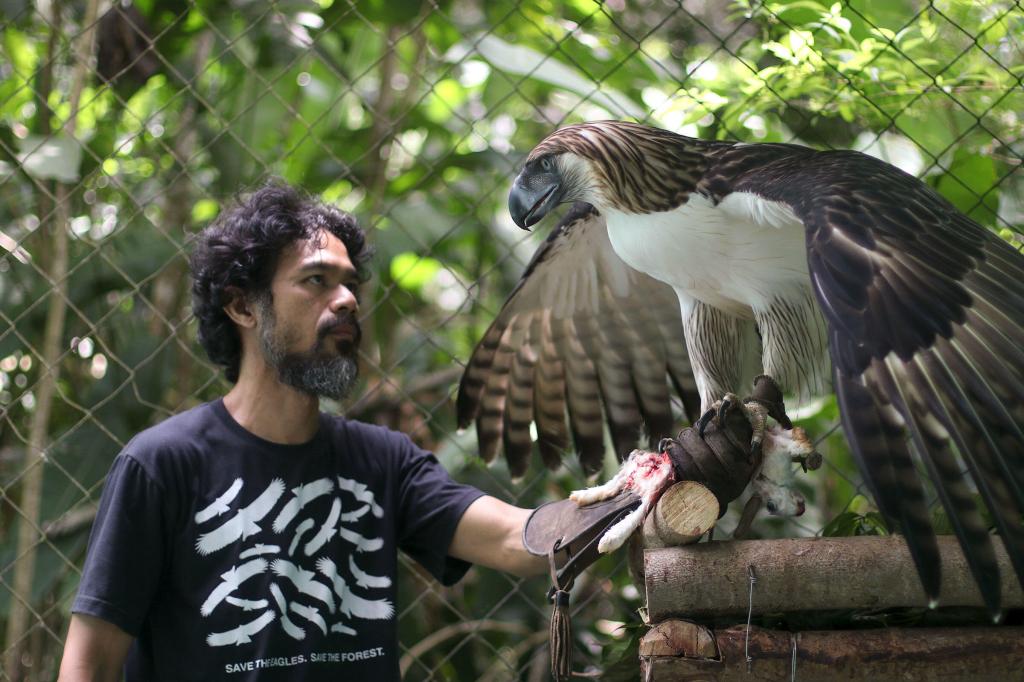
Photo Credits: Audubon

Feared close to extinction because of the rapid decline of its population, the Philippine eagle is continually being conserved and protected by Philippine Eagle Foundation (PEF) despite the current global health crisis.

The monogamous Philippine Eagle, a natural treasure found only in the Philippines, faces extinction due to human activities, loss of habitat, and slow reproduction rate of once every two to three years. 

The year 2020 had been a chaotic year for the whole world. But for eagle conservationists, 2020 saw hope and optimism, with 7 eagles rescued and two new eagle families sighted.

“We have demonstrated over the past 30 years our commitment to conserve the mighty Philippine Eagle and by hook or by crook, we will sustain that next year and in the years to come,” said Dennis Joseph Salvador, the executive director of the PEF.

He added that he is optimistic that the protection of the species started on the right track for 2021, given the achievements of 2020.

Despite the impacts of the COVID-19 pandemic and the continuous threat of human activities, the PEF achieved a record number of rescues for the year.

“We are very glad that despite the pandemic’s travel and movement restrictions, we were able to save six of these seven precious birds, with three of them healed and successfully released back to their respective forest homes,” claimed Salvador.

Additionally, with an estimate of 400 nesting pairs of Philippine Eagles left in the wild, the sighting of two families of the raptors, one within Mount Apo Key Biodiversity Area and another within Mount Kampalili-Putting Bato Key Biodiversity Area, was a milestone worth celebrating for the foundation.

“We are very happy every time we discover new pairs,” Jayson Ibanez, research and conservation director at the PEF, said. “It is important to locate the nesting sites so that we can put in place protective measures to ensure they will be out of harm’s way so that the species can reproduce and will not become extinct.”

“Conserving these core areas of reproduction and keeping the nesting pair and their young safe is pivotal to the success of saving the species from being lost forever,” Ibanez added.

In efforts to conserve the critically endangered Philippine Eagle, the PEF has put together various movements and programs like the Bird of Prey: To Save Our Eagle Online Film Screening.

“I’m hopeful that [our film] will make a difference,” says Rettig, “because I’ve seen how images have the power to change the way people look at nature, change the way they look at the environment, and change the way they care.”

The Cornell Lab of Ornithology’s debut film in partnership with the Philippine Eagle Foundation, the award-winning documentary entitled Bird of Prey, depicts the moving story of a small group of conservationists who are dedicated to their goals and work tirelessly to save these rare eagles from extinction.

“If we lose the Philippine Eagle here in the Philippines, then the whole world loses,” says Professor Perry Ong, University of the Philippines. “The eagle may be found here, but it belongs to the world.”

The Philippine eagle is most certainly a breathtaking beauty of nature that will be a huge loss not only to the Philippines, but also to the whole world if these majestic animals become extinct. 

Therefore, one thing is certain: The PEF will continue its efforts to conserve the population of the Philippine Eagle until thousands of these majestic birds will be soaring high in the sky.
Rediscovery of the Pinatubo Volcano Mouse

Bryan Justine G. Dela Cruz ||

30 years ago, in the province of Zambales, endless amounts of magma and ash spewed out of the mouth of Mount Pinatubo. Lava that pooled into layers up to 600 feet thick in the valleys burned and destroyed everything it touched. The once lavish green forests covering the mountains were dead, and everything in sight was black and grey. Recorded as the second-most powerful volcanic eruption of the 20th century, life and diversity in the area was hanging on a thread. As days turned to years, Mount Pinatubo’s rich ecosystem had seemed to be long forgotten, until Danny Balete showed interest and surveyed the mammalian population fairing on Mount Pinatubo.

Over several months, in early 2011 and again in 2012, Danny Balete, a Filipino zoologist and biologist, researched on the mammal fauna of Mount Pinatubo. Balete and his team scouted from the bottom to near the top of the mountain. The devastation brought by the eruption was still evident, landscapes were unstable and hazardous, yet they pursued the investigation. 

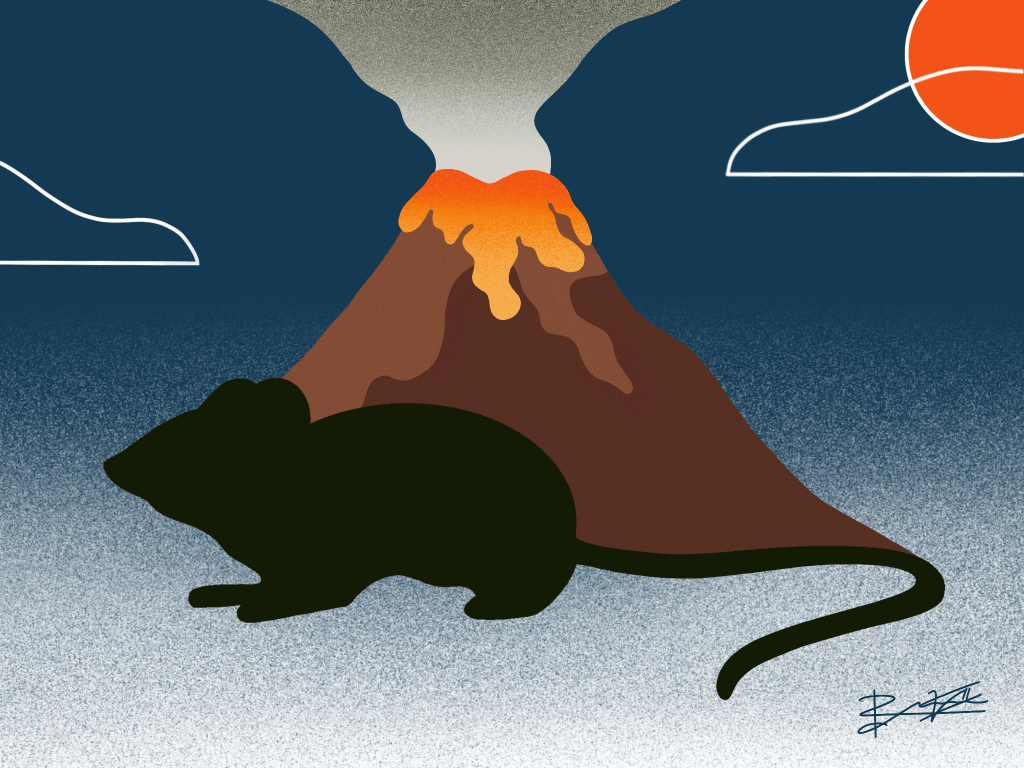
Balete and his team wanted to know the fate of Apomys sacobianus, commonly called the Pinatubo Volcano Mouse, that was thought to have been all wiped out by the eruption. The Pinatubo Volcano Mouse is a rodent found only in the tropical dry forests in the Philippines and was once thought to be extinct. 

After months of monitoring the dangerous and unstable land of Mount Pinatubo, the team produced surprising results. Overwhelmingly, the most surprising discovery was the abundance of Apomys sacobianus. Far from extinction, this species was thriving in the disturbed land.

After completing the investigation, Danny Balete returned to the Field Museum of Natural History in Chicago and prepared for his eventual publication; however, in 2017, Balete died with the publication unfinished. Eric Rickart and Larry Heaney, co-authors of Balete, picked up and completed the study as a tribute to him. Balete is now recognized as one of the most important figures in the Philippine Biodiversity Science.

Inequality in the Solution

Niel Dustin Benedict Agner ||

Photo Credit: International Disability Alliance

In recent years, nothing has ever been as disruptive to human society as the COVID-19 pandemic. The pandemic took the world by surprise, and amidst this life-changing experience, one of the voices that need to be heard is the World Health Organization (WHO), which PubMed describes as one that “plays an essential role in the global governance of health and disease due to its core global functions of establishing, monitoring and enforcing international norms and standards, and coordinating multiple actors toward common goals.”

An article on nrp.org cited that WHO describes itself as the “the global guardian of health.” It is imperative to ask: What does its leadership have to say now, after a year of the global health crisis that challenged its organization? 

In a speech delivered by Dr. Tedros Adhanom Ghebreyesus, WHO’s Director General, some key lessons about the pandemic were discussed. First, COVID-19 exposed the capacity of nations around the world in terms of crisis preparedness and response. Second, the pandemic illustrates the close association between and among the health of humans, animals, and the planet. Third, the global pandemic requires a very reliant and competent WHO.

The question now is: Since vaccination is supposedly the cure to this pandemic, what does WHO have to say about the distribution of it?

Dr. Ghebreyesus calls upon all countries for the equal distribution and deployment of vaccines. He emphasized,

“It’s not right that younger, healthier adults in rich countries are vaccinated before health workers and older people in poorer countries. Prioritize those most at risk of severe diseases and death.”

As much as WHO desires to achieve the equal and fair distribution of vaccines, a substantial amount of work still has to be done. WHO reported that more than 39 million doses of vaccine have been given to at least 49 higher-income countries, whereas only 25 doses have been given in one lower-income country. 

This unequal distribution of vaccines can lead to unwanted scenarios that WHO wanted to avoid such as vaccine hoarders, market chaos, uncoordinated responses, and continued social and economic disruption.

“Ultimately, these actions will only prolong the pandemic, the restrictions needed to contain it, and human and economic suffering,”

the WHO Director General warned.

Path to decarbonisation

Danna Mheliza Mae Budano ||

Have you ever wondered why our country experiences scorching heat all year long, or why storms seem to be packing up more wind and rain compared to the past? Have you ever asked how we can possibly stop it from getting worse?

Increasing temperatures, rising sea levels, intensifying typhoons — these are what we have observed in the past few decades. This alarming trend is expected to continue if the world doesn’t collectively step up its game on reducing the main cause of these events – carbon emissions.

Climate change has existed since the start of Earth’s history, even before humans came to existence. So why exactly is it such a big deal now? Climate change, today, occurs at a much faster rate compared to the past. As a matter of fact, carbon dioxide levels have increased by 40% since pre-industrial times. As carbon emissions increase, temperatures also continue to rise, and at present, many countries have started to suffer the consequences, and unfortunately, the Philippines is second only to Japan in terms of climate risk. 

Burning fossil fuels such as coal, petroleum and natural gas contribute largely to carbon emissions. Fossil fuels are the largest energy sources in the world, making up a staggering 84% of the world’s energy. In 2019, almost 90% of the Philippines’ energy still comes from different fossil fuels. This is a large hurdle to overcome to reduce carbon emissions. Back in 2017, President Rodrigo Duterte ordered the implementation of the Philippine Development Plan (PDP) 2017 – 2022, which included climate policies and measures. 

But reality refuses to move the way we want it to. Since 2016, carbon emissions have only increased — the Philippines, for example,  is expected to take the lead in South-East Asia when it comes to increasing carbon emissions. Excessive mining and deforestation are still occurring at frightening rates. 

Despite that, the country took a small step to reducing carbon emissions from fossil fuels by placing a moratorium on new coal power plants. The Philippines is expecting to slowly shift to cleaner energy resources such as wind and solar power. By 2050, it is expected that the Philippines would have the 2nd cleanest energy grid in Southeast Asia. 

Our future is filled with uncertainty; it is impossible to guess  how the Philippines would look even just 10 years into the future. Parts of major coastal cities could be submerged underwater, or we could also become the carbon-friendly country we are striving to be. It all depends on how we, the citizens, and the government choose to act in this agitating situation. 

Behind the negatives and positives

Danna Mheliza Mae Budano ||

It has been several months since COVID – 19 started plaguing the shores of Eastern Visayas, and since then, we have seen several thousands of cases, with more cases popping up due to hundreds of people being tested everyday. So, how exactly do we test people and determine whether someone has been infected with the COVID-19 virus?

The very first step of testing is the collection of samples. “Samples are collected by trained swabbers from different health facilities across the region. The staff of the COVID lab does not handle sample collection in order to minimize the exposure of the staff to potentially infectious patients,” stated Carlo Chris Apurillo, who is currently working in the Eastern Visayas Regional COVID-19 Testing Center as the Quality Assurance Officer. 

Apurillo explained that the testing center uses the real time Reverse Transcription – Polymerase Chain Reaction (RT-PCR) protocol where RNA is extracted from a defined volume of the sample from the Universal Transport medium. The Universal Transport medium is used for the collection, storage, and transport of specimen(s) to be tested for viruses. When the RNA has been successfully extracted, the sample would be subjected to polymerase chain reaction (PCR). During PCR, RNA is reverse transcribed into DNA and then amplified. Afterwards, the RT-PCR collects data from the samples during PCR which are then displayed on a computer. The analysts then interpret the data to determine whether or not viral RNA is present in a sample. Once viral RNA is detected, it is recorded as a positive result. 

People have shown concern whether the test results are accurate or not, and Apurillo assured that the real time RT-PCR test is very accurate in detecting the SARS-COV-2 virus as long as all the necessary precautions have been followed. He added,

“The test has 100% analytic sensitivity and 100% analytic specificity. However, its diagnostic sensitivity is only 70% since it is affected by several factors including timing of sample collection, manner of sample collection, and specimen handling and storage.”

The Eastern Visayas Regional COVID-19 Testing Center processes around 300 – 350 samples per shift, each shift lasting around eight or more hours as analysts tend to work beyond office hours. Apurillo mentioned that he usually works 9 – 10 hours a day. 

When asked whether testing is truly an important step in beating the pandemic, Apurillo emphasized that testing allows us to identify individuals infected with the virus. Determining who are infected with the virus is necessary in order to quarantine and isolate these patients, and thus, preventing the further spread of the virus.

mRNA vaccines: How does it work?

Neil Dustin Benedict Agner ||

For several months, the world has been anxiously waiting for a sort of relief, a first-line prevention for the menace that plagued us ceaselessly – the COVID-19 pandemic. Finally, the long-awaited vaccine has arrived as Pfizer and Moderna announce their COVID-19 vaccine. These vaccines, just days apart, showed high levels of effectiveness against the disease. 

Pfizer announced the preliminary trial results of their Pfizer-BioNTech developed vaccine showing that it was 90% effective. Nine days later, it was followed up with final test results and two months of safety data, showing it was 95% effective. Similarly, Moderna announced that preliminary results for their own vaccine indicated that it was 94.5% effective. 

The two vaccines were developed using messenger RNA (mRNA). However, as this concept is relatively new, it has yet to be approved in vaccines until now. 

So how do mRNA vaccines work?

An mRNA vaccine works differently compared to live attenuated and inactivated vaccines. Instead of injecting the viral protein into the body, the person is injected a blueprint of the viral protein in the form of genetic material – the mRNA. When injected in the body, the cells use the genetic information (in the mRNA) to directly produce the viral protein in the body. 

Simply put, in traditional vaccines, the actual inactive virus, or the proteins it produces, are injected into the body. Conversely, the discovered vaccines inject the instructions for making the proteins the form of mRNA, so that the proteins are created inside the body by its own cells.

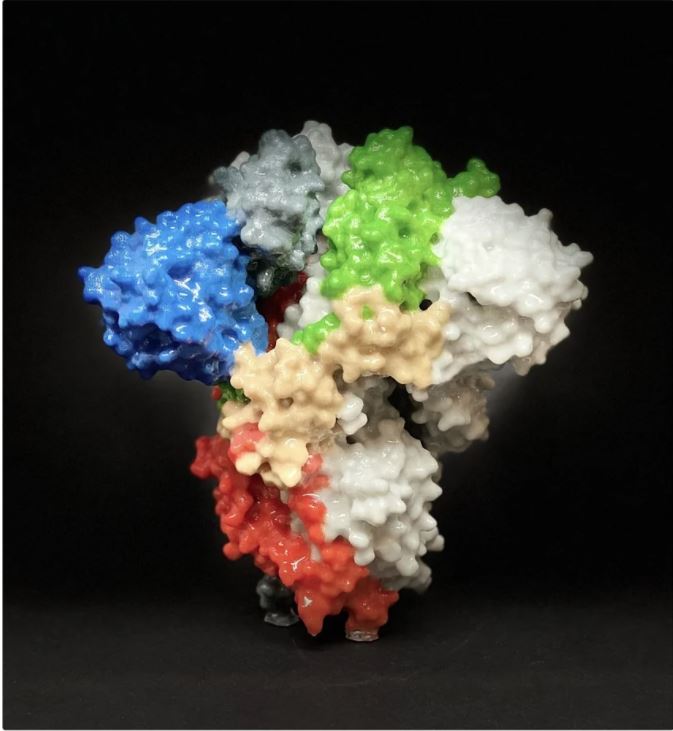
In the case of Pfizer’s and Moderna’s vaccines, the instructions in the mRNA injected are used by the cells to build the spike protein that the coronavirus uses to infect other cells. This spike protein is then recognized by the immune system and triggers it to produce antibodies and immune cells.

3D print of the spike protein of SARS-CoV-2, the virus that causes COVID-19. Spike proteins cover the surface of the virus and allow it to enter and infect human cells. Photo Credit: NIH

It will be another agonizing wait even as the vaccine signifies a turning point for the future.

Dangers of Lunar Dust

Jun Kwon Shin ||

“It’s come on pretty fast,” radioed Apollo 17 astronaut Harrison “Jack” Schmitt with a hoarse voice, the National Aeronautics and Space Administration (NASA) reports. And as the allergic reactions raged on for hours, the first man to have caught extraterrestrial hay fever was recorded.

It all began when the crew returned to Challenger, the Apollo 17 lunar module, after their first extravehicular activity (EVA) or “moonwalk.” Upon entering the cabin, they proceeded to take their helmets and gloves off. One man was visibly having an alarming reaction due to this, and the person in question was none other than Schmitt. He reported that the suspect for the sudden allergic reaction was due to the lunar dust that was tracked back in the cabin. “First time I smelled the dust I had an allergic reaction, the inside of my nose became swollen, you could hear it in my voice,” quoted Schmitt, during his speech at the Starmus space festival in Zurich.

Lunar dust or moon dust are the remnants of meteorite collisions formed over the course of millions of years. It was commented by Apollo 17 astronauts to feel “as soft as snow, yet strangely abrasive.” Its abrasive nature is the result of the moon’s lack of an atmosphere and water, which makes it difficult for the dust to erode. The crew found it annoyingly difficult to brush off the dust from their protective gears whenever they returned to the cabin from their EVAs. Some dust would always make its way inside, leading to the dilemma of Schmitt.

Due to its harmful nature, NASA has shown concern about the dust posing as a health hazard for future astronomers. Russell Kerschmann, a pathologist at the NASA Ames Research Center, articulated that: “In some ways, lunar dust resembles the silica dust on Earth that causes silicosis, a serious disease.” Just like silica dust, lunar dust can cause severe damage to human lungs once it is ingested. An experiment conducted by the researchers of Stony Brook University proved that when lung cells are exposed to lunar dust, 90% of them could be killed. In addition to that, the dust is dangerously abrasive, as it was able to penetrate through layers of Kevlar-like material on the astronomers’ boots. Schmitt expounded in his interview with Wired that “We need to understand what the biological effects are, because there’s always the possibility that engineering might fail.” He also added in the same interview that “dust is the number one environmental problem in the moon.”

Before space agencies plan to set up a settlement on the moon, scientists will have to learn more about lunar dust and devise engineering solutions to tackle its unique nature. Without a deep understanding of lunar dust, a base on the moon is no more than a pipe dream. 

Photo Credit: hq.nasa.gov

Extending life: The fight against Progeria

Bryan Justine Dela Cruz ||

The U.S. FDA approves the first-ever drug treatment, Zokinvy, for the rapid-aging disease Progeria.

On November 20, 2020, Progeria Research Foundation partnered with Eiger BioPharmaceuticals (Eiger) announced that Zokinvy, or medically known as Lonafarnib, is approved by the U.S. Food and Drug Administration, a milestone in the field of medicine.

“Shortly after our son Sam was diagnosed with Progeria, my family and I founded The Progeria Research Foundation to find the cause, treatments, and cure for all children with this fatal disease. This first approved medication is a truly extraordinary milestone for the Progeria community as we forge ahead toward the cure,” said Leslie Gordon, MD, PhD, PRF Medical Director, and Zokinvy Clinical Trial Investigator.

In the year 1999, Sam Gordon Berns was diagnosed with Progeria, at that time the disease was genetically unknown and there was no treatment. 6 months later, his parents, Dr. Leslie Gordon and Dr. Scott Berns, and aunt, Audrey Gordon, founded the Progeria Research Foundation (PRF).

In 2003, the PRF helped discover the gene mutation that causes Progeria and developed a diagnostic kit, which paved the way for the development of a treatment for the disease.

Zokinvy, a treatment that extends the lives of people diagnosed with Progeria, slows the pace of the disease by blocking the accumulation of defective, farnesylated proteins which form tight associations with the nuclear envelope, leading to the cellular instability and the process of premature aging in people with Progeria.

“This is not a cure,” cautions Monica Kleinman, a pediatric critical care doctor at Boston Children’s Hospital involved with the clinical trials. “We’ve hopefully extended the life span that [the children] have by slowing the pace of the disease,” but, she says, this doesn’t give kids a normal length of life.

The results of the clinical trials showed that the use of Zokinvy for three years increased the life span of children for about three months compared to other kids who did not take the drug. While children who received the drug for up to 11 years had their life extended by about two and a half years.

A single mutation of the gene, lamin A (LMNA), is responsible for the development of Progeria in children; consequently, promoting an abnormal form of protein Progerin, which causes instability in the nuclei and leads to a rapid aging process.

Hutchinson-Gilford Progeria Syndrome, or Progeria for short, is an ultra-rare, progressive genetic disorder that causes children to age rapidly.

People diagnosed with this disease often die of heart failure, heart attack or stroke even before they reach the age of 15.

“Today we celebrate the incredible milestone of an approved treatment for Progeria, and tomorrow we will press on until we have achieved our vision of a world in which every child with Progeria is cured.” said Sam’s father Scott D. Berns, MD, MPH, FAAP, Co-Founder and Chairman of the Board, The Progeria Research Foundation.

The PRF together with Eiger will continue to pursue their goal of finding a cure for Progeria.