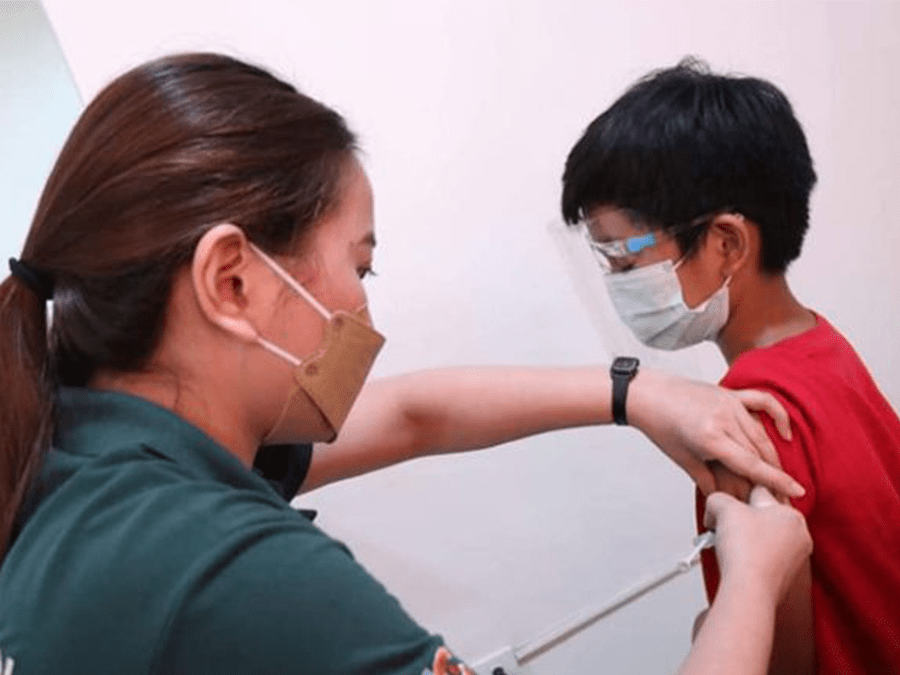
COVID-19 Vaccination Rollout for Ages 5-11 Postponed to February 7

by: Vean Cordero || Photo credit: CNN Philippines

The vaccination rollout for children ages 5 to 11, originally scheduled to begin on February 4, 2022 — as announced by Health Undersecretary Maria Rosario Vergeire in a press briefing last January 25 — was postponed to Monday, February 7. 

The Department of Health (DOH) announced on February 3 that logistical challenges prompted them to change the schedule. 

As of January 29, the DOH has reported that over 168,355 children aged 5 to 11 are registered for the vaccination. They will be immunized with the Pfizer-BioNTech’s COVID-19 vaccine, as it is currently the only COVID-19 vaccine approved for emergency use for children aged 5 to 11 by the Food and Drug Administration (FDA). FDA director-general Eric Domingo emphasized during the Laging Handa Briefing that it has a 90.7 percent efficacy for the given age group, adding that the adverse symptoms shown during clinical trials were mild. 

Secretary Carlito Galvez Jr., chief implementer of the National Task Force Against COVID-19 (NTF), has said that Pfizer’s vaccine has “a lower formulation appropriate for children,” assuring parents of its safety, further stating that the government aims to vaccinate 14.7 million children within the said age group.

The Pfizer vaccine for children aged 5 to 11 has a lower dosage and concentration than those administered for youth aged 12 to 17. Because of this, it was ordered and procured separately, with the first shipment of the Pfizer vaccine containing 780,000 doses. It was expected to arrive last January 31; however, the DOH announced on February 3 that its arrival would be delayed until the evening of February 4. 

A statement from the DOH, given last February 3, expressed that, “To ensure the adequate preparation and distribution of the Pfizer vaccines, the COVID-19 vaccination of 5-11 year old will begin on February 7 (Monday).”

The rollout will be held in at least 32 sites around Metro Manila, including the Philippine Children’s Medical Center, Philippine Heart Center, National Children’s Hospital, Manila Zoo, SM North Edsa (Skydome), and FilOil Gym (San Juan City). Vaccination sites in other regions will also be expected to open a week after the initial rollout.

The Department of Education welcomes the vaccination of children as it plans to eventually transition to limited in-person classes by School Year 2022-2023. Moreover, Education Undersecretary Nepomuceno Malaluan stated that the planned vaccination would help build confidence among parents to allow their children to participate in in-person classes.
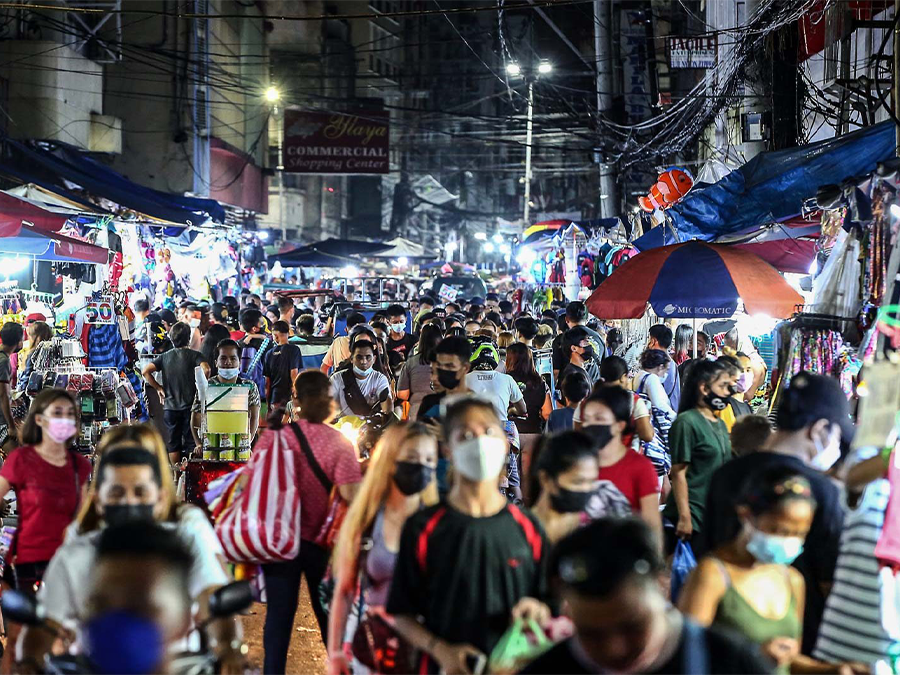
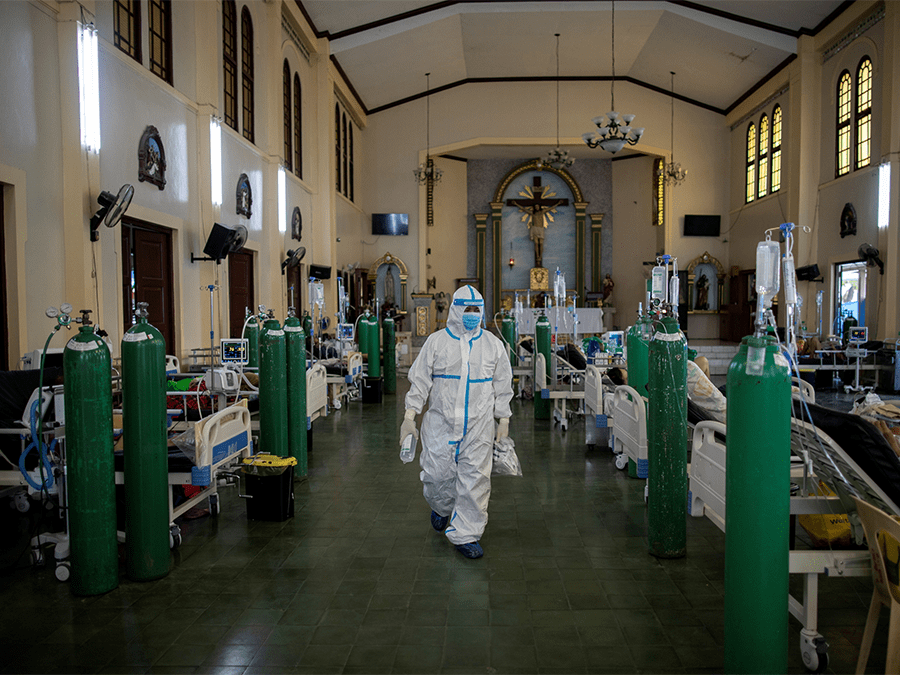
Omicron – PH Status

by: Sun Yu || Photo Credits: Rappler ||

 It was not so long ago when the number of COVID-19 cases dropped to a few hundreds. On December 18, 2021, there were only 22 new confirmed cases. However, on the first day of 2022, 4,445 tested positive, and the numbers have only risen since then. 

In the past few weeks, the Philippines tallied its highest number of daily reported COVID-19 cases. As of January 10, 2022, there have been an additional 33,169 cases, surpassing the 30K nation’s infection mark. According to Dr. Guido David of the OCTA group, this may continue to increase in the coming days, and there is no certainty when it will peak. 

 In the last week of November, news broke out globally, announcing the new COVID-19 variant: the B.1.1.529 variant, more commonly known as the Omicron variant— a mutated coronavirus that was first reported in South Africa on November 24, 2021. According to a tweet by Bill Hanage, Associate Professor of Epidemiology at Harvard School of Public Health, “Omicron appears roughly 2-3 times as likely to transmit as Delta, and is expected to show a tendency to clustered transmission in large gatherings.” In fact, according to the UN, Delta has only 9 mutations on its spike protein, compared to that of Omicron with 32 mutations on its spike protein and 18 distinct mutations having a total of 50 mutations, which was the key to identifying the new variant. It has 70 times faster replication, and a higher possibility of re-infection.

According to the United States Center of Diseases Control (CDC) director, Dr. Rochelle Walensky, as of December 22, 2021, 70% of COVID cases in the US are Omicron, similar to other countries. The Philippines has yet to identify the numbers because of its incapability to detect 100% of Omicron cases. Yet it is safe to assume that the current surge is composed mainly of the Omicron variant due to the mutations that provide stronger infection and higher transmissibility. 

Oksana Pyzik, Lecturer at University College of London, said in an interview with Al Jazeera that the five most common symptoms of the Omicron variant are runny nose, fatigue (mild or severe), headache, sore throat, and sneezing. Other symptoms, previously known to other variants,  include coughing, shortness of breath, fever, muscle aches, especially on the lower back (New York Times, 2022), and loss of smell, have been less observed in Omicron. According to Vergeire, the first cases of Omicron in the Philippines had mild symptoms, similar to most patients worldwide. 

Due to this faster rate of transmission, stricter restrictions will be implemented nationwide, announced presidential spokesperson, Karlo Nograles, on Wednesday. Areas under Alert Level 3— starting from January 14, 2022 to January 31, 2022— will include Benguet, Kalinga and Abra in the Cordillera Administrative Region; La Union, Ilocos Norte and Pangasinan in Ilocos; Nueva Vizcaya, Isabela and Quirino in Cagayan Valley; Nueva Ecija and Tarlac in Central Luzon; Quezon in Calabarzon; Occidental Mindoro and Oriental Mindoro in Mimaropa; and Camarines Sur and Albay in Bicol; Bacolod City, Aklan, Capiz and Antique in Western Visayas; Cebu City and Mandaue City in Central Visayas; Tacloban City in Eastern Visayas; Cagayan de Oro City in Northern Mindanao; Davao City in Davao region; Butuan City and Agusan del Sur in Caraga; and Cotabato City in the Bangsamoro Autonomous Region in Muslim Mindanao. 

Experts say that the best thing to do is avoid social gatherings, maintain social distancing, and, if experiencing symptoms, self-isolate. But, most importantly, get vaccinated. Though there have been reports that current vaccines have reduced immunity against the Omicron variant, they are still effective against the severe symptoms and cases of breakthrough infection. Vaccination programs, including those for booster shots, are still ongoing, and some municipalities have provided incentives to encourage more people to get vaccinated. 

For more info about alert levels, visit:

https://cnnphilippines.com/news/2021/9/10/explainer-NCR-pilot-COVID-19-alert-level-system.html#:~:text=Alert%20Level%203.%20Areas%20under%20this%20level%20are,increasing%20bed%20utilization%20and%20intensive%20care%20utilization%20rates.

Delta Variant Continues to Wreak Havoc

by Clarence Tabinas || Photo Credit: Reuters

The pandemic has been ravaging the world for almost two years now, with people anxiously hoping for an end to the crisis. But instead of stopping, more and more variants continue to emerge through the mutation of SARS-CoV-2. Among these variants, however, one has become a cause for concern because of its increased transmissibility.  

Lineage B.1.617.2, more commonly known as the Delta Variant, first emerged in India last October 2020.  It is twice as infectious as other strains of the virus, primarily because those infected with this variant can carry up to 1000 times more viruses than those infected with the original strain. As a result, one person can infect about 9-13 people in a short time. 

Symptoms of Delta include headache, sore throat, and runny nose— slightly different from those associated with the original strain.  Although it is more infectious than other variants, there is still no proof of Delta causing more severe symptoms. Data-gathering resumes throughout the world in order for scientists to become more familiar with this strain and for preventive measures to be set in place.  

The Delta Variant had been one of the reasons for the second wave of infection in India. Regarded as the most populous democratic country in the world, India had descended into chaos as large numbers of cases arose. Firewood became a resource of great importance as it was used for the cremation of thousands of dead bodies. 

The variant continued its spread to over 98 countries in a matter of months. On August 31, 2021, the World Health Organization (WHO) announced that the Delta variant had become the dominant strain in the Philippines, and as of September 21, 2021, the variant has spread to 185 countries worldwide.  

Vaccination remains the best method of prevention. According to research, unvaccinated people are still five times more likely to be infected than those vaccinated and 25 times more likely to be hospitalized. Furthermore, vaccinated individuals are at risk of spreading the virus at a shorter time than those who are not. However, though many have already received their vaccines, wearing masks and observing physical distancing are still needed as breakthrough cases increase.

STEER: SARS-EVC conducts career talk

by Gab Segura || Photo credit: SARS (PSHS-EVC)

In an effort to bolster interest in research amongst the Philippine Science High School – Eastern Visayas Campus (PSHS-EVC) student body, the Society for the Advancement of Research in Science (SARS) organized STEER: Scholarly Talks to Encourage and Empower Research. The event was held last November 19, from 1:00 to 4:00 pm.  

The event commenced with a speech by SARS President Vean Cordero, welcoming the student body. Mr. Numeriano Gutierrez provided closing remarks. Two scientists, Dr. Thomas Edison dela Cruz and Ms. Joy Ann Petronio-Santos, introduced by Mr. Carlo Apurillo and Ms. Janeth Morata, respectively, provided insightful career talks detailing their inspirations and struggles. In between were games with prizes consisting of merchandise bearing the SARS logo, furnished by EVC’s own FabLab. 

Dr. dela Cruz, an expert in Microbiology and professor at the University of Santo Tomas, spoke of his experiences researching myxomycetes both locally and abroad as well as his efforts to draw attention domestically through establishing a shop for fungi. The efforts included holding workshops on their identification, and promoting them as an avenue for ecotourism. He emphasized that a study should not be hindered by its possible economic returns—citing his deep fascination with slime molds despite their unprofitability— and that it is essential to cultivate a passion for science among all walks of life.   

A University Researcher at University of the Philippines – Diliman and Vice President of Manila HealthTek Inc., a biotechnology firm, Ms. Petronio-Santos described the possible career paths for prospective scientists and gave advice on how to take new opportunities in order to advance in both the academe and the industry. In her talk, she also urged aspiring researchers to stay in the Philippines “para sa bayan” in order to strengthen the local scientific community, sespite the warning of the many struggles Filipino scientists face. 

According to SARS President Vean Cordero, STEER was intended to “increase [the student body’s] awareness and knowledge of some research careers that they may be interested in pursuing in the near future.” She hoped that the event would “pique the interest of our scholars and encourage them to eventually take up research as a career or at least push them to continue researching even after graduating college” and that it would paint a picture of what it means to be a Filipino scientist.  

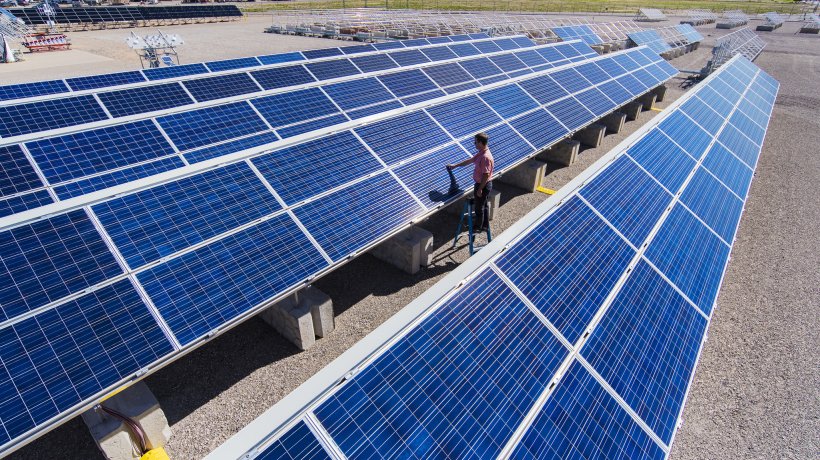
What’s Beneath a Solar Panel?

by Jim Yvene Cadion || Photo credit: Energy Department of the US

There is something crucial, yet inconspicuous, about the sun. 

It is behind the fame of the world’s dominating energy sources, such as fossil fuels and hydroelectric power. Both the chemical potential energy in fossil fuels and the kinetic energy used by hydroelectric power is essentially derived from solar energy through a series of energy transformations. With the advent of new technologies, solar energy can be utilized more directly through the use of solar panels. 

We sometimes stare at solar panels with no idea how they work. Using these to generate electricity seems like creating energy out of thin air. How is this possible? How could light be converted to electricity almost instantly? 

The answer is that it is made possible through the atomic enigmas of photovoltaics.   

Photovoltaics is the direct conversion of energy carried by electromagnetic radiation into electrical energy at the atomic level. This phenomenon, called the photovoltaic effect, was first observed by the French physicist Alexandre-Edmond Becquerel in 1839. It is based on the photoelectric effect, a phenomenon first explained by Albert Einstein wherein photons or particles of light carrying sufficient energy are able to knock and release electrons from atoms. When electrons are released, they are able to move more freely but are typically tricked to our advantage into flowing through electrical circuits. This movement of electrons is the electric current, which is what the process aims to generate.

Utilizing photovoltaic technology becomes advantageous as the earth intercepts an astronomical amount of solar power— a total of 173,000 terawatts, a magnitude more than 10,000 times the world’s total energy consumption, according to Washington Taylor, a physics professor at the Massachusetts Institute of Technology (MIT). This makes its generation of energy sustainable, unlike fossil fuels— which are estimated to be depleted by 2060, according to the Millennium Alliance for Humanity and Biosphere.  

In addition, its generation of energy does not emit harmful greenhouse gases in comparison to fossil fuels, which account for the emission of billions of metric tons of carbon dioxide annually. This consequently makes photovoltaic technology exceptionally beneficial in alleviating climate change. 

Given its clean and sustainable features, photovoltaic technology appears to be a better option than fossil fuels, especially now that we are dealing with fossil fuel depletion and climate change. However, there is more to this than meets the eye. 

Solar panels provide an inconsistent energy supply for most areas of high energy demand since it only works during the daytime and in favorable weather conditions. Making this energy source consistent requires efficient storage of energy and efficient power grids that could distribute electricity from areas with prolific sunlight to areas under the shade. However, with current technology, this would mean large price tags and uselessness, as more energy dissipates when longer transmission lines are used.  

Another challenge that photovoltaic technology faces are its inefficiency. According to the United States Solar Energy Technologies Office, most commercial solar panels have mean efficiencies of 15-20%— percentages far lower than fossil fuels’ mean efficiencies, which range from 35-45%.  

Although the sun imparts a great amount of energy, present-day photovoltaic technology could only harness less than a speck of it. Principal dependence on this technology remains not completely feasible. 

With further innovations, however, this may be possible in the future. Priorities on tackling related challenges, such as climate change and energy resource depletion, depending on the perceived opportunity costs and the specific assumptions we have to make when trying to solve such multifaceted problems. 

But, the transition towards direct capture of solar energy is a mere walk in the Labyrinth filled with hedges of technology, economics, and politics. 

PSHS-EVC brings home First Prize in 2021 RICE Eastern Visayas

by Bryan Justine Dela Cruz || Photo Credit: DOST-TAPI

Philippine Science High School – Eastern Visayas Campus (PSHS-EVC) proves once more that it is unrivaled in research and innovation in Region VIII  after securing first place in the Sibol Award for Outstanding Student Creative Research Category High School at the Regional Invention Contest and Exhibits (RICE) Eastern Visayas, held last November 12. 

The competition was organized by the Department of Science and Technology – Technology Application and Promotion Institute (DOST-TAPI) in collaboration with DOST Regional Office No. VIII to recognize exceptional contributions and ingenious innovations of young Filipino inventors and select qualified research projects for the National Invention Contest and Exhibit (NICE). The competition allowed students from public and private schools around the region to showcase their research projects and served as an avenue for the youth to engage in research and development. 

Dunn Zander Alpar, Angelo Ryan Dolina, Israel John Peñalosa, and Nico Quimsing, recent PSHS-EVC graduates, represented the school in the said competition with Mr. Jesse Estoque, a Computer Science teacher of PSHS-EVC, as the team’s adviser.  

During the awarding ceremony, which was streamed virtually on the DOST-TAPI official Facebook Page, the team’s entry “Project FRIES: Freshwater Morphology Information Gathering System” was announced as the First Prize Winner from among several entries with an average score of 83%. They won 20,000 pesos and the chance to represent Eastern Visayas on the national stage of the competition in 2022.  

“Pisay’s curriculum trained us for the panel defense since the intensity of the competition was similar to what we had gone through in STR. Honestly, we are just glad that we were able to present our research in front of esteemed engineers and researchers around the region and bring home another trophy,” Dolina said. 

Mr. Estoque said that he had a positive experience working with the team and was confident that they would do an excellent job defending their device during the panel interview since they worked on Project FRIES for more than two years. “Winning was a beautiful bonus,” he added. 

“Supervising them was a breeze actually, most probably because they have already been trained under Engr. Vinci Gabumpa. I also saw their eagerness to participate in the event,” Mr. Estoque shared. 

The team members hope to inspire the next generation of innovators and researchers from PSHS-EVC to explore the complexity of technology and the ideas in their minds just waiting to come alive. “I hope more students from EVC will appreciate research, particularly tech-related projects, since they can really change the world,” Dolina mentioned. 

Despite pursuing different career paths and attending separate universities across the country, the members will continue improving Project FRIES.  

“As for the next step of Project FRIES, since our research qualified for NICE, we might opt to add the features that the engineers suggested during the panel defense,” Dolina replied when asked about the future of Project FRIES.

Millions Lost as COVID-19 Test Kits Expire

by: Nathan Dela Torre || Photo Credit: CNN

In March of 2020, the Philippines reported its first COVID-19 case, resulting in the government imposing the first of many community quarantines. With more COVID-19 cases being reported every day, the government has been tasked to strengthen its COVID-19 response, including the push for mass testing. 

Yet, during the Senate Blue Ribbon Committee hearing held on September 21, 2021, it was confirmed by the Department of Health (DOH) that 371,794 COVID-19 tests from nearly 8,000 test kits had expired. The Committee had purchased these kits, amounting to P550 million, along with the Procurement Service – Department of Budget and Management (PS-DBM). 

“[…] In the middle of a situation where we were not testing enough… para tayong nagsusunog ng pera sa gitna ng napakaraming namamatay,” stated Sen. Francis “Kiko” Panglinan.

(In the middle of a situation where we were not testing enough… it’s as if we’re burning cash in the midst of so much death.) 

These BGI real-time Fluorescent RT-PCR test kits were manufactured on April 5, 2020, with an expiry date of October 5, 2020, and delivered from May 2-4, 2020, with a two-month shelf-life. This would mean that they had a six-month shelf-life, in comparison to the original specifications that the DOH provided, which stated that the kits would have 24 to 36 months before their expiry dates. 

In the same meeting, Pangilinan also pointed out that the Department of Health should have bargained for a lower price instead of paying fully for the kits. According to him, the Department of Health could have gotten a 25 percent discount for the near-expiry test kits, given that it is a practice in the industry that you can get a discount when the product is close to its expiration. 

On September 24, however, another issue was brought up at the Senate Blue Ribbon Committee hearing. One of the 14 tranches of 2,000 A*STAR Fortitude kits, worth P688 million, was bought at double markup even if it only had two months remaining shelf-life. 

This was confirmed by Mervin Ian Tanquintic, an inspector from PS-DBM. “During this inspection, Your Honor; it was a joint inspection by the PS-DBM and the DOH. Because of the need of the item, per DOH, it was acceptable even if they had a short shelf life,” said Tanquintic [in response to Sen. Kiko Pangilinan].

More than 300,000 Filipinos could have been tested for COVID-19 if we were able to manage the COVID-19 test kits effectively. Moreover, the government should effectively manage the usage of these kits to avoid wasting funds. And finally, as we approach the second year of the pandemic, this setback pushes us further from achieving the main goal— going back to normal.

SpaceX’s Inspiration4: The First All-Civilian Crew to Orbit the Earth

Jun Kwon M. Shin||

Photo credits: Space.com

Elon Musk and his aerospace company, SpaceX, takes another leap for mankind with the success of the first all-civilian space flight mission, Inspiration4.

On September 15 at 8:02 p.m. EDT, SpaceX successfully launched its Crew Dragon spacecraft. Aboard the spacecraft are four amateur astronauts. With this achievement, the company has yet again made history by successfully sending the first all-civilian crew into orbit. That is to say, they are the first crew to orbit the Earth without any professional astronauts to guide them on board.

The mission commander of Inspiration4 is Jared Isaacman, the 38-year-old billionaire founder and CEO of Shift4 Payments— a payment processing company. He also bought all four seats for Inspiration4, donating three of the seats to raise awareness and fund St. Jude Children’s Research Hospital, a research and treatment center for children with cancer and other pediatric diseases, such as leukemia.

One such patient is Hayley Arceneaux, who, at the young age of 10, was diagnosed with bone cancer but made a full recovery after receiving treatment from the hospital. Arceneaux is now a healthy 29-year-old who works as a physician assistant at this hospital, and one of the three ‘civilians’ to join Mr. Isaacman in the spaceflight mission.

The other two ‘civilians’ to join the mission are Christopher Sembroski and Dr. Sian Proctor. Sembroski is a 42-year-old US Air Force veteran and Embry-Riddle Aeronautical University alumnus who works as a data engineer for aerospace company Lockheed Martin. Dr. Sian Proctor, 51, is the eldest member of the crew, and an African American geoscientist and professor who teaches at South Mountain Community College, Phoenix, Arizona.

The Inspiration4 crew prepared and trained for the spaceflight mission for about six months. During this period, the crew members would pore over important guidelines and complete simulation tests. 

In an interview with NBC, where the crew was asked whether they were scared for the spaceflight, Mr. Sembroski expounded that, “We were trained so well, we were not scared in the least.” 

“I felt really comfortable because the training that we got from SpaceX was the same training that NASA astronauts are getting right now,” added Dr. Proctor.

The Official Inspiration4 website announced that the crew would perform several experiments during the spaceflight mission. The site states the main purpose of these experiments, which is to “expand our knowledge of the universe,” but does not mention any details on said experiments. Nevertheless, in the same interview with NBC, Mr. Isaacman stated that, “When we splashed down, it felt like all of our on-orbit objectives, everything we set out to achieve while we were in space, we completed.”

The crew safely returned to the Earth’s surface when the Crew Dragon capsule splashed down in the Atlantic Ocean on September 18 at 7:06 p.m. EDT,  after three days in orbit. 

This marked the conclusion, and the success, of the Inspiration4 mission.

Fabricante Secures Spot in Finals of the Breakthrough Junior Challenge

Vean Cordero ||

The Philippines secures a spot in the top 16 of the Breakthrough Junior Challenge (BJC) for the fourth time as Francine Oren T. Fabricante (18), a 12th-grader from Philippine Science High School – Main Campus, was announced as one of the finalists last September 21 with her video entry “Gravitational Waves: The Invisible Key to Unlocking Our Universe”.

 The BJC is an annual global competition where students aged 13-18 are given a chance to explain and break down complex concepts or theories in life sciences, physics, and mathematics into a three-minute video. This year, the Breakthrough Prize Foundation added a new category, called Space Exploration (SE). The prize is an opportunity to attend a rocket launch that celebrates the anniversary of humanity’s 60 years in space, which is set to take place in 2022.

Fabricante’s video on gravitational waves was one of the three entries that received the highest scores from the evaluation panel. These, along with the top Space Exploration entry in the Popular Vote, will move to the final round of judging for the Space Exploration Champion. The announcement of winners and the award ceremony will happen sometime in November.

Fabricante was motivated to take part in this year’s challenge because of a webinar hosted by the UP Astronomical Society, wherein Mx. Beatrice Maquilan— who was part of the Top 10% of the BJC twice— was the guest speaker. “And because I turned 18 in May, joining the BJC 2021 would be my last chance. So, I decided to enter! If I didn’t, I knew I would regret it,” Fabricante said. 

Through her journey in this competition, she has come to realize that science is an integration of the humanities and the arts. “We need people who could find the right words and visuals to explain it. Proper science communication is the key to making humanity understand the wonders and solutions science can provide, especially during this pandemic,” she expressed.

If she were to win this year’s BJC, Fabricante shared that she would use the $250,000 prize for her college needs and the $100,000 prize to help improve her school’s research facilities. 

Fabricante plans to take up Biology as her major in college. However, if given the opportunity to study abroad, she wants to study in a school that can cater to her diverse interests in science. She also added that she wants to pursue Astronomy, so she hopes to take it as her minor.

Even after the competition, Fabricante wants to continue communicating science. “The Breakthrough Junior Challenge was a great opportunity to enhance my science communication skills. If I can continue to inspire more students, Filipinos, and women in STEM because of the way I present science, then I definitely won’t stop,” she said.  

Finally, Fabricante shared this to all aspiring students: “If I could reach this far with my first entry in the BJC, with a phone as a recording device and no prior experience in animation, then nothing is impossible! The BJC is a chance to learn and learn from others. Just do your best and enjoy the process! Good luck, and I hope to see more Pisay entries in the future!”

Taking inspiration from Fabricante, it is possible to thrive in the competition, even without state-of-the-art cameras or expensive recording gadgets. You do not need to be experienced in video editing and animations, nor do one need to be knowledgeable in complicated science concepts to join and shine in the competition. What you need to do is to start, take action, and persist. Just begin with what you know, use what you have, do what you can, and learn as you go. You never know, you might be the next Filipino to win this prestigious competition.

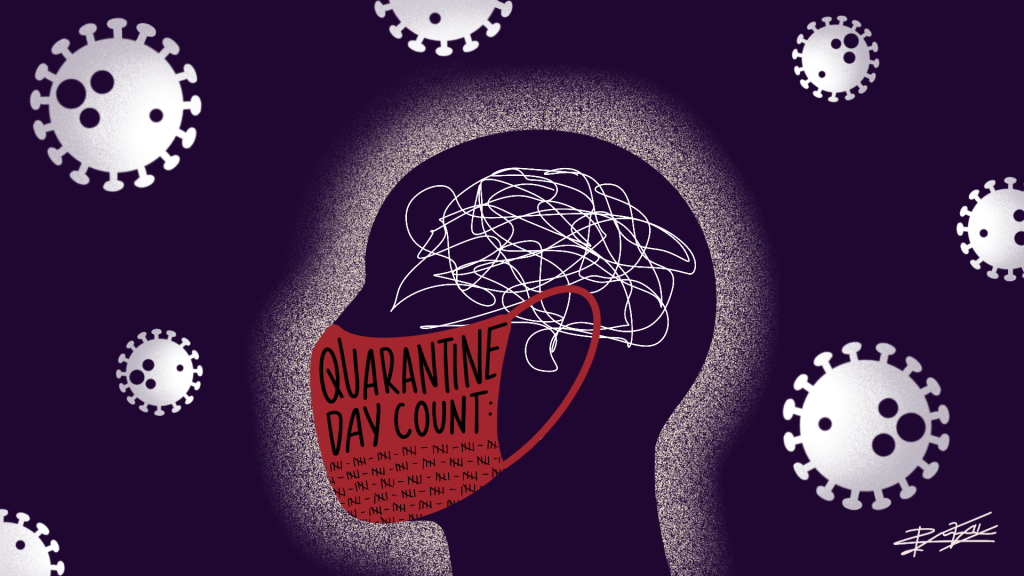
Pandemics, quarantine and mental health

Danna Mheliza Mae D. Budaño ||

Uneasiness, anxiety, dread, tension, confusion, and hopelessness have been our loyal companions ever since the COVID-19 pandemic started ravaging the country last year. 

We were optimistic that everything would go back to normal after a few months; that we would be back with our normal lives as if nothing happened. That sentiment couldn’t have been any farther from our reality.

A year has passed since the government implemented quarantine, yet, whatever we do, we can’t seem to reach the end of this dark tunnel.

We are losing hope every day. 

Each day, thousands of newly recorded cases and hundreds of recorded deaths are announced. This serves as a grim reminder that whilst we are at the safety of our homes, in some other place, people are fighting a desperate match against death.

As dire as the COVID-19 pandemic is, unfortunately, it isn’t our country’s only enemy. It had brought along a string of other problems.

Problems in the economy, in the government, in the environment, and in education have been rampant in the past year, and some of these stemmed from the year-long quarantine the government had implemented. Yet, even less talked about is the population’s worsening mental health crisis amidst the quarantine and pandemic. 

Mental health has always been a topic of concern even before the COVID-19 pandemic and the quarantines started. But with the endless problems the country and the rest of the world have been facing, we are starting to forget how important mental health actually is. 

Quarantine certainly isn’t the best experience, and people have associated negative emotions with it such as boredom, loneliness, and uncertainty. There had also been extreme cases where quarantine had led people to commit suicide. 

Prolonged quarantine can result in psychological damage due to extended exposure to stressors. A study conducted in 14 different countries had shown that people who showed symptoms of depression tripled after restrictions were implemented. 14.2% of the 14,975 respondents displayed symptoms of depression before quarantine started. After quarantine regulations were implemented, 45.2% of the respondents showed symptoms of depression. 

Despite the facts above, we couldn’t simply halt quarantine. A spike in cases would trigger more unrest and anxiety to the population as compared to a prolonged quarantine. 

What exactly are we supposed to do? What should our country’s leaders do? 

Authorities should make concrete plans on how to fight the COVID-19 pandemic. Quarantine is a measure against the pandemic, we can only end quarantine as long as cases have decreased significantly, along with chances of future infections. 

Communication with the population is necessary. The government should clearly state its plans and give updates on the situation. They should also make sure that while quarantine is implemented, the population has their basic needs fulfilled, especially the people who have lost their jobs due to quarantine. 

On the other hand, as citizens, we should follow health protocols implemented by the government. Wear masks, sanitize ourselves properly, and take care of our physical well-being by taking supplements. 

With the worsening mental well-being of the population during quarantine, we should start taking serious action against the pandemic itself.

By taking all the necessary steps to end the pandemic, someday, we might be able to get ourselves out of quarantine and take a fresh breath of air outside without fear.