New Year, New Me? Setting Realistic Resolutions for 2023

by: Aine Latoja || Photo Credit: Andrea Atkinson/The Daily Nebraskan

A lot of times, we pressure ourselves to automatically change into someone new the minute the clock strikes midnight. As we jump to the sound of torotots and sparkling fireworks, we whisper small promises to become a better version of ourselves this new year. But the premise of becoming anew right away is something we know all too well. After all, bad habits do die hard. 

The month of January brings in all kinds of things. As the calendar turns a new page, everyone anticipates a fresh start. With that, we create new year’s resolutions –  a means to improve ourselves from the versions that we were in the past year. It may be the case, but the first step in doing all this is learning how to make realistic new year’s resolutions. 

Finding Purpose 

Finding your purpose is the most vital aspect of creating a realistic resolution. Many people find it hard to stick to their goals and continue pursuing their dreams, short-term and long-term, without that something that keeps the fire burning within them. It can be anything or anyone, in all shapes and forms; finding something that truly keeps you going — be it friends, a new hobby, or even a TV show — makes working towards your goals worthwhile.

Take It Slow 

Another reason why these resolutions get dropped mid-year is that we expect to be consistently good at something right away. We would immediately deduce that this new “thing” isn’t meant for us just because it didn’t work out as we expected it to be. By taking slow steps and creating easy-to-accomplish goals, our resolutions are more likely to have longevity. Think of it as stairs, slowly climbing up, step after step. 

Working From Within 

Most importantly, no matter how corny it sounds, the only way we can resolve these resolutions is to work on ourselves first. Build self-confidence, try new things, and have an open mindset. These are just some of the ways you can practice. But this doesn’t mean that self-improvement has to involve objective-oriented activities. Sometimes, the tiniest acts of self-care are just as much as self-care than things like trying a new diet to improve your lifestyle or fixing a sleep schedule. 

But if you genuinely desire change in your life, you must be willing to make it happen at any time, regardless of what date or month it is. Believing that you can only start fresh at the beginning of the new year only adds to the notion that achieving these goals is just to prove something to someone and not to yourself. 

However, I believe we put too many expectations into changing for the new year that we tend to forget what we already have and the progress we’ve made in the past, how far we’ve come, and how we’ve grown as a person. Letting go of toxic habits and leaving things that no longer serve us behind are small feats in themselves, and we should pat ourselves on the back for that. 

As scholars, we stress ourselves way too much; maybe it’s just how we are. Let this be a reminder to set goals for prioritizing mental health, maintaining a healthier lifestyle, and discovering more about ourselves this year. It would be a great start to 2023 to have an open mind and take it slow despite the strenuous academic workload. 

As we go forth with the new year knowing how to set attainable resolutions, may this year be one that we can truly remember.

PSHS-EVC Sportsfest 2022: The Charitesia commences

by: Frances Katharine Manalo || Photo Credit: Kendra Osias

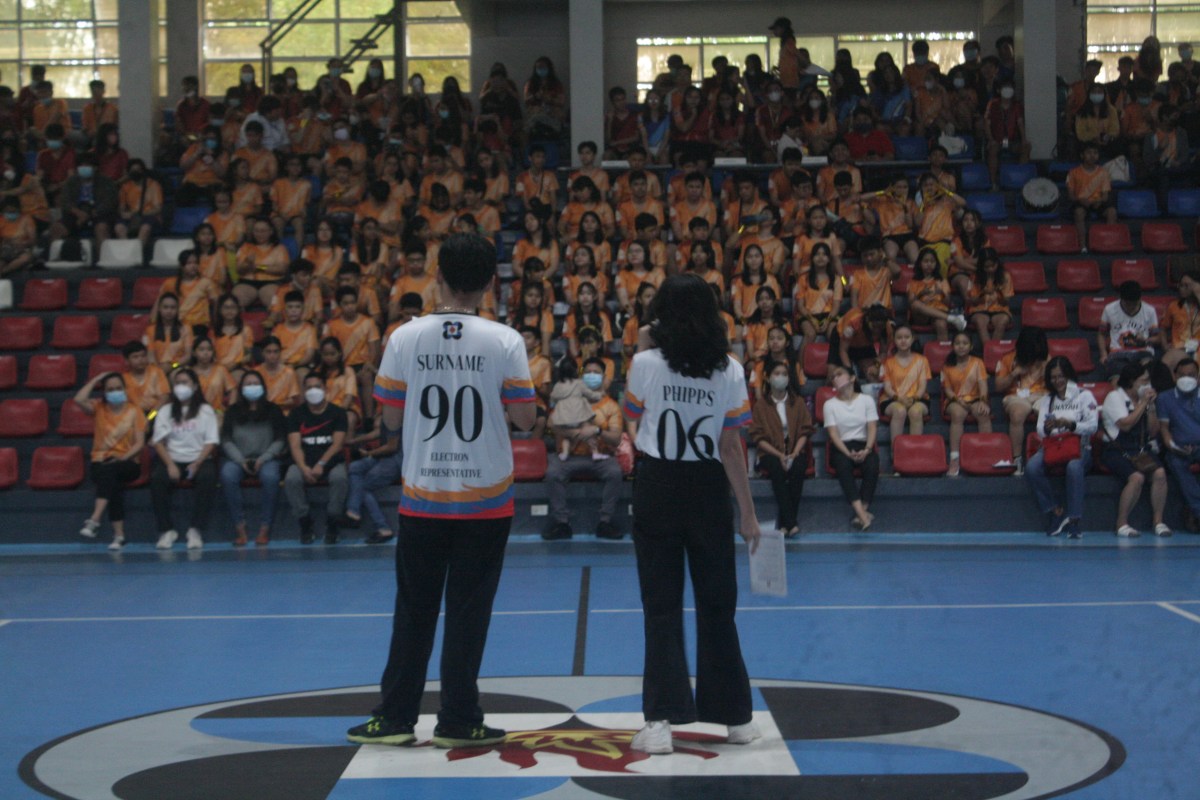
With the theme “Unity in the Spirit of Camaraderie,” the PSHS-EVC finally kicked off Sportsfest 2022: The Charitesia last January 30, 2023, in the school gymnasium. Hosted by Batch 2025, the week-long event will end on February 3.

On Monday morning, the opening program, hosted by Benj Salvatierra and Max Phipps, began with a prayer and the singing of the Philippine National Anthem. This was followed by an opening message delivered by the Campus Director, Ms. Yvonne Esperas, who then voiced the declaration of this year’s Sportsfest.

Upon the opening, the Lighting of the Torch was done by the Athletic Council Presidents of Batches 2023, 2024, and 2025, namely Alchris Ceballos, Charles Uy, and Maud Mejias, respectively. The program then proceeded with an opening salvo performance by PSHS-EVC’s official dance ALA/Club “Pisayaw” and an Oath of Amateurism led by the Athletic Council Vice President, Gabrielle Cordeta.

Various competitions also took place during the opening, where Houses Aglaea, Thalia, and Euthymia earned their first house points. Each house showed their uniqueness and unity through the lively cheers roaring through the whole gymnasium, the shining vocal solo performances, the energetic cheerdance stages, and the dramatic vocal duets.

The winners were immediately announced at the end of the morning program. For the cheer competition, House Aglaea was awarded first place, House Thalia second place, and House Euthymia third place. In the vocal solo performances, House Aglaea once again claimed the first spot, Thalia in second, and Euthymia in third. For the cheerdance competition, House Euthymia was awarded first place, House Thalia second place, and House Aglaea third place. Lastly, in the vocal duets, House Thalia came in first place, House Euthymia in second, and House Aglaea in third.

The Charitesia continued in the afternoon with the long-awaited and much-anticipated Sportsfest games and festivities, such as the booths conducted by Batches 2023, 2024, and 2025.

Ibang-Iba Talaga Ang Pasko Sa Pinas: What Makes Up A Uniquely Pinoy Christmas

by: Zenas Agnila || Photo Credit: Diversify 

Umagang may dala ng bagong pag-asa—, the loud, abrupt carols of the neighbors’ prepubescent children blend in with the subdivision’s already Christmas spirit-infused evening atmosphere. The scent of Tatay’s adored sweet-style spaghetti lingers throughout the residence and in everyone’s unassuming nostrils. And coming in clumps, extended families slowly arrive to saturate the house that now feels like home. 

There must be something so beautiful and memorable about a Pinoy Christmas that sets it leagues apart from the rest of the world’s holiday celebrations.

In truth, its beauty is not entirely centered around the grandest of Noche Buenas or the prettiest of exchange gifts. A genuine Christmas in the country has pillars that lie on the simplicity of our faith, food, and family.

Faith

The Philippines being a predominantly Christian nation, faith is undeniably a fundamental aspect of our country’s culture, and unsurprisingly, so is Christmas. For most, the heart of the holidays lies in the Christmas church services and Simbang Gabis, which does no less than acknowledge and honor the birth of Jesus Christ—our reason for the season. Far detached from Santa Clauses and the numerous other figures that make up most of the western celebrations, Filipino holidays are punctuated by evening church trips with family, merry thanksgiving to the Lord, and countless other nostalgic church Christmas traditions with relatives.

Food

Food is every Filipino’s love language and the star of every home’s Christmas. It is the highlight, if not the most sought-after aspect of our holidays, whether we like to admit it or not. The sight of the pre-Christmas night is decorated with our nanays, tatays, titos, and titas dominating the kitchen scene in a chaotic war of prepping up Christmas dishes mixed with just the right amount of chitchat and unhinged laughter. Once prepared, on the dinner table lies the ubiquitous and saliva-inducing Lechon, the sweet Filipino-style spaghetti that Italians would go berserk about, the seared, sweet-savory Christmas ham, mango float, fruit salad, bibingka, and countless more dishes that remain unnamed yet are as ever-present and ever-delectable on the table. Such a feast is made possible through the time and effort families pour into meticulously preparing and cooking the night’s Noche Buena, so hats off to our humble kitchen heroes. In such a way, it is with great certainty that we go home with more than just our hearts full, but our stomachs as well. 

Family

It’s the people who make Christmas worth showing up for — whether they’re the openhanded aunts who unhesitantly give out the crisp blue bills, the cousins from far away who come home to spend the year-end with us, or even the closest friends who become family too. For us, the holidays are family reunions in disguise, the golden opportunity to catch up on everyone’s fast-paced life and rekindle the spark of closeness lost by time and distance. The human interactions, lighthearted games, small talk, and sweet nothings that comprise our holiday festivities make celebrating Christmas with the loves of our life all sweeter and warmer. 

We Filipinos pride ourselves on a Christmas rallying around faith, good food, and the warm company of family. 

Even so, there are many ways to celebrate the holidays; it can be as simple or as grand as how we’d like it to be. In whichever way we choose to celebrate this very special day, there is an assurance that despite the prospect of uncertainty that the other days bring, we Filipinos always find ourselves making the sweet effort to make that time of year an extra special one. In a nutshell, our Christmas celebrations are deeply rooted in the spirit of thanksgiving, contentment, and joy against all odds. 

Our Paskong Pinoy is one filled with simply celebrating the gift of Christ’s birth, mouthwatering feasts, and genuine relationships with the people we can count on throughout the new year.

So, as the holiday season comes to a close, we wait in giddy anticipation—eager to relive those candlelit moments anew. And as we find ourselves storing away the Christmas lights and decorations, we keenly look forward to the next Pinoy Yuletide, ready to display those colorful ornaments again the next time that special time of year makes its way around our calendars once more. 

To Manufacture Consent: The Maharlika Investment Fund

by: Sean Marcus V. David || Photo Credit: Rappler

One thing that the people tend to forget whenever discussing the State and the Government is that these figures derive their authority not simply from the trust of a higher power or the laws they wrote; this authority exists through a social contract between the State and its people. Whether to enforce its belief systems and moral principles, to facilitate economic interests, or simply to provide protection, the State and its institutions exist solely through the people’s consent to be governed—consent only given when the people trust the State to do its duties using its elevated positions of power.

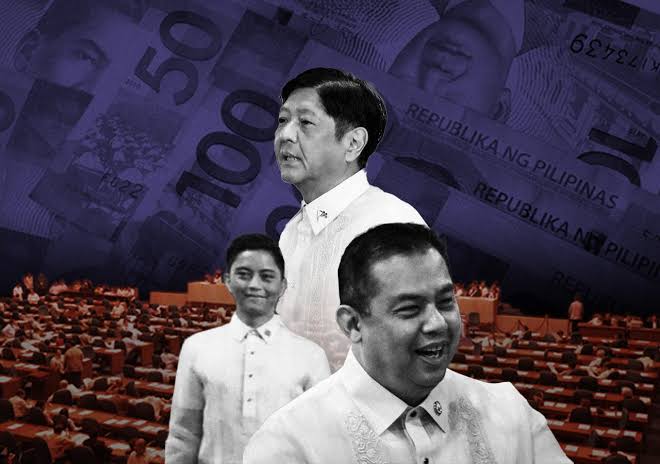
The Maharlika Investment Fund, more commonly known as the Maharlika Wealth Fund, is a Sovereign Wealth Fund proposed by House Bill No. 6398. Like most institutions, it is supposed to take surplus funds—which arise when government revenue far surpasses budgetary expenditures—and invest it in stocks, bonds, and other security nets and provide the Government with recurring income. In addition to having a massive budgetary surplus, most nations that decide to establish sovereign wealth funds have little to no international debt to service, thereby freeing up funds that could be turned to maximizing long-term returns on investments by the Government. Due to its nature, the Maharlika Wealth Fund would have much greater risk-tolerance—the willingness to accept the risk inherent to the volatility of the investment’s value—compared to pension funds and the Central Bank, and, to much concern, greater lack of transparency.

It is with this context that we explore the concerns the Filipino people have with the Maharlika Wealth Fund, starting in particular with its source of funds. As originally envisioned, the Fund would have sourced its seed capital from the Government Service Insurance System (GSIS), the Social Security System (SSS), the Land Bank of the Philippines, and the Development Bank of the Philippines (DBP). These sources do not count as surplus funds, and in fact, the funds of the GSIS and the SSS aren’t even public funds. Pouring the funds of the GSIS and the SSS into a volatile investment fund like the MWF would be putting the hard-earned wealth of the people at great risk, which the people deemed to be unacceptable—leading to their removal as sources from the bill. Furthermore, the Landbank and the DBP are already required by law to pay 50% of their annual profits to the General Fund of the Government. Thus, further cutting into their funding would risk their ability to operate and the government programs they support. It should also be noted that the Philippines does not have any commodity-based surplus funds sourced from external trade conducted by state-owned enterprises.

The nation clearly lacks the surplus funds required to set up the Maharlika Wealth Fund, but what it does have is a massive budgetary deficit of ₱13.64 trillion, or $246.34 billion. This debt comprises a whopping 63.7% of the National GDP as of 2022–a massive jump from 39.4% at the start of the pandemic. This is on top of low growth projections by the Central Bank of the Philippines and the worries of the Filipino people, with over two-thirds of the people surveyed by TransUnion expecting an economic recession by the end of 2023. With the perfect storm of pandemic anxiety and lack of investor trust in President Ferdinand “Bongbong” Marcos Jr. due to his family’s association with grave government corruption, some doubt the state’s ability to keep the economy afloat. 

Between the lack of fiscal capital to set it up, the incredible debt garnered by the administration through its mishandling of the pandemic response, and the lack of trust from foreign investors and the Filipino people, it is no surprise that people are dubious of how the House of Representatives abruptly approved the House Bill No. 6398. 

Is it strongly imperative that a Sovereign Wealth Fund be created for the nation, even when it doesn’t have the funds to reliably service its foreign debts? Are there truly no better alternatives into pouring what little funds we do have into bouncing back from the damages brought by the pandemic? Are we even sure our funds are in safe hands, when the President still hasn’t braved the herculean hurdle of rising above the reputation his family name has? In what seems to be another issue to add to the pile of unpopular laws passed by the Administration, the MWF could only lead to further instability within the nation, either through gross mishandling of its funds, or worse. It is important for the Government to first prove itself capable of both building back the economy and placating the people’s concerns before it strives to pass laws that could impact the nation for decades to come. For in its current state, any controversy could be the straw that ultimately breaks the camel’s back.

Ateneo dethrones UP to reclaim UAAP Men’s Basketball crown

by: Jesslie Yu || Photo Credit: One Sports

Outlasting the defending champions, the Ateneo Blue Eagles are back at the top, redeeming themselves against the UP Fighting Maroons, 75-68, in an intense do-or-die Battle of Katipunan last December 19, 2022, at the Smart Araneta Coliseum in Quezon City. 

Ange Kouame was hailed as the Finals MVP for offensively and defensively hounding the Fighting Maroons with 19 points, 12-rebound double-double game, and four blocks. Securing the victory for Blue Eagles alongside Kouame, Gabriel Gomez and Forthsky Padrigao both knocked up the scoreboard with 12 points.

“This means a lot to me because nobody believed in us, even we didn’t believe in us in the start. But Coach Tab is the man and we just followed his lead,” stated the Finals MVP Kouame.

Ateneo dominated the first half as they jumped out to gain an early 9-0 run in the first quarter, wrapping up with a suffocating lead, 30-14. They continued to punish the Fighting Maroons, who were trying to fight back against the storm of Ateneo, but the Blue Eagles blew the lead and ended the first half with a strong 15-point advantage, 47- 32.

Turning the wheels of fate, the hungry Fighting Maroons did not yield over the 20-point deficit of Ateneo and crawled back into the game with a destructive 18-4 run, closing the gap to only a 6-point deficit, 56-50. The third quarter ended with a single-digit lead by Ateneo, 60-52.

Feeding off their momentum, the Diliman-based squad went on rampaging the court in the fourth and final quarter as they managed to make a 5-point lead with James Spencer’s emphatic three-pointer in the last two minutes.

With only 24 seconds on the clock, UP’s Alarcon intentionally missed the free throw to score a cold-blooded three in the corner, making it a three-point game, 70-67. But Ateneo concluded the Cinderella story of UP through crushing free throws to finally seal the deal and redeem their 12th championship in Men’s Basketball, 75-68.

“I’m so far from the forefront of this championship. It’s about these players. I’m just so grateful for their effort. I’m the lucky guy,” said Ateneo coach Tab Baldwin.

The Scores:

Ateneo (75): Kouame – 19, Padrigao – 12, Gomez – 12, Andrade – 10, Ballungay – 4, Chiu – 4, Daves – 4, Koon – 4, Quitevis – 4, Ildefonso – 2.

UP (68): Spencer – 14, Alarcon – 12, Galinato – 12, Tamayo – 11, Cagulangan – 9, Diouf – 7, Gonzales – 2, Lucero – 1.

Quarters: 30-14, 47-32, 60-52, 75-68.

Politics, Passion, People, and PMUNYS III: A Post-Summit Memoir

by: Poimen Agnila || Photo Credit: PSHS-EVC Delegation

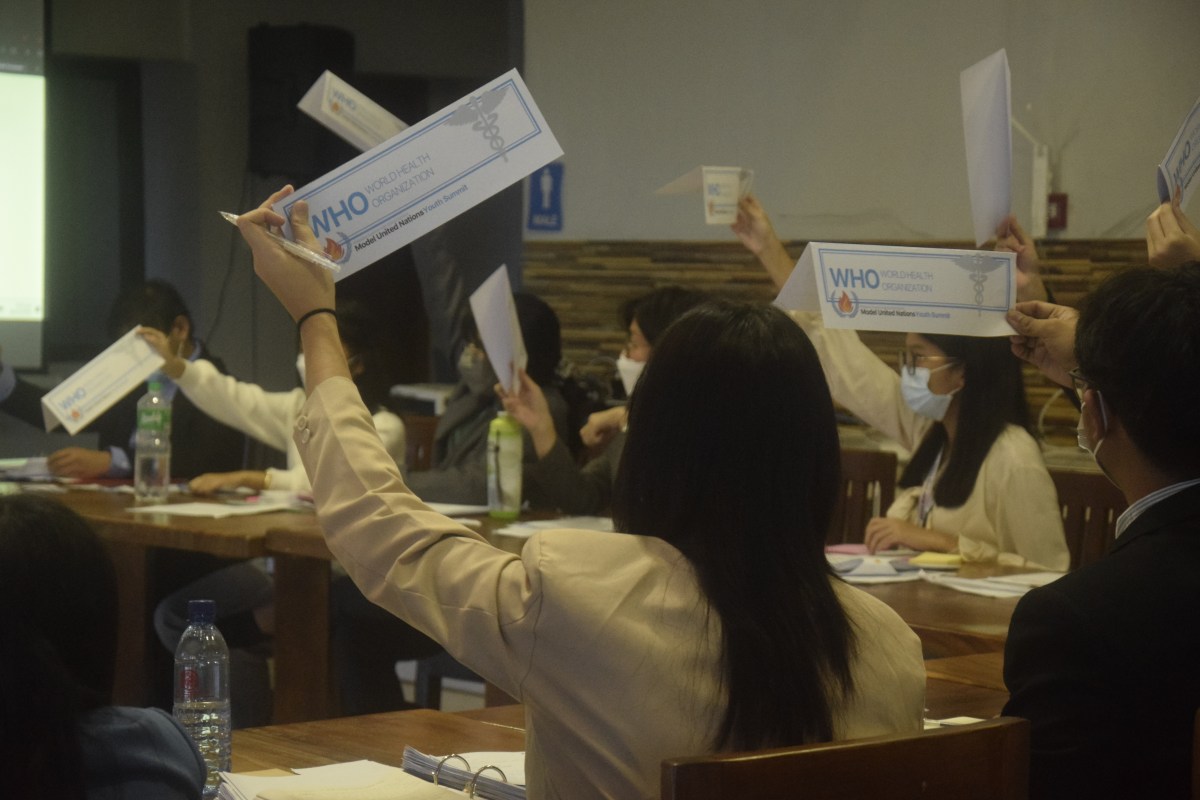
To the uninitiated, Model United Nations is nothing but a bunch of unnecessarily discursive and overly impassioned teenagers showing up in coats and slacks, spewing out pages’ worth of UN SDGs-related statistics, and getting into heated debates about the political and economic state of the world right now. While this observation isn’t technically false, it is, however, incomplete. To fill in the gaps left by the general public’s unfamiliarity with student-led global diplomacy events such as MUN, this delegate motions to take you through the absolute rollercoaster of the recently concluded Philippine Science High School System Model United Nations Youth Summit III. 

From November 28 to December 2, 2022, six student-delegates from PSHS-EVC, including myself, Crishelle Phoebe Yu, Aine Kirstie Latoja, Kyrus Matthew Pampanga, Troyann Justin Pallones, and Kyle Andrew Abello, braved not only the cold of the Baguio climate but also the much colder pre-contest anxiety-induced shivers of the first in-person PMUNYS. We were joined by three more students who trained for and served as committee Dais for the summit, namely Alchris Marie Ceballos, Kyle Matthew Balasanos, and Joshua Christopher Capada. Lastly, heading the EVC delegation were our dedicated and passionate teachers, our coach, Ma’am Noemi Agner, and Sir Eman Patata, who’s been there since day one and served as the Technical Working Group for PMUNYS III. 

To say that the change in scenery from the quiet late-night practices at CReST’s Smart Classroom-B to the buzzing committee sessions at 456 Hotel’s function rooms was exhilarating would be an understatement. I don’t think I would be alone in saying that the entirety of the summit felt like a fever dream. Sure, it was nerve-wracking at first, but in the end, the awe of just being there triumphed over the crippling self-doubt caused by the exponentially-increasing butterflies in our stomachs.  

However, before everything else, let’s have a quick rundown of what people do in PMUNYS. First, you get assigned a committee and country (in my case, it was UN Women and the Republic of Chad, respectively). Then, you are tasked with writing a position paper that provides insight into your country’s stance on the chosen topic (for this year, it was Sustainable Development Goal 6 – Clean Water and Sanitation). Next, during the summit itself, all countries must present an opening speech for the General Speaker’s List. Right after, an agenda-setting of the debate will determine the topics the committee will discuss over the span of a few committee sessions. Moderated (consists of smaller speeches depending on the given speaking time) and unmoderated caucuses (independent discussions with fellow delegates) will take place to understand the stances of each country, propose solutions that tie in with those stances, and form blocs to begin the writing of the working paper. This working paper eventually becomes the resolution paper, with the input of all member-states within the bloc, merging to make one cohesive and diplomacy-driven framework.

The irony of a bunch of science high school students coming together to discuss the problems of the global humanities is not ironic at all; it is befitting. Although the PSHS System prides itself on its rigorous STEM-based curriculum, PMUNYS III does not erase the STEM-ness of it but instead reconciles science with the humanities in a way that beautifully exemplifies what is meant to be a Pisay scholar. Yes, heavy research, memorization of statistics, and substantial academic writing are involved. Still, scholars must also acquire a certain level of empathy and understanding to look at specific problems through the perspectives of member-states who may have them differently (politically, economically, or socially) than the country they have been tasked to represent. 

Indeed, the very worst part about PMUNYS III is also its very best: it challenges you. Although it has managed to fry every single researching brain cell, wring out all public speaking confidence, and exhaust every last ounce of writing willpower, it has—as cliché and sappy as it might sound—also managed to mold us into better people. It has helped us become better listeners, better leaders, and, truthfully, better friends. They say that it’s not just a contest, but genuinely, PMUNYS III was the first one to ever make this statement feel absolutely true. It held us by the shoulders, looked us in the eye, and told us that the ideas of sleep-deprived, academically-burdened, and oftentimes confused teenagers matter. It gave us a platform to not only speak our minds about things that concern the people we took an oath to serve as science students, but also propose realistic solutions in order to give them a better quality of life. It was more than just high schoolers fighting off travel fatigue and playing diplomat dress-up in luggage-squished suits; it was countries coming together to say, “This is the problem. Here’s what we can do about it.” PMUNYS III is Pisay culture at its best — dedicated where competitiveness is warranted but extraordinarily collaborative and appreciative of one another’s efforts when the situation calls for camaraderie.

Nevertheless, it wasn’t just the eloquently-worded life lessons and intellectual takeaways that made the summit such a memorable event; it was also the small and seemingly unimportant moments that brought us together not just as scholars but as people.  

What is PMUNYS III? It’s crammed moderated caucus speeches, endless back-and-forth note-passings, tension-filled resolution writings, and diplomatic conflict resolution. However, it’s also Maroon blasting in the hotel room at 12 midnight on a 17-degrees-celsius Wednesday, tracking 50,000 steps from climbing the uphill streets of Burnham Park and Session Road, enjoying late-night misadventures with the EVC delegation, breaking the Rules of Procedure by conversing in Bisaya with seatmates, exchanging intercampus chika after committee sessions, bonding over post-awarding realizations while eating dinner on the roof deck, passing out on the bed from dancing the Socials Night away to You Belong With Me, and exchanging MBTI types, Spotify Wrappeds, and Twitter and Instagram handles with the committee-members-turned-friends who’ve made the past week a truly unforgettable one. 

I have met so many amazing people through PMUNYS III. They are outstanding writers, articulate speakers, and brilliant thinkers, but more than that, they care. They are passionate, and in a time where it’s so easy to feel disheartened and defeated by all that’s been going on with the world, passion is a spectacular thing to have. It’s been such a treat being in the same room as my fellow delegates, witnessing their eagerness to become the change they want to see in the world, and learning so much from the way they represented their country in the summit. True to its logo, the heart of Pisay will always be the passionate fire that continues to burn brightly in the souls of its earnest scholars. It’s nice to know that while most of us openly admitted to joining PMUNYS III solely for the clout, we will go back home with more than just a bigger Facebook friends list and full camera roll. 

With placards raised, motions passed, and meetings adjourned, PMUNYS III secures the top spot for the “Highlight of My 2022” Award by an overwhelming majority vote. Although it’s already been a couple of weeks since we’ve bid our goodbyes, I cannot help but become sentimental over all the shared moments and memories made during our short-lived adventure as diplomats. Words will never do justice to how much I have come to love this event in all its stressful glory and how much I will miss it.  Baguio is a one-hour flight and 6-hour bus ride from Tacloban, but I will forever hold this summit close to my heart.

There was a quote shared in the closing ceremony which I think perfectly captures what PMUNYS III was all about: “The world needs dreamers and the world needs doers. But above all, the world needs dreamers who do.” – Sarah Ban Breathnach. 

PMUNYS III, truly, is for the dreamers who did. 

China experiences an upsurge in COVID-19 cases after dismantling stringent “zero-COVID” policy

by: Gabriel Vinci Tamayo || Photo Credit: REUTERS/Aly Song

China scrambles to accommodate patients as the nation undergoes a new wave of COVID-19 cases right after the rollback of the most significant restrictions through its “zero-COVID” policy, forcing residents to stay inside their homes and subsequently resulting in the desertion of streets in major cities. By the end of 2023, the country’s COVID-19 death toll is expected to soar past 1 million.

Last December 7, China announced to lighten its current COVID-19 prevention and control protocols. This is due to the protests in cities across the country calling for an end to the stringent restrictions brought about by the “zero-COVID” policy. However, toning down the protocols has proven to have a more negative effect on the nation as the number of COVID-19 cases has reportedly increased. The rise in cases is currently unknown due to the discontinuation of mandatory testing in several areas. 

Worrying predictions made by researchers at the Institute for Health Metrics and Evaluation (IHME) have also recently surfaced. It is estimated that the country’s COVID-19 death toll will breach 322,000 by April 2023. An analysis of this report performed by Reuters also found that China might see upward of 1 million COVID-19-caused deaths in the next year.

This swell in cases has led to overloaded hospitals, causing numerous cities across China to install more hospital beds and set up clinics for fever screening. It has also caused panic buying to surge, leading to the exponentially significant and sudden rise in demand for pain-relief medicine, flu drugs, vitamin C-rich products, electrolyzed water, and COVID-19 testing kits. Concerned authorities are already preparing health kits and medicinal products, following the nation’s call. The vulnerable groups, such as the elderly of Wuhan, China, are already receiving packs containing medicines, antigen tests, and throat syrups.

Alleged inconsistencies in the death toll are also being found, with the increased number of hearses entering crematoriums every day raising suspicion as China has not reported a single death from COVID-19 since December 4. One witness from Reuters revealed that they saw 40 hearses queuing to enter a crematorium in Beijing.

Along with these suspicions came a massive wave of misinformation on COVID-19. The views of several experts seemed to have drastically shifted, such as the opinion of the architect of the “zero-COVID” policy, Dr. Liang Wannian. He went from supporting the policy, stating that China “cannot tolerate” another massive wave of cases, to stating that “the virus is much milder now,” suggesting that he supports making the policy more lenient. 

Dr. Zhong Nanshan, a seasoned pulmonologist who helped combat the SARS outbreak, took it a step further by spreading information that is not only misleading but also outright wrong. Dr. Zhong stated that he has not seen COVID-19 do long-term damage to a patient’s organs and that 78% of patients infected with the Omicron variant will not be infected again for a long time. Nevertheless, such claims have already been proven wrong by studies and general observations. 

“It doesn’t matter whether [the sources] are reputable or not,” stated Huang Yanzhong, a senior for global health at the Council on Foreign Relations, when asked about the rising amount of COVID-19-related fake news. 

“They find anything that they thought would be useful to them, they start to translate that into Chinese, and start to spread it, and it becomes viral,” Huang added.

Maharlika Investment Fund bill swiftly approved by the House of Representatives

by: Daneil Anthony Cerdeña || Photo Credit: Rappler

On December 15, 2022, House Bill No. 6608, also known as the Maharlika Investment Fund (MIF) bill, was approved in its third and final reading at the House of Representatives. The MIF bill is a policy that employs citizens, promotes trade, expands infrastructure, and aims to establish the role of various investments in financial assets. With a staggering approval rate of over 95%, the bill was approved days before the Congress’ recess from December 17, 2022, to January 22, 2022. Notably, all legislators voted on this bill and had no abstaining voters.

Speaker Ferdinand Martin Romualdez, Majority Floor Leader and Zamboanga City 2nd District Representative Manuel Jose Dalipe, Ilocos Norte 1st District Representative Ferdinand Alexander “Sandro” Marcos, Marikina 2nd District Representative Stella Luz Quimbo, and Tingog-Partylist Representatives Yedda Marie Romualdez and Jude Acidre are among those who authored the MIF bill. Their association led to the establishment of the Maharlika Investment Fund (MIF) Corporation.

“The proposed sovereign wealth fund will help President Ferdinand Marcos Jr. keep the country on the high-growth path,” principal author Martin Romauldez stated.

As a sovereign wealth fund of the Philippines, the MIF Corporation will have a capital of over 75 billion pesos coming from the Land Bank of the Philippines, the Development Bank of the Philippines (DBP), the Philippine Gaming and Amusement Corp (PAGCOR), and the Bangko Sentral ng Pilipinas (BSP) as the MIF contributors. 

However, the MIF bill has met criticism from its content to its approval. President Ferdinand “Bongbong” Marcos Jr. categorized the MIF bill as something urgent, leading to its swift approval in the House of Representatives due to the provisions of Article VI, Section 26 (2) of the 1987 Constitution.

“There is no necessity to certify as urgent the Maharlika Investment Fund. It is not needed by the people who are already deep [in] debt,” voiced France Castro, representative of the Alliance of Concerned Teachers Partylist. She also highlighted the public’s outcry by expressing that organizations, economists, academics, and more have opposed a bill “that prioritizes an investment fund over budget for social services even with a deficit budget.”

In an interview, Co-author Sandro Marcos remarked that although the President favors the bill, he did not spearhead its proposal.

“Yes, it became apparent that the President was in support of creating a sovereign wealth fund, but it didn’t— the idea did not come from him per se because this is something that has been in the works or something that has been pushed by not even this administration but administrations past,” he expounded.

“The intention of sovereign wealth funds is very laudable,” Camarines Sur 3rd District Rep. Gabriel Bordado Jr. expressed his views. 

“Indeed, Mr. Speaker, putting up a sovereign wealth fund through Maharlika Investment Fund can be beneficial to the country IF done properly and [at] the right time,” Bordado Jr. added, pointing out that the MIF bill was created at the wrong time.

PasKoral and Pasko Jingle kick off EVC’s Holiday Season 

by: Aya Ecaldre || Photo Credit: Paskorus Technical Working Group

To celebrate the holiday season, the Philippine Science High School – Eastern Visayas Campus (PSHS-EVC) held the annual competition for the PasKoral and PaskoJingle virtually last December 19, 2022, via Facebook Live. Organized by the PEHM unit, together with Musikanta, the event showcased video outputs by the students. 

The event was formally opened by Mrs. Leslie Cruto. She mentioned that this yearly tradition allows us to discover students’ talents and skills. 

“Traditions are important in the Filipino culture, and all Pisay scholars go through this celebration year after year to tell us their stories,” she added.

Ms. Cindy Campanero then introduced the board of judges. The board consisted of three members, namely the chair, Ms. Maricar Tegero, together with Mr. John Mark Esperas and Mr. Jelf Seberre. Tegero graduated cum laude with a Bachelor of Secondary Education Major in Music, Arts, PE, and Health from Leyte Normal University (LNU) and is currently pursuing a Doctor of Education Major in Physical Education at the University of Visayas, Cebu City. She was also a former PSHS-EVC PEHM mentor, A.Y. 2013-2014. 

Esperas is also a graduate of Bachelor of Secondary Education Major in Music, Arts, PE, and Health from LNU, an instructor at Eastern Visayas State University (EVSU), and is the assistant choirmaster of Sinirangan Chamber Singers. On the other hand, Seberre is a musician, song accompanist, band and liturgical keyboardist, violinist, and choir trainer who participated in 11 local and three international tours overall. 

The PasKoral and PaskoJingle were both conducted by house and category. Houses Aglaea, Thalia, and Euthymia prepared one entry for each contest under Category A, consisting of students from Grades 7-9, and Category B, composed of students from Grades 10-12. 

The criteria for judging include the engagements garnered for each video entry posted on the EVC Direct Facebook Page. The competition results will be released on Christmas Day, December 25, 2022.

Briella Acala, a freshman, shared how fun and enjoyable her PasKoral experience was since it was her first time participating. 

Grade 8 student Joxyne Gravoso also stated that the event was a fun experience. She expressed their gratitude to their Grade 9 seniors, who facilitated and guided them throughout the preparation period. 

Jhun Kenneth Iniego from Batch Arimo (2023) quoted that they had fun while practicing for PasKoral. He also highlighted that their overall cooperation together as a house resulted in their majestic output. 

“Because the PasKoral was by category, I was able to interact with a few lower year [students] which I loved! The practices and recordings allowed us to bond and overall, it was an event that I’ll look forward to happening again,” Ariadni Palomo, a Grade 9 student, said. 

The event was then concluded with a closing message from the Campus Director, Ms. Yvonne Esperas. In her message, she thanked the PEHM unit and those involved in making the event a success. 

“It is with utmost sincerity that I wish you all the love from your family and friends, the joy and harmony of being together with your loved ones, and peace in your hearts,” she noted. 

Argentina secures legendary World Cup final over France in shootout

by: Kyrus Mathew Pampanga || Photo Credit: Julian Finney/Getty Images

Arguably, the most splendid championship game in the history of sports.

Defying odds in the world of football, Argentina conquered the reigning champions France over an epic penalty kick shootout, 4-2, after the teams reached full time with a 3-3 draw last Sunday at the jam-packed Lusail Stadium in Lusail, Qatar.

Sealing the deal in sheer bliss, the 25-year-old defender Gonzago Montiel clinched the third World Cup trophy for Argentina with a defining penalty kick into the back of the net against French goalkeeper Hugo Lloris.

Lionel Messi—the most decorated player of his generation and captain of the Argentine team—delivered a fitting end in what is expected to be his final World Cup appearance, achieving the prestigious glory that had thwarted him during an extensive and illustrious career.

“It’s just crazy that it became a reality this way. It took so long, but here it is,” Messi stated. “I craved for this so much. I knew God would bring this gift to me. I had the feeling that this [World Cup] was the one.”

Commanding his team to a lopsided victory, Messi opened up the scoreboard on a 23rd-minute penalty kick and assisted Ángel Di María to score in the 36th minute after finishing off a five-pass team move with a staggering flick over a sluggish showing France.

Proving to be the familiar European giants, the French team sprung back into life as Kylian Mbappé punched back and equalized in style by registering two goals in less than two minutes to take the match to extra time, which left the South Americans stunned.

Well into the additional half-hour was an incredible display of grit and talent from the two superstars of both teams. Messi safeguarded the ball home to restore Argentina’s lead in the 108th minute, 3-2, but Mbappé tied the score once more within the last two minutes, 3-3, yielding him a hat-trick—scoring three goals during a single match—the first in a World Cup final since 1966.

Concluding the roller-coaster showpiece event, the blazing Argentine team worked hand-in-hand during the penalty-kick shootout by scoring all four of its spot kicks while Emiliano Martínez, the goalkeeper of the tournament, saved the French Kingsley Coman’s attempt.

With the victory laying in his hands, Montiel’s decisive effort to put his shot into the net led Argentina to claim their crown after roughly thirty-six years, and Messi finally raised his trophy in front of almost 89,000 fans in attendance—most cheering for the South Americans.

“I cannot believe that we have suffered so much in a perfect game. Unbelievable, but this team responds to everything,” Argentina coach Lionel Scaloni said. “For us in Argentina, football is something more than just a game, it’s a historic moment for our country.”

The victory for Argentina marked the end of twenty years of European dominance in World Cup grounds, as Brazil in 2002 was the last South American champions to claim the title.

Messi, who was making a historic 26th appearance in a World Cup match, was awarded as the player of the tournament after scoring goals in all four knockout rounds. Conversely, the 23-year-old Mbappé finished the World Cup as its top scorer with eight goals to take home the Golden Boot.

“It was the World Cup of records tonight,” France coach Didier Deschamps stated after the match. “And Kylian Mbappé really left his mark on this final. Unfortunately, he didn’t leave the mark he would have liked.”

The World Cup champions Argentina will earn $42 million in prize money for their soccer federation while the losing team France, third place Croatia, and fourth place Morocco will receive $30 million, $27 million, and $25 million from FIFA, respectively.