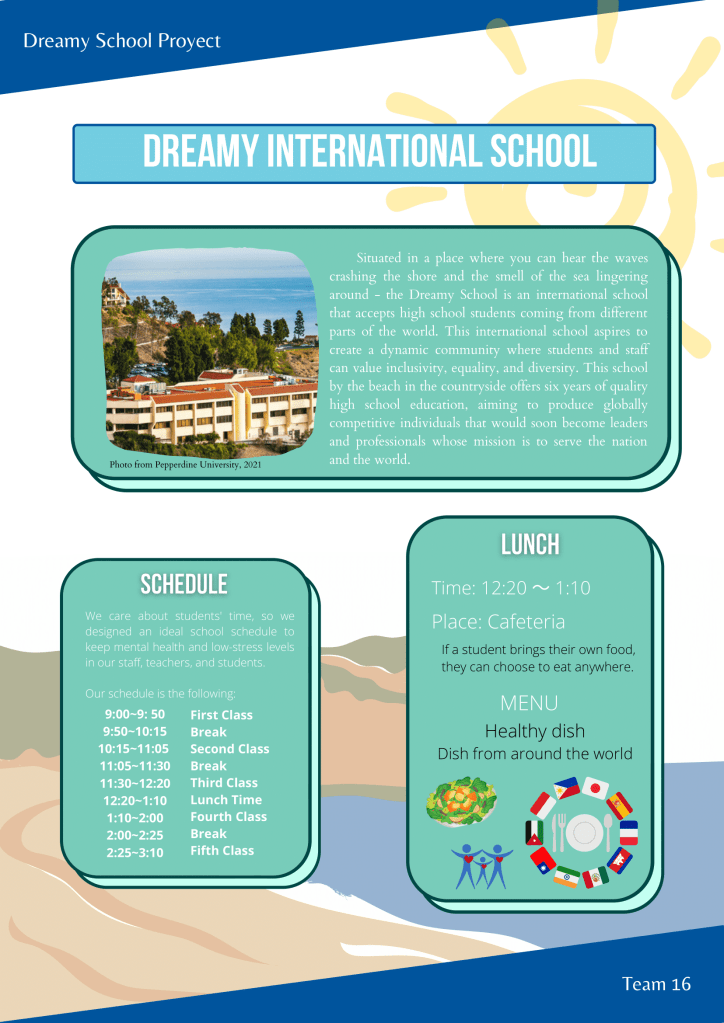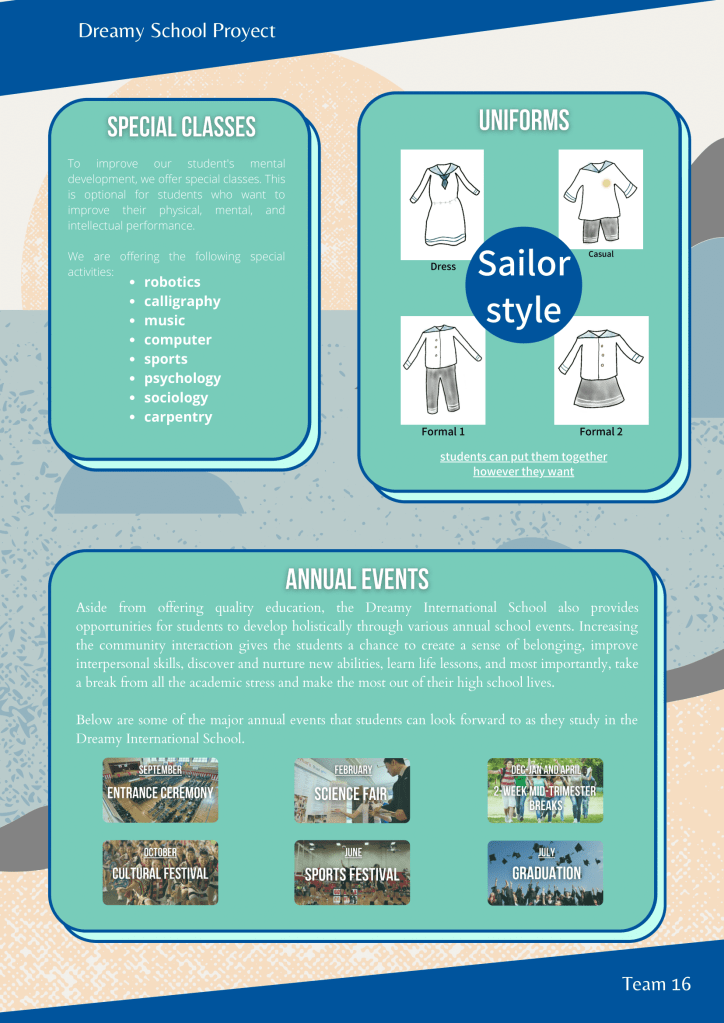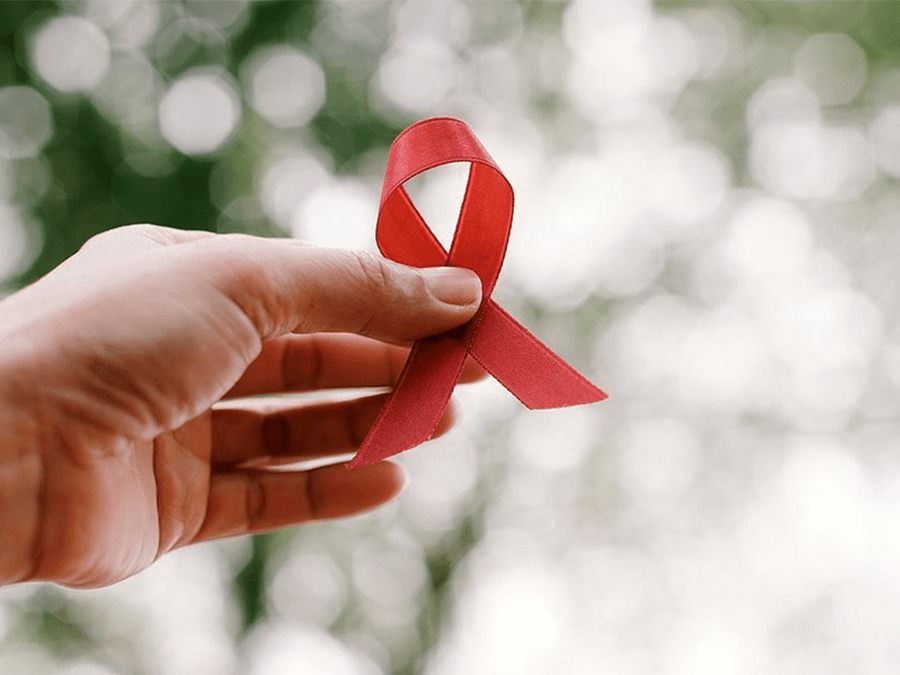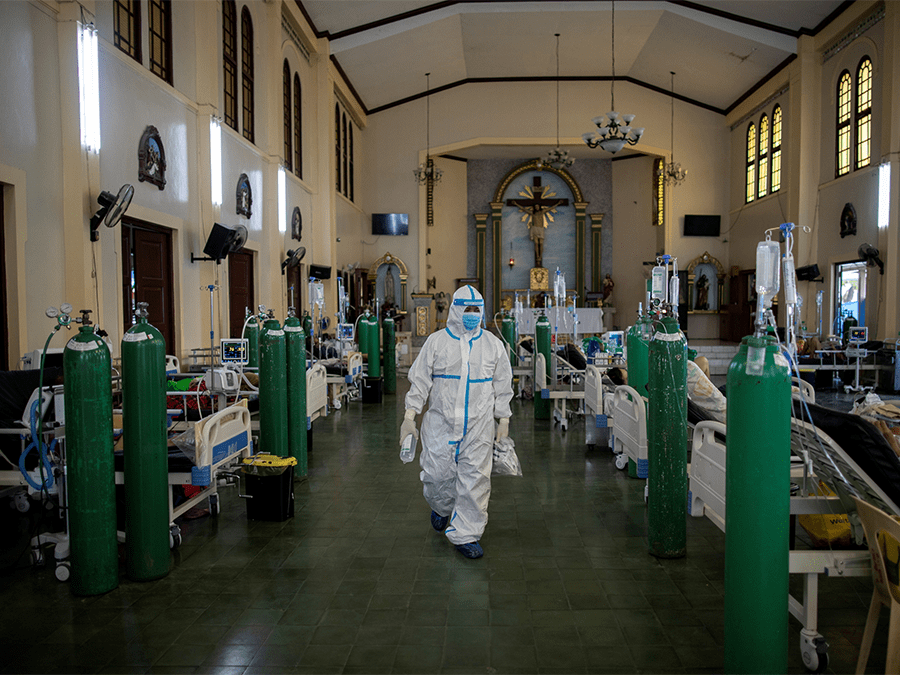
AIDS: The People Seen as Nothing But Their Blood

by Christian Lawrence M. Tan || Photo Credit: Everyday Health

We live amongst people with all sorts of illnesses, from the hypertension your grandmother might have to the diabetic cousin anyone could have. However, why is a full-blown freak-out the first reaction to HIV? People think their blood is filthy, soiled as the rag you use to wipe your dinner table, or like a wound that never heals and spreads like wildfire just by being near. All the people ever see in them now is their blood and what stains it.  

Fear-mongering by the media makes it worse, as the stigma only grows with knowledge. People are scared because they know of it, but their hostility comes from not knowing about it. They are aware of the danger the disease itself poses but feel justified in their scorn of the afflicted because they don’t know how it feels and has no desire to contract it themselves. Despite all the knowledge available to the average person about this stigma-clad disease, anyone and everyone can still be ignorant.  

HIV stands for “Human Immunodeficiency Virus.” It attacks the body’s immune system until it begins to struggle against other diseases. If left untreated with antiretrovirals for long enough, it develops into the condition known as AIDS (Acquired Immunodeficiency Syndrome). By then, the human body is so weak to infection that something like a little cut can be life-threatening. As an STD, it is spread through sexual contact, or mediums such as blood, semen, and vaginal excretions. 

One would think that there would be more sympathy from the common man given all the information of what HIV/AIDS positives suffer through, but that is unfortunately not the case. And so the big question is: do they really deserve it? After all, it is not as if they willed it. The logic that victims go about philandering in an attempt to catch it on purpose is simply foolish. By judging them and isolating them from society, you ostracize these suffering individuals simply because you hold prejudice against them.  

Some might say they are being punished for their carelessness and being ‘impure’, but again, does one see themselves planted on the ground before they even spot the rock they will trip on? People like to pretend they’re in the right because they feel that they can see the situation unfold from all sides, but they fail to consider what it might actually be like for the person suffering.  

Breaking down the barrier is the first step of creating an environment where one can freely reach out. There shouldn’t be a difference in how people with HIV or AIDS are treated. Place yourself in their shoes for you to understand them better and for you to grow as a person from it. It is time to stop seeing these people as filthy-blooded monsters, and rather a time to regard them as the good average person they were, and still are, supposed to live as. 

PSHS-EVC participates in the 18th NYC

by Katharine Manalo || Photo Credits: NYC Fb Page

The Philippine Science High School – Eastern Visayas Campus (PSHS-EVC) obtained a set of achievements as selected Grade 12 students participated in the 18th National Youth Congress (NYC), held last November 20-21 via Zoom, alongside other Filipino high school students. 

The NYC is an annual congress presented by the University of the Philippines (UP) Economics Society and UP School of Economics Student Council. The event aims to provide high school students with an engaging introduction to economics and to demonstrate the power of economic analysis in clarifying relevant societal issues. This year, with the theme, “Descend to Ascend: Moving towards Genuine Development for an Empowered Nation”, the convention highlighted the importance of human welfare in development through a series of talks and activities centered on the role of economics and the youth in developing people-centered policies and initiatives. 

Erika Flanco, one of PSHS-EVC’s delegates, finished as champion for the CAPTURE: Infographics Making Competition. Flanco’s winning piece was composed of imagery that showed how the world looked during the initial implementation of lockdown. According to her, the airplane routes incorporated in the infographic were inspired by how everyone rushed back to their hometowns. She noted that one may also view it from the perspective of the virus spreading and inevitably affecting the various sectors— including wage workers, urban poor, women, and children, overseas Filipino workers, persons with disabilities— that are the central focus of the infographic.  

Flanco emphasized, “The overall goal was to inform our fellow Filipinos on their [sectors’] current disposition.” 

Besides the CAPTURE contest, she also competed in the INK: Visual Arts Competition.

Jim Yvene Cadion, Julianna Nebrija, and Bryan Dela Cruz placed as semi-finalists in the SMART: Idea Pitch Competition. Cadion and Dela Cruz qualified as semi-finalists in the Economics Quiz Bee, with Jun Kwon Shin and Jean Lourd Misa as their substitute representatives. Dela Cruz also participated in the INK: Essay Writing Competition. Nebrija and Misa along with Kirsten Casas competed in the GLIMPSE: Video Making Competition. The delegates were coached by Economics teacher Emman Patata. 

Patata shared that he was proud of all the delegates for being able to share their outstanding outputs with the rest of the country. According to him, he recognized the willingness of the delegates to make the world a better place, and he wanted to provide a platform for the students to apply what they learned in his subject to gain a deeper comprehension of real-world, societal issues. 

“I wanted them to use their talents, to have their voices and ideas be heard by their fellow youth nationwide… if we can see talents from our students, we should encourage them to use it for the greater good,” he expressed.

Delta Variant Continues to Wreak Havoc

by Clarence Tabinas || Photo Credit: Reuters

The pandemic has been ravaging the world for almost two years now, with people anxiously hoping for an end to the crisis. But instead of stopping, more and more variants continue to emerge through the mutation of SARS-CoV-2. Among these variants, however, one has become a cause for concern because of its increased transmissibility.  

Lineage B.1.617.2, more commonly known as the Delta Variant, first emerged in India last October 2020.  It is twice as infectious as other strains of the virus, primarily because those infected with this variant can carry up to 1000 times more viruses than those infected with the original strain. As a result, one person can infect about 9-13 people in a short time. 

Symptoms of Delta include headache, sore throat, and runny nose— slightly different from those associated with the original strain.  Although it is more infectious than other variants, there is still no proof of Delta causing more severe symptoms. Data-gathering resumes throughout the world in order for scientists to become more familiar with this strain and for preventive measures to be set in place.  

The Delta Variant had been one of the reasons for the second wave of infection in India. Regarded as the most populous democratic country in the world, India had descended into chaos as large numbers of cases arose. Firewood became a resource of great importance as it was used for the cremation of thousands of dead bodies. 

The variant continued its spread to over 98 countries in a matter of months. On August 31, 2021, the World Health Organization (WHO) announced that the Delta variant had become the dominant strain in the Philippines, and as of September 21, 2021, the variant has spread to 185 countries worldwide.  

Vaccination remains the best method of prevention. According to research, unvaccinated people are still five times more likely to be infected than those vaccinated and 25 times more likely to be hospitalized. Furthermore, vaccinated individuals are at risk of spreading the virus at a shorter time than those who are not. However, though many have already received their vaccines, wearing masks and observing physical distancing are still needed as breakthrough cases increase.

STEER: SARS-EVC conducts career talk

by Gab Segura || Photo credit: SARS (PSHS-EVC)

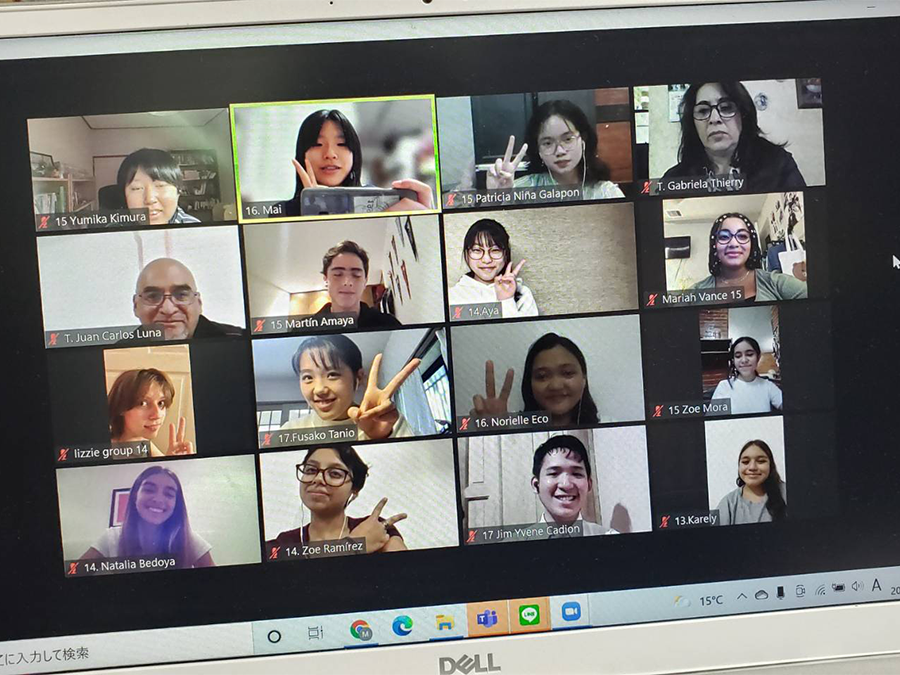
In an effort to bolster interest in research amongst the Philippine Science High School – Eastern Visayas Campus (PSHS-EVC) student body, the Society for the Advancement of Research in Science (SARS) organized STEER: Scholarly Talks to Encourage and Empower Research. The event was held last November 19, from 1:00 to 4:00 pm.  

The event commenced with a speech by SARS President Vean Cordero, welcoming the student body. Mr. Numeriano Gutierrez provided closing remarks. Two scientists, Dr. Thomas Edison dela Cruz and Ms. Joy Ann Petronio-Santos, introduced by Mr. Carlo Apurillo and Ms. Janeth Morata, respectively, provided insightful career talks detailing their inspirations and struggles. In between were games with prizes consisting of merchandise bearing the SARS logo, furnished by EVC’s own FabLab. 

Dr. dela Cruz, an expert in Microbiology and professor at the University of Santo Tomas, spoke of his experiences researching myxomycetes both locally and abroad as well as his efforts to draw attention domestically through establishing a shop for fungi. The efforts included holding workshops on their identification, and promoting them as an avenue for ecotourism. He emphasized that a study should not be hindered by its possible economic returns—citing his deep fascination with slime molds despite their unprofitability— and that it is essential to cultivate a passion for science among all walks of life.   

A University Researcher at University of the Philippines – Diliman and Vice President of Manila HealthTek Inc., a biotechnology firm, Ms. Petronio-Santos described the possible career paths for prospective scientists and gave advice on how to take new opportunities in order to advance in both the academe and the industry. In her talk, she also urged aspiring researchers to stay in the Philippines “para sa bayan” in order to strengthen the local scientific community, sespite the warning of the many struggles Filipino scientists face. 

According to SARS President Vean Cordero, STEER was intended to “increase [the student body’s] awareness and knowledge of some research careers that they may be interested in pursuing in the near future.” She hoped that the event would “pique the interest of our scholars and encourage them to eventually take up research as a career or at least push them to continue researching even after graduating college” and that it would paint a picture of what it means to be a Filipino scientist.  

What’s Beneath a Solar Panel?

by Jim Yvene Cadion || Photo credit: Energy Department of the US

There is something crucial, yet inconspicuous, about the sun. 

It is behind the fame of the world’s dominating energy sources, such as fossil fuels and hydroelectric power. Both the chemical potential energy in fossil fuels and the kinetic energy used by hydroelectric power is essentially derived from solar energy through a series of energy transformations. With the advent of new technologies, solar energy can be utilized more directly through the use of solar panels. 

We sometimes stare at solar panels with no idea how they work. Using these to generate electricity seems like creating energy out of thin air. How is this possible? How could light be converted to electricity almost instantly? 

The answer is that it is made possible through the atomic enigmas of photovoltaics.   

Photovoltaics is the direct conversion of energy carried by electromagnetic radiation into electrical energy at the atomic level. This phenomenon, called the photovoltaic effect, was first observed by the French physicist Alexandre-Edmond Becquerel in 1839. It is based on the photoelectric effect, a phenomenon first explained by Albert Einstein wherein photons or particles of light carrying sufficient energy are able to knock and release electrons from atoms. When electrons are released, they are able to move more freely but are typically tricked to our advantage into flowing through electrical circuits. This movement of electrons is the electric current, which is what the process aims to generate.

Utilizing photovoltaic technology becomes advantageous as the earth intercepts an astronomical amount of solar power— a total of 173,000 terawatts, a magnitude more than 10,000 times the world’s total energy consumption, according to Washington Taylor, a physics professor at the Massachusetts Institute of Technology (MIT). This makes its generation of energy sustainable, unlike fossil fuels— which are estimated to be depleted by 2060, according to the Millennium Alliance for Humanity and Biosphere.  

In addition, its generation of energy does not emit harmful greenhouse gases in comparison to fossil fuels, which account for the emission of billions of metric tons of carbon dioxide annually. This consequently makes photovoltaic technology exceptionally beneficial in alleviating climate change. 

Given its clean and sustainable features, photovoltaic technology appears to be a better option than fossil fuels, especially now that we are dealing with fossil fuel depletion and climate change. However, there is more to this than meets the eye. 

Solar panels provide an inconsistent energy supply for most areas of high energy demand since it only works during the daytime and in favorable weather conditions. Making this energy source consistent requires efficient storage of energy and efficient power grids that could distribute electricity from areas with prolific sunlight to areas under the shade. However, with current technology, this would mean large price tags and uselessness, as more energy dissipates when longer transmission lines are used.  

Another challenge that photovoltaic technology faces are its inefficiency. According to the United States Solar Energy Technologies Office, most commercial solar panels have mean efficiencies of 15-20%— percentages far lower than fossil fuels’ mean efficiencies, which range from 35-45%.  

Although the sun imparts a great amount of energy, present-day photovoltaic technology could only harness less than a speck of it. Principal dependence on this technology remains not completely feasible. 

With further innovations, however, this may be possible in the future. Priorities on tackling related challenges, such as climate change and energy resource depletion, depending on the perceived opportunity costs and the specific assumptions we have to make when trying to solve such multifaceted problems. 

But, the transition towards direct capture of solar energy is a mere walk in the Labyrinth filled with hedges of technology, economics, and politics. 

PSHS-EVC Minecraft “Build-A-Lab” Challenge comes to a close

by: Gabriel Vinci Tamayo || Photo credit: Student Aliance PSHS-EVC

The PSHS-EVC Minecraft “Build A Lab” Challenge, organized by the PSHS-EVC Chemistry Unit in cooperation with the Student Alliance, was held as a way of showcasing the creativity of students. Contestants were assigned to design a laboratory, and videos of which— serving as virtual lab tours— were posted on the EVC Direct Facebook page. 

The event officially commenced on October 1, 2021. Participants were given two weeks to work on their projects. Five entries were submitted in total for this event: three entries from Category A and two entries from Category B, all of which were ranked based on the judges from the Chemistry Unit’s opinions and the online votes. The winners of the competition were announced last November 17.

Of all the entries, Giovanni Ignacio and the group of Louise Lelina, Gabrielle Cordeta, and Jezrel Saño, finished as champions for Category A and Category B, respectively. In second place were Chad Merontos for Category A and the group of Justin Tabao, Vehuel Bateo, and Ruan Baillo for Category B. Third place was awarded to Mikael Yuan Bacani. 

The winners were awarded prizes such as writing tablets, headphones, and a ring light to help ease their online learning experiences. 

“It was a fun experience. Tiring, sure, but, despite that, it was still quite memorable,” the Category B champion, Jezrel Saño,  stated.

2020 Summer Paralympics: A Beacon of Hope amid Pandemic

by Gabriel Segura || Photo credit:

“You are the best of humanity and the only ones who can decide who and what you are.” 

Andrew Parsons, the International Paralympics Committee President, spoke to the 4,537 athletes participating in the 2020 Tokyo Paralympics, declaring them “beacons of hope” as the world collectively faces the COVID-19 crisis. His speech was followed by grand displays of pomp and circumstance, staples of the Paralympics’ prestige. 

However, these flamboyant displays could not hide certain somber realities.  

Inside the stadium, the silence usually filled by the cheers of a live audience was palpable, and the absence of the Afghan team reminded one of the current political unrest in the region. Outside, the cries of a dissatisfied Japanese public called attention to questions left unanswered by the government; while the sporting events went on, Japan was facing its then-worst COVID-19 outbreak, with a record number of daily cases and Tokyo hospitals filled to the brim.  

The pandemic was not the only concern raised by the public— the ghost of the 2010 Fukushima Daiichi nuclear meltdown, which claimed more than 18,000 lives and rendered the surrounding landscape barren to this day, loomed large, as Olympic proceedings were held as close as 20 kilometers from the former power plant. 

The six athletes of the Philippine delegation consisted of three two-time participants and the rest competing for the first time. Buoyed by the success of Hidilyn Diaz and the fact that the Philippines had consistently won medals since 2012, both the delegation and the nation were enthusiastic and exuberant— but the path would be fraught with struggles. Due to hospitals overflowing with patients, gyms had been repurposed as quarantine facilities, leaving them with no adequate training venues. On top of that, the efforts of three athletes would come to naught: on August 22, powerlifter Achelle Guion, set to leave for Tokyo, tested positive for COVID-19. A week later, discus thrower Jeanette Aveceda would also test positive, as well as taekwondo competitor Allain Ganapin on September 2. 

Though they set their personal bests, swimmers Ernie Gawilan and Gary Bejino did not advance in any of their events, save for Gawilan in 6th place in the 400-meter freestyle. Wheelchair athlete and ASEAN gold medalist Jerrold Mangliwan fared similarly despite a record-breaking run in the T52 classification, finishing 6th in the 1500-meter race in a personal best and 7th in the 400-meter race, setting a new Philippine national record, but he would be disqualified for a lane infringement infraction. 

While the losses may be disappointing, the nation’s continued participation in the Paralympics is always a positive. The value of the games goes beyond mere athletic recognition and to the broader cause of visibility and understanding toward the fifteen percent of the global population living with disabilities. While the current circumstances have proven difficult, the ardent spirit of the disabled community remains unbroken.

PSHS-EVC brings home First Prize in 2021 RICE Eastern Visayas

by Bryan Justine Dela Cruz || Photo Credit: DOST-TAPI

Philippine Science High School – Eastern Visayas Campus (PSHS-EVC) proves once more that it is unrivaled in research and innovation in Region VIII  after securing first place in the Sibol Award for Outstanding Student Creative Research Category High School at the Regional Invention Contest and Exhibits (RICE) Eastern Visayas, held last November 12. 

The competition was organized by the Department of Science and Technology – Technology Application and Promotion Institute (DOST-TAPI) in collaboration with DOST Regional Office No. VIII to recognize exceptional contributions and ingenious innovations of young Filipino inventors and select qualified research projects for the National Invention Contest and Exhibit (NICE). The competition allowed students from public and private schools around the region to showcase their research projects and served as an avenue for the youth to engage in research and development. 

Dunn Zander Alpar, Angelo Ryan Dolina, Israel John Peñalosa, and Nico Quimsing, recent PSHS-EVC graduates, represented the school in the said competition with Mr. Jesse Estoque, a Computer Science teacher of PSHS-EVC, as the team’s adviser.  

During the awarding ceremony, which was streamed virtually on the DOST-TAPI official Facebook Page, the team’s entry “Project FRIES: Freshwater Morphology Information Gathering System” was announced as the First Prize Winner from among several entries with an average score of 83%. They won 20,000 pesos and the chance to represent Eastern Visayas on the national stage of the competition in 2022.  

“Pisay’s curriculum trained us for the panel defense since the intensity of the competition was similar to what we had gone through in STR. Honestly, we are just glad that we were able to present our research in front of esteemed engineers and researchers around the region and bring home another trophy,” Dolina said. 

Mr. Estoque said that he had a positive experience working with the team and was confident that they would do an excellent job defending their device during the panel interview since they worked on Project FRIES for more than two years. “Winning was a beautiful bonus,” he added. 

“Supervising them was a breeze actually, most probably because they have already been trained under Engr. Vinci Gabumpa. I also saw their eagerness to participate in the event,” Mr. Estoque shared. 

The team members hope to inspire the next generation of innovators and researchers from PSHS-EVC to explore the complexity of technology and the ideas in their minds just waiting to come alive. “I hope more students from EVC will appreciate research, particularly tech-related projects, since they can really change the world,” Dolina mentioned. 

Despite pursuing different career paths and attending separate universities across the country, the members will continue improving Project FRIES.  

“As for the next step of Project FRIES, since our research qualified for NICE, we might opt to add the features that the engineers suggested during the panel defense,” Dolina replied when asked about the future of Project FRIES.

Millions Lost as COVID-19 Test Kits Expire

by: Nathan Dela Torre || Photo Credit: CNN

In March of 2020, the Philippines reported its first COVID-19 case, resulting in the government imposing the first of many community quarantines. With more COVID-19 cases being reported every day, the government has been tasked to strengthen its COVID-19 response, including the push for mass testing. 

Yet, during the Senate Blue Ribbon Committee hearing held on September 21, 2021, it was confirmed by the Department of Health (DOH) that 371,794 COVID-19 tests from nearly 8,000 test kits had expired. The Committee had purchased these kits, amounting to P550 million, along with the Procurement Service – Department of Budget and Management (PS-DBM). 

“[…] In the middle of a situation where we were not testing enough… para tayong nagsusunog ng pera sa gitna ng napakaraming namamatay,” stated Sen. Francis “Kiko” Panglinan.

(In the middle of a situation where we were not testing enough… it’s as if we’re burning cash in the midst of so much death.) 

These BGI real-time Fluorescent RT-PCR test kits were manufactured on April 5, 2020, with an expiry date of October 5, 2020, and delivered from May 2-4, 2020, with a two-month shelf-life. This would mean that they had a six-month shelf-life, in comparison to the original specifications that the DOH provided, which stated that the kits would have 24 to 36 months before their expiry dates. 

In the same meeting, Pangilinan also pointed out that the Department of Health should have bargained for a lower price instead of paying fully for the kits. According to him, the Department of Health could have gotten a 25 percent discount for the near-expiry test kits, given that it is a practice in the industry that you can get a discount when the product is close to its expiration. 

On September 24, however, another issue was brought up at the Senate Blue Ribbon Committee hearing. One of the 14 tranches of 2,000 A*STAR Fortitude kits, worth P688 million, was bought at double markup even if it only had two months remaining shelf-life. 

This was confirmed by Mervin Ian Tanquintic, an inspector from PS-DBM. “During this inspection, Your Honor; it was a joint inspection by the PS-DBM and the DOH. Because of the need of the item, per DOH, it was acceptable even if they had a short shelf life,” said Tanquintic [in response to Sen. Kiko Pangilinan].

More than 300,000 Filipinos could have been tested for COVID-19 if we were able to manage the COVID-19 test kits effectively. Moreover, the government should effectively manage the usage of these kits to avoid wasting funds. And finally, as we approach the second year of the pandemic, this setback pushes us further from achieving the main goal— going back to normal.

PSHS-EVC finishes as Champion in Celestial Brain Buster: Astro Quiz Bowl 2021 

by: Patricia Galapon || Photo Credits: PSHS-EVC Facebook Page

Philippine Science High School – Eastern Visayas Campus (PSHS-EVC) takes pride as three of its students bag the title, ‘Astro Quiz Bowl Champions,’ in the inter-school Astro Quiz Bowl held last October 30.  

The Quiz Bowl, with the theme “The Space Between Us: Entanglement Across the Distance,” was organized by the University of San Carlos Physics and Astronomy Society In celebration of Astronomy Week 2021. It was held via Discord and Zoom, with teams of three from 16 different schools participating. The event was streamed virtually on the USC Physics and Astronomy Society official Facebook page. 

Jim Cadion and Raven Blanca, Grade 12 students, and Jolinel Reoma, a Grade 11 student, were the school representatives for the event with Ms. Nikki Rabe, a Physics teacher, as the team’s coach. 

The grand tally revealed that the PSHS-EVC participants acquired the top spot despite being in a tie in the last round of the competition. “After the quiz bowl, our heads seemed to run out of brain cells because of the magnetar-like questions that obliterated most of them,” Cadion said. 

He also mentioned that although their group was intimidated by other participating schools, he found comfort in their team spirit and the effective reviews conducted by their coach. 

Ms. Rabe emphasized that trust and confidence within the team brought them to victory and added that their preparation included multiple review sessions, integrated with discussions that established the group’s teamwork.  

“I was really amazed on how broad their understanding and knowledge on Astrophysics and Astronomy is, even though most of it were not part of their curriculum,” she shared.