Glitz and Gutter: 100 days under Marcos

by Tiffany Glenne Afable || Photo Credit: Ashkinaz Canonoy

Slightly over a hundred days have passed since the Philippines witnessed another Marcos rise to the highest seat of power. Now, the people of the nation are left asking what exactly has the new administration accomplished under his regime. 

It has been a long-standing tradition for the President of the Philippines to mark their first 100 days in power with an accomplishment report. The advent of this tradition could be traced back to U.S. President Franklin D. Roosevelt during the Great Depression in 1933. This was then adopted by the Philippines under the administration of 11th President Corazon C. Aquino, where she outlined her government’s activities in the first 100 days. However, 16th President Rodrigo Roa Duterte broke the tradition by declaring his achievements for the first 50 days—rather than a hundred—with a “50firstdays” campaign. 

Marcos, too, has broken the 100 days tradition, albeit differently. 

“Unlike his predecessors, President Ferdinand “Bongbong” Marcos Jr. is not keen on releasing a report for his first 100 days in office and is actually wondering if it was necessary,” Executive Secretary Lucas Bersamin said in an interview a week before the President’s official marking of his first hundred days. 

The people of the nation, therefore, took it into their own hands to retrace President Marcos’s achievements and milestones over his first 100 days in office.

Health 

As the Philippines continues to face the pandemic, one would believe that a leader’s first priority is the country’s state of health. However, the seat of the Department of Health (DOH) Chief Secretary remains deserted, with only the Officer-in-Charge, Maria Rosario Vergeire, currently holding the reigns. The absence of a full-time DOH chief secretary only further exposes the plight of the country’s health workers amidst the pandemic as they find themselves overworked and underpaid, with some resorting to seeking better pay and more lenient working conditions abroad. 

“We have to remember that the DOH is not about COVID alone. It’s about public health in general. That’s another side of it, and it’s as important as COVID is,” said the President regarding the people’s concerns of who is meant to lead the Philippines towards the end of this health crisis.

Economy

The economic crisis also takes its spot as one of the country’s most pressing issues. Although the direness of this situation is felt across all parts of the world, it has strongly taken its toll on the people as most Filipinos feel the burden of high prices yet low pay. Farmers and fisherfolk expressed their suffering as they shared how the prices of commodities, transportation, and utility costs keep rising at a staggering rate while no substantial aid is being provided. 

According to the Philippine Statistics Authority, inflation quickened 6.9% year-on-year in September 2022, which was much faster than the 6.3% recorded in August. In fact, the country’s economic team confessed that it is most unlikely for the Philippines to meet its inflation target this year.

Read: The Philippine Sugar Crisis 

Marcos on his first 100 days

When asked about his administration’s performance for the first 100 days, Marcos responded, “I think what we have managed to do in the first 100 days is put together a government which is functional and which has a very, very good idea of what we are targeting in terms of strict economic targets.”

He also affirmed his gratefulness for his economic managers who helped transform the economy during the COVID-19 pandemic and will continue to do so in the coming years. 

The President also highlighted the success of his recent engagements, such as his conversations during the United Nations General Assembly (UNGA) and his state visits to ASEAN countries, namely Indonesia and Singapore. 

However, his SG trip sparked controversy as the Marcos couple were spotted enjoying their time in the exclusive F1 Paddock Club, along with their son Ilocos Norte Rep. Sandro Marcos, House Speaker Martin Romualdez, and a few dignitaries, only days after the devastating Typhoon Karding hit the Philippines. Fuel was only added to the fire as photos of the event also revealed the attendance of House Speaker Romualdez’ wife Rep. Yedda Romualdez and Sandro Marcos’ rumored girlfriend, actress Alexa Miro. The situation garnered much criticism as people labeled the trip to be “ill-timed” and ignorant of the suffering of the Filipinos. 

Despite the backlash the First Family received, former Press Secretary Trixie Cruz-Angeles wrote in a post on October 3, “Naging produktibo ang pagdalaw sa Singpore ni Pangulong Ferdinand Romualdez Marcos Jr. Pinagpatibay niya ang mga pangunahing usapan sa huling state visit sa bayan na ito, at pinatuloy ang paghihikayat sa pag-invest sa bayang Pilipinas.” 

[Translation: “The visit of President Ferdinand Romualdez Marcos Jr. to Singapore was productive. He strengthened the initial discussions from his earlier state visit and continued encouraging investors to invest in the country.”]

When the people demanded transparency on the funding of the Grand Prix trip, Executive Secretary Lucas Bersamin said, “It’s beyond the issue. It’s not relevant at all to question, to ask kung sino gumastos. Basta he [Marcos] was doing something for us.” 

He also added that it “shouldn’t be a problem” if public funds were used for the official trip, although it is important to note that the Palace did not officially inform the public of the First Family’s Singapore trip beforehand. 

The first 100 days and what it signifies for the country

Although some believe Marcos to be unlucky for inheriting an enormous debt and a slew of problems that were brought about the pandemic and the incompetencies of the previous administation, it is still part of his duty to minimize the worst effects of this crisis so that the people of the country do not suffer any further. But when all that Filipinos can witness are frequent partying and inadequate action, it is no surprise that the questions and protests only grow louder.

Even if a hundred days are not enough to draw a conclusion for where the current administration is going to lead us in the next 6 years, it provides us enough of a glimpse of who might abandon this ship once its starts sinking. 

The country can only hope it is not the captain of our nation. 

DART: Redirecting asteroids for planetary defense

by Nathaniel Dela Torre || Photo Credit: NASA/Johns Hopkins/Handout via REUTERS

On the 26th of September, at 7:14 p.m. Eastern Daylight Time, National Aeronautics and Space Administration’s (NASA) Double Asteroid Redirection Test (DART) successfully made its impact with the asteroid Dimorphos as a part of NASA’s overall planetary defense strategy. This event turned out to be the first-ever time NASA had been able to change the motion of a celestial object and the first time it had ever demonstrated asteroid deflection technology.

NASA has deemed Earth as ‘no longer powerless’ against potential earth-bound comets and asteroids. DART serves as NASA’s first demonstration of kinetic impact as a part of its overall planetary defense strategy. This demonstration was an opportunity to test whether kinetic impact is viable in mitigating an earth-bound asteroid or comet (NASA, 2022).

As mentioned, the mission made use of the kinetic impact technique. According to NASA (2015), kinetic impaction involves sending one or more large, high-speed spacecraft into the path of an approaching near-earth object. In this case, the smaller DART spacecraft targeted Dimorphos, a moonlet of a larger asteroid named Didymos, in hopes of redirecting its orbit. 

Before the collision, Dimorphos takes around 11 hours and 55 minutes to orbit its larger parent asteroid, Didymos. The mission aimed to alter the smaller asteroid’s orbit by at least 73 seconds or more. It is important to note that neither asteroid poses a threat to Earth.

On November 23, 2021, the SpaceX Falcon 9 rocket was launched, and carrying along with it was the DART spacecraft. The launch took place at the Space Launch Complex 4E, Vandenberg Space Force Base in California. The DART spacecraft itself is low-cost, with dimensions of roughly 1.8 meters in width, 1.9 meters in length, and 2.6 meters in height.

On September 11, a spacecraft was ejected from DART. This spacecraft is called Light Italian CubeSat for Imaging Asteroids (LICIACube), and its primary purpose was to capture photos of the collision up close. The impact was successfully made on the 26th of September the following year, 10 months after the initial launch. Two days after the collision, on September 28, LICIACube uploaded its first images of the event. They will be used to add relevant information about the generated plume. 

After two weeks of looking into the results of the mission, NASA held a media brief that occurred on Tuesday, October 11. The agency revealed that the DART mission has successfully altered Dimorphos’ orbit by 32 minutes, shortening the asteroid’s orbit to 11 hours and 23 minutes. DART’s investigation team will continue to look into the images produced by LICIACube and other ground-based observatories.

DART’s success proves to be another leap for mankind as we prepare to defend ourselves from potential disasters. This first step towards planetary defense opens up more possibilities and more potential missions in the near future.

PSHS-EVC Awards its Scholars in Pasidungog 2021-2022

by Patricia Galapon || Photo Credit: Floydalyn Nitura

To our dear students, Antonio Brown once said: “The journey is never-ending. There’s always gonna be growth, improvement, adversity; you just gotta take it all in and do what’s right, continue to grow, continue to live in the moment.”

The Philippine Science High School-Eastern Visayas Campus (PSHS-EVC) held Pasidungog 2021-2022: The Virtual Recognition Program last October 7, 2022, in honor of the exceptional skills and academic excellence showcased by the PSHS-EVC students in the previous academic year. The event took place at the PSHS-EVC Gymnasium, while simultaneously being streamed through the EVC Direct Facebook Group.  

Grades 10 to 12 students and all members of the school faculty were invited to witness the recognition program at the campus gymnasium during the universal break last Friday at 4 PM.

The program commenced with an invocation and the singing of the Philippine National Anthem. It was then followed with the warm, welcoming remarks of Ms. Yvonne Esperas, the Campus Director. Dr. Alfred J. Miralles, a PSHS-EVC alumnus, also delivered a keynote address to further motivate the scholars to continue persevering in future endeavors. “Slow and steady wins the race,” he emphasized throughout his speech. 

The announcement of the director’s listers and awardees of SY 2021-2022 followed afterward. The Curriculum & Instruction Division Chief, Mrs. Ana Riza Gozon, introduced the student awardees, beginning with the lower grade levels and finishing off with the senior year students. Amidst the program were intermission numbers by talented scholars, Troyann Justin Pallones and John Luwenzky Jorge, who showcased their musical prowess.

Mr. Dennis Juabot, the Students Services Division Chief, concluded the event by expressing his gratitude to all participants and facilitators for their contribution to the program’s success.

Mass Shooting: Over 30 people killed by former police officer at a local day-care center in Thailand

by Daneil Anthony N. Cerdeña || Photo Credit: Arab News

Trigger Warnings for the content of this article: Violence and mentions of suicide

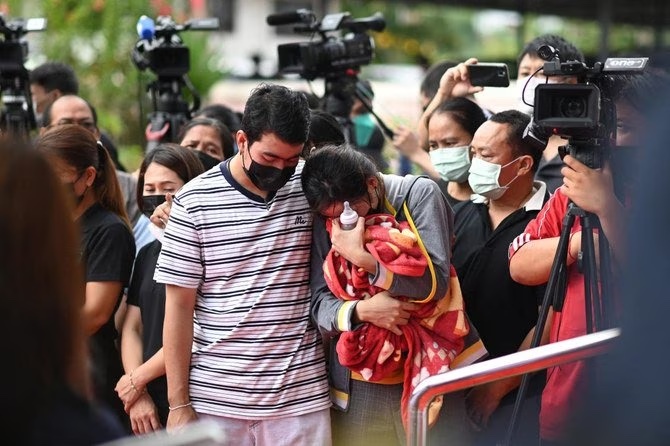
Last October 6, 2022, in Uthai Sawan, Nong Bua Lamphu, Thailand, a local day-care center shifted from being a positive place to instantly becoming a historical area due to a former police officer going on a rampage—resulting in the death of over 30 people, mainly children.

According to Aaron Karp from the Small Arms Survey (2018), Thailand is estimated to approximately have 10 million civilian-held legal and illegal firearms. In the same year, 1,359 people died due to firearms (Alpers, Philip & Picard, 2022). However, mass shootings in Thailand are rare, with the last occurrence taking place in 2020 in Nakhon Ratchasima, Thailand, where a soldier killed 29 people due to rage. However, that has changed due to the daycare attack.

The gunman was Panya Khamrab—a 34-year-old former police officer discharged from service due to his case: alleged possession of drugs.

On October 6, 2022, Khamrab attended a court hearing regarding his case. However, according to the Royal Thai Police, he was supposed to receive his verdict on October 7, 2022.

After the hearing, Khamrab directly went to the local nursery in Nong Bua Lamphu to pick up his son, although when he arrived, his son was nowhere to be found. He then began attacking civilians. 

Khamrab shot both the adults and staff in the daycare. In his rampage, he stabbed a group of sleeping children in a room, among other horrible atrocities. The police then stated that he fled the scene with his pick-up, shooting random passers-by while driving back home.

The attacker used a 9mm gun he legally acquired; however, most of the killings were committed by stabbing victims with a knife, the police added.

“We surrounded the house and then found that he committed suicide in his home,” Police Chief Damrongsak Kittiprapat said. He also added that Khamrab killed both his wife and son before killing himself. 

His attack is now the newest addition to the various massacres in Thailand’s history, with more than 30 people killed through shooting or stabbing by this former police officer. 

However, most of the children from the class were safe, as they were absent due to recent floods, preventing them from coming to the center.

Currently, it is unclear what motivated the attacker. He was, however, apparently under the influence of drugs, police spokesperson Paisal Lusueomboon told the Thai Public Broadcasting System (ThaiPBS) in a phone interview.           

Doctor Krisanaphong Poothakool, a local Thai criminologist and faculty member of Rangsit University, was also interviewed by ThaiPBS. He expressed that the Nong Bua Lamphu Massacre would not be the last of its kind and that Thai society should rethink the state of firearm possession in the country. Dr. Poothakool also suggested that a mental health screening should be conducted before an individual is allowed to possess a firearm.

The Thai government has started its commitment to solving this issue. Recently, the King and Queen visited the massacre victims at the local hospitals in Nong Bua Lamphu. In addition, ThaiPBS reported that in order to prevent gun-related violence, the topic of gun control will be brought up at a meeting of the House Committee on Police Affairs. 

Global figures all around have also shared their support and grief for the Thai people. The United Nations International Children’s Emergency Fund (UNICEF) commented on the tragedy by declaring that “UNICEF condemns all forms of violence against children. No child should be a target or witness of violence anywhere, anytime.”

In a tweet by the Australian Prime Minister, Anthony Albanese, he articulated, “It’s impossible to comprehend the heartbreak of this horrific news from Thailand. All Australians send their love and condolences.”  

“I am shocked to hear of the horrific events in Thailand this morning. My thoughts are with all those affected and the first responders. The UK stands with the Thai people at this terrible time,” Liz Truss, the Prime Minister of the United Kingdom and Northern Island, also expressed through a tweet.

Chadchart Sittipunt, Bangkok’s Governor, shared his thoughts in a tweet stating “การสูญเสียลูกคือโศกนาฎกรรมที่รุนแรงที่สุดของพ่อแม่ ผมขอแสดงความเสียใจกับครอบครัวผู้สูญเสียและผู้ได้รับบาดเจ็บทุกคน และขอเป็นกำลังใจให้พวกเราทุกคนผ่านพ้นช่วงเวลาที่หดหู่โหดร้ายนี้ไปได้ครับ [The loss of a child is a parent’s greatest tragedy. My condolences to all the bereaved and injured families. And I would like to encourage all of us to get through this gloomy time.].” 

This gave the Thai people hope since their government officials acknowledged the issue and would improve the current state to prevent a massacre from happening again.

Not All Heroes Wear Capes: To Every Teacher Out There

by Zenas Agnila || Photo Credit: Floydalyn Nitura

I can still vividly recall my earliest memory of a teacher.

Daycare can be downright hell for any 4-year-old who finds comfort in the familiar confines of home — and I was no outlier. 

School was uncharted territory, and I was a rogue ranger, aimlessly navigating its bounds unarmed, unaccompanied, and lost. The muffled crayon-scribbling and playful screaming of my new peers were overwhelming, so I resorted to the classroom’s corner, eyes watery and heart sunken. However, those tear-filled eyes were quickly replaced with a sparkle as the daycare teacher ran to my care, carried me in her arms, and proceeded to teach the lesson while holding my frail figure and patting me on the back in an attempt to soothe me. She saved me that day. And at that moment, a myriad of profound appreciation for these capeless heroes dawned on me — an appreciation that followed me throughout my academic journey and strengthened with every teacher I’ve ever had the pleasure of knowing. 

With their heroic powers of super memory, teachers are bestowed with the sacred responsibility of instilling lifelong knowledge in their mentees, a heavy role they play with an uncompromising heart. They are the pillars of every child’s formative years — the potters who intricately shape our otherwise formless clays of scholastic proficiency. It was a teacher who taught us how to divide a chocolate cake into equal slices, how to identify gerunds in sentences, and how to make our C++ codes actually work. Teachers make alien vocabularies and unfamiliar formulas seem like old friends. Teaching is a cherished skill very few can master, an art form harnessed to perfection by our humble hero educators.

Besides being conduits of timeless knowledge, teachers are advocates of life. For more times than I could count, these unsung paladins of the educational sector transcend from conforming to module topics to stepping out and being our portal into society. They enlighten us on social issues and practical life lessons, prepare us to be active members of our community, and open our eyes to the real world with all its injustices that we were never aware of until now. Teachers embed in us the virtue that there is more to school than flipping through the complicated pages of biology textbooks when the world needs a little flipping itself. Through their lives, we find the meaning of ours. The magical trail they lead is enough to leave a lasting imprint for us to tread the ways they once walked through, learn through their experiences, and make one for ourselves.

But their valor doesn’t end there. With us young children dedicating most of our bright hours to learning in school, our teachers’ mission is to create a safe space that feels like home. Their casual hallway greetings or whispers of reassurance after a particularly tricky exam feels like the warm, nurturing embrace we never knew we needed. With their parental fostering, every classroom transforms into a welcoming playground of boundless knowledge, and every laboratory becomes an abode of beakers and infinite research ideas. These heroic teachers make the school grounds less of a greyscale establishment of educational mundanity and more of an iridescent social bubble with homely comfort and creativity bursting at its magical seams. 

It’s true. Not all heroes wear capes — because I found my first hero in the form of a worn-out teacher who carried me in her arms and hushed my clamorous weeping to a minimum. And there are so many more in the shape of tireless educators who became my academic confidants, life mentors, and second parents. Although they fall just an inch short when put beside the more intrepid comic book superheroes, they still possess a certain superpower those masked vigilantes can only ever dream of: they prepare us to be the heroes in our own stories. 

 And I say that’s the coolest superpower ever.

Editor’s Note:

We at the Science Net are truly thankful for all the teachers out there who never fail to nurture us like we are their own children. As we soar and sow our gifts, we will always remember to be grateful to all of you who have lent us flight.

Happy Teachers’ Day!

Stench of the Philippine Economy: Why the Country Repels Foreign Investors

by Jana Maisei Venigas || Photo Credit: Nathalia Canlas

            Gas prices sit at scarily huge numbers. The daily commuter spends twice as much than they used to pay in past years. The dollar weighs heavier than it ever has to the Filipinos. These are just some of the effects resulting from the economic crisis the Philippines currently lives in. With the war between Russia and Ukraine, the rest of the world is having a difficult economic time, most especially third-world countries such as the Philippines. 

            Truly, international conflicts obstruct the economic growth of the Philippines, but could this really be the only reason? Should we completely disregard those with the power to change the course of things?

            From September 18 to 24, President Ferdinand Marcos Jr. traveled to the United States to speak at the United Nations General Assembly (UNGA). His goal in having done so is to secure foreign investors, emphasizing that the Philippines is a growing economy. Given the economic situation of the Philippines, foreign aid would help overturn the impacts in these times, as well as accelerate national recovery. However, foreign investors seem harder than ever to grasp.

            Despite Marcos’ efforts, it seems that foreign investors themselves turn away from aiding the Philippines. The Philippines is deemed unattractive for Foreign Direct Investment (FDI), according to Oxford Economics’ FDI scorecard. The scorecard heavily emphasizes the quality of infrastructure, which former president Rodrigo Duterte tried to salvage through his “Build, Build, Build” program. Still, the Philippines, as a developing country, faces the worst of the pandemic and the Russia-Ukraine economic effects. Having foreign investors refuse us not only exposes the deep lack of this country’s competency in economic development but also the deep financial hole our government has dug us into.

What directed away the appeal to invest in the Philippines?

            The attractiveness of a country to foreign investors is highly reliant on its quality infrastructure. But other than that, the Philippines also proves to have lackluster performance in other parts: firstly, the country’s funding for agriculture is inadequate. Its farmers scrape by, experiencing the lowest pays despite being the primary producer of the country. 

            Secondly, investors veer away from governments whose corruption leaks in large quantities. There is growing concern that the Philippines’ appeal to foreign investors is diminishing due to the uncertainty of the government’s integrity. 

            Statistics show that the Filipino people are poorer in 2022 than in 2018 [1]. But while there may be many factors that affect today’s poverty, such as COVID-19 lockdowns and the Russia-Ukraine war, there is no reason to believe this is a matter that cannot be helped. After all, the job of our country leaders is to assert themselves and initiate fruitful economic growth. Yet at times the country most needs it, the reek of the Philippine economy repulses foreign investors.

References

[1] https://psa.gov.ph/poverty-press-releases/nid/167972 

Seeking Greener Pastures Behind the Bars of SBP

by Kyle Andrew Abello || Photo Credit: FIBA/Inquirer.net

William Navarro, a player of the Gilas Pilipinas, was caught in the middle of an upset as fellow basketball stars and fans went to social media to express their dismay with the Samahang Basketbol ng Pilipinas (SBP) not giving Navarro clearance to play in the Korean Basketball Association (KBA) for the Seoul Samsung Thunders. 

“I’m sorry but this is crazy. THIS HAS TO STOP. You got players who’ve been working hard and dreaming to play basketball at the highest level they can reach and we got our own people stopping us from achieving greatness,” said Kai Sotto on Twitter after news broke out that the International Basketball Federation (FIBA) and SBP did not clear Navarro for the Korean Basketball League (KBL).

Other prominent basketball players, namely Greg Slaughter and Matthew Wright, also called out the actions of the SBP. Wright stated that Filipino basketball players still represent Pinoy Pride wherever they go, while Slaughter described their actions as ‘crab mentality at its highest.’

While it is true that the SBP should not withhold its players from grabbing opportunities that would better themselves as athletes, it is important to know the reasoning behind such actions. It would be unreasonable for the SBP to limit their players, so it begs to ask the question: why did the SBP not clear Navarro?

“The SBP respects players’ rights to look for greener pastures. But players also need to respect agreements they have entered into with their teams,” SBP said in a statement Sunday, Sept. 18. “Mr. Navarro has an existing contract to: 1) play for the national team, attend activities, practices, social and business functions and 2) with his undeniable agreement, be assigned to only and no other team or ballclub than his PBA drafting team, the NorthPort Batang Pier. The SBP does not intend to unduly prevent players from furthering their careers with other teams here or overseas. But it is a fundamental and ethical practice for players to honor their existing contracts with their mother teams.”

Based on the statement of the SBP, it is true that an athlete should uphold and honor their contract. Since Navarro still has an ongoing obligation, it would dishonor his contract if he would play in the KBL, hence SBP not giving him clearance to participate in the said stint abroad. The statements of his fellow basketball players may sound right, but in reality, it does not hold a legal basis.

However, it should be understood where the players are coming from. As athletes, they know the importance of stepping out of their comfort zone and maximizing every opportunity that comes their way, as it is what allows them to improve. They know how great the opportunity would have been for Navarro and how having exposure to playing abroad might even be beneficial for Gilas Pilipinas.

Although it makes more sense for the SBP to allow Navarro to let him spread his wings, this argument would have no legs in the court of law because of the presence of the contract that bars Navarro from reaching greatness and from having freedom as an athlete. 

Freedom is fundamental when expanding your horizons, but that freedom might be tainted by a contract. If there’s a lesson from this stirrup, it would be that if one wants to have the freedom to seek greener pastures, carefully review the contract that is to be signed, or better yet, don’t sign it at all.

Unity: Marcos’ solution to issues presented to the United Nations General Assembly

by Daneil Anthony N. Cerdeña || Photo Credit: Eduardo Munoz/Reuters

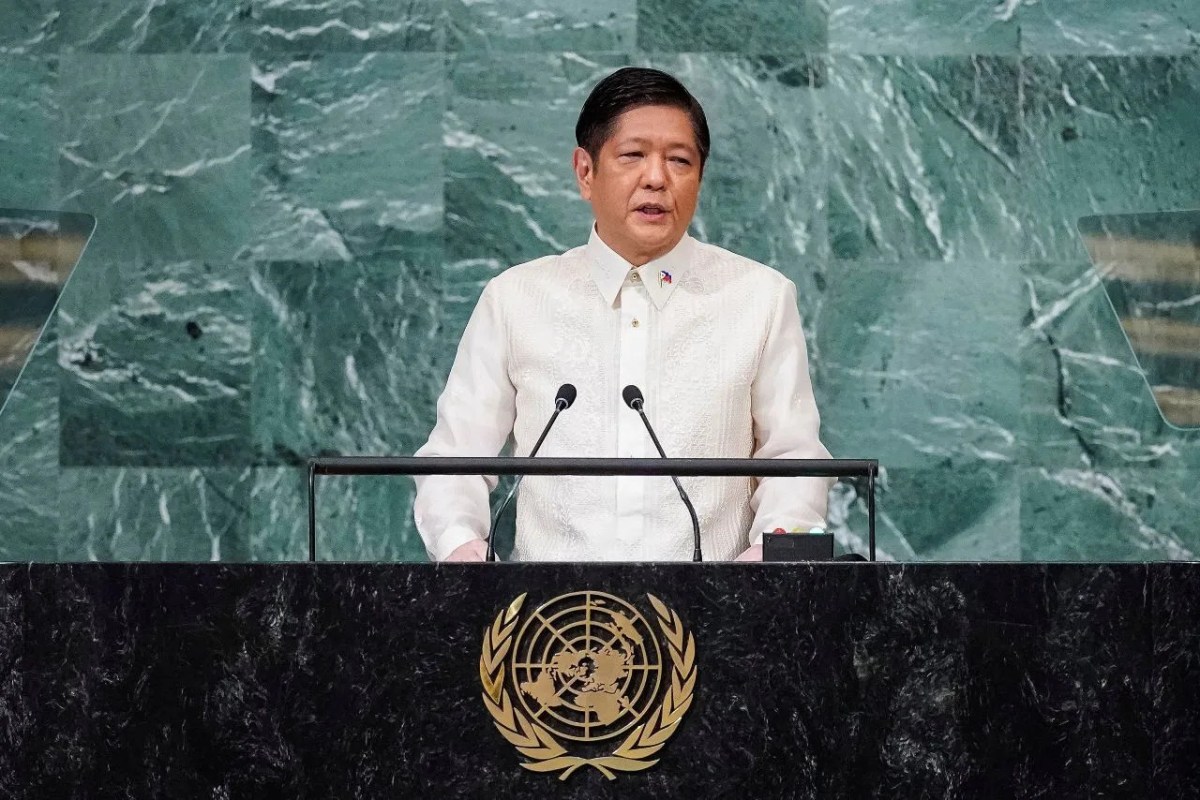
On September 21, 2022, the President of the Philippines, Ferdinand “Bongbong” Marcos Jr., represented the Philippines by speaking at the 77th Session of the United Nations General Assembly in New York.

“Climate change is the greatest threat affecting our nations and peoples. There is no other problem so global in nature that it requires a united effort, one led by the United Nations,” he commented about the need for climate justice as a global issue.

Marcos also talked about how advanced technologies are rapidly transforming human life. “We still barely understand how these transformations are unfolding and where they are leading,” he explained. He then addressed how the multilateral system of the United Nations is slowly crumbling due to an international lack of trust.

“The Philippines shall continue to be a friend to all and an enemy of none,” he added.

Lastly, he highlighted the injustice the Philippines faced during the pandemic. Marcos brought to light the unfair vaccine distribution by saying it is “evident during this pandemic when the richer nations immediately received vaccines at the expense of the have-nots.”

After discussing with the United Nations General Assembly, he offered a solution for the nations under the United Nations to stand in solidarity. “We need to reaffirm the wisdom of the founders of our United Nations. This means transcending our differences and committing to ending the war, upholding justice, respecting human rights, and maintaining international peace and security,” he expressed.

Marcos demonstrated the potential of unity and solidarity by mentioning the success of the Bangsamoro Autonomous Region in Muslim Mindanao as the centerpiece of the said efforts. He expounded that the peace our country has achieved after decades of struggle between warring factions and clansmen shows that “unity is possible even in the most trying circumstances.”

“The peoples of the world look to their leaders, to us, to make into reality these aspirations for our future. We must not fail them. And if we stand together, we will not fail them. If we stand together, we can only succeed,” he remarked, concluding his speech.

Fall Equinox: Embracing Autumn in a Tropical Country

by David Roberts || Photo Credit: Matt Cardy/Getty Images

“Autumn leaves falling down like pieces into place, and I can picture it after all these days”

– Taylor Swift, All Too Well (Taylor’s Version)

So the season of pumpkin spice lattes and crunched golden leaves is fast approaching, huh? Although we live in the tropics, that should not stop us from enjoying the beauty of the autumnal aesthetic. With this year’s fall equinox fast approaching, here are a few facts and folklore concerning this phenomenon.

The fall equinox takes place on September 23rd, marking the official start of autumn. However, that is only applicable in the Northern Hemisphere. For the Southern Hemisphere, it actually occurs in March. During the autumnal equinox, the sun shines directly above the equator from the North Pole, causing the hours of day and night to be equal in length. The word “equinox,” like solstice, is derived from the Latin roots “aequus” meaning “equal,” and “nox” meaning “night.”

This equinox also denotes the point at which nights begin to outnumber the days in the Northern Hemisphere, indicating less sunlight and a much colder temperature. No more beach days and tans, as scarves and thick coats will be your best friends. Moreover, the autumn season lasts until the winter solstice—the world’s shortest day.

With the autumnal equinox being such a complex and fascinating phenomenon, there are several cultures that come with it. 

For starters, it has a connection to the Aurora Borealis, also known as the Northern Lights. According to Janet Green, a physicist at the National Oceanic and Atmospheric Administration, geomagnetic storm disturbances in the Earth’s magnetic field are strongest around the equinoxes. This causes the lights to put on a spectacular show. If you want to check out the magnificent green lights and nature’s own sky show, the autumn equinox may be a good time to do so. Don’t forget to prepare your cameras!

The first bright blood-colored full moon, now referred to as the Harvest Moon, is closest to the autumn equinox and is well-known as the first full moon of the season. The tilt of the moon’s orbit relative to the Earth’s horizon is at its smallest, causing the full moon to emerge above the horizon much faster than usual for the couple of nights the Harvest Moon is present. This gives farmers more time to harvest summer-grown crops beneath the bright gleam of the Harvest Moon’s dark red glow.

The fall season is quickly approaching, as are the numerous cultural and recreational opportunities that come along with it. With this in mind, hopefully everyone will be able to appreciate the fall as the beautiful season that it is, despite being in a tropical country.

Grief and Grievances: Queen Elizabeth II’s Complicated Legacy

by Poimen Agnila || Photo Credit: Wio News

Queen Elizabeth II—the longest-serving monarch in the history of the British royal family, a symbol of aristocratic elegance, and the subject of countless internet memes about being quite the resilient geriatric—is a figure whose impact on modern history and pop culture is nothing short of universal. However, this international renown is also why her death has garnered its fair share of attention and, by default, controversy. So do not fret if you find yourself conflicted about whether to grieve Her Majesty or nurse grievances instead.

While she has devoted much of her life to engaging in humanitarian efforts (raising over $2 billion for more than 600 charities), strengthening global cooperation as Head of the Commonwealth, and serving the United Kingdom to the fullest of her abilities, the legacy the Queen left behind has been tarnished with claims of racism and colonialism. Mourning posts and heartfelt tributes clash with more cynical takes as the late monarch’s death sparks a growing social media debate on whether her memory should be celebrated or criticized. One can argue that it would be impossible for a reign as extensive and far-reaching as the Queen’s to not have its rocky bumps along the way; a few whoopsies here and there are absolutely normal. However, the nail that seals the coffin is the fact that these rumors are not completely groundless.

When the Queen ascended the throne in 1952 following the death of her father, King George VI, Britain was still battling freedom movements in Kenya and Egypt. Five years prior, India had just gained their independence and was granted partition from Pakistan. Less than a decade later, Sudan and Ghana broke free from Britain’s grasp and pursued an autonomous form of governance. The British administration took part in Kenya’s bloody Mau Mau uprising, carried out unimaginable acts of abuse towards Africans held in detainment camps, and became complacent in the perpetuation of racism and violence in the parts of the world they colonized. The freedom these countries have come to know isn’t just an epic tale of patriotism and bravery, but one that was endowed at the cost of millions of indigenous people’s lives.

So much of the world is skeptical about grieving the late Queen because she was never truly held accountable for the atrocities committed by her country under her rule. Although the Crown’s influence on political decisions had begun to dwindle during her ascension to the throne, it is still worth noting that her global prominence alone would have given her the platform she needed to address the reign of terror her country had instigated. The thing is, of course, she didn’t. She was an unassailable figure of duty and power, but that does not change the fact that she isn’t completely blameless in the previous century’s struggle against neocolonialism. A well-kept public image and a multitude of successful diplomatic endeavors cannot make up for the countless acts of racial violence being swept under the rug nor excuse history being rewritten time and time again.

For many now and for many more in the future, her legacy will always be one shrouded in a somber string of what-ifs and could-have-beens.