Ever and Again

By Zoe Quibranza || Graphics by Rei Alinsub

Do you think the cracked pavements of the EDSA streets remember the footsteps of those who marched on them long ago?

Fifty-three years have passed since Proclamation No. 1081 – Marcos Sr.’s Martial Law – and yet the rain falls as if to remind us that the ground is still soaked in the blood and fear of those years. Over the span of a little less than 14 years, an estimated 70,000 of the Marcoses’ political enemies were imprisoned and over 3,200 found themselves deprived of a peaceful departure, all under the dictatorial powers of Ferdinand Marcos Sr. ‘s regime. But it seems that numbers cannot hold the shriek of a mother who never found her son nor catch the rattle of a typewriter seized from a silenced newspaper office. They cannot explain how the family that the Filipino people took decades to repel was able to return in power and be greeted with open arms by descendants of the people who resisted them in the first place.

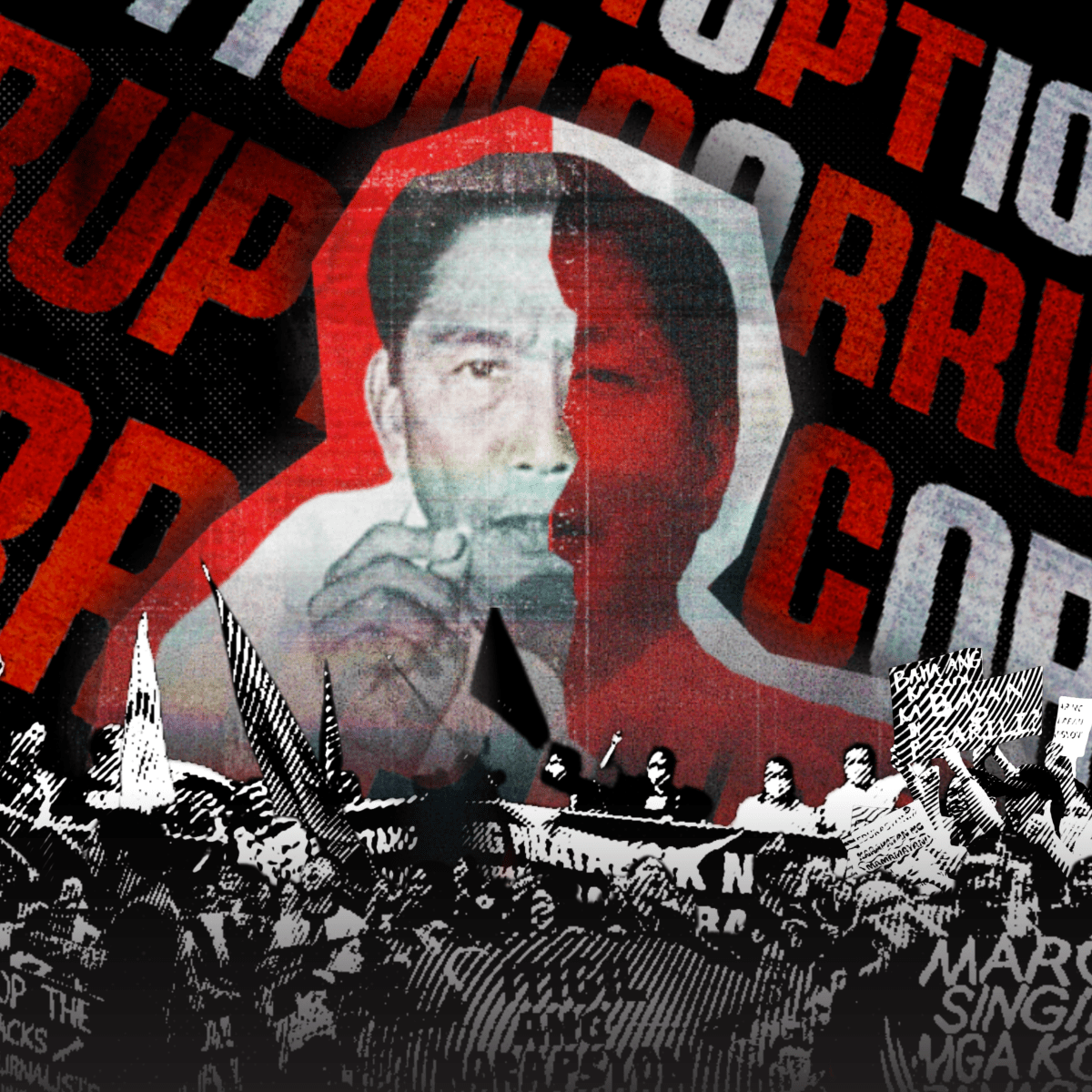
However, in spite of many history books that deem the martial law era as the country’s “golden age”, the Marcoses fail to understand that history does not like to be twisted, and it will not favor those who attempt to wring it of truth. This Sunday, the ghosts return, not as a whisper of a digital material posted online, but as footsteps once more. Two of them, in fact: Baha sa Luneta: Aksyon na Laban sa Korapsyon at nine in the morning, and the Trillion-Peso March at EDSA by mid-afternoon. Supported by at least 200 organizations composed of church groups, student organizations and labor unions, the rally shows signs of great promise for active reform within the government.

This time, they will come not in yellow, the color on our flag that’s supposed to symbolize freedom, democracy and sovereignty, nor will it be red, the supposed color of patriotism and the willingness of the Filipino to shed blood for the country. No, they will come in black, the color of defiance, sorrow and anger. One could not help but to think of how sick and tired we are of the streets to be painted in the literal absence of color. Like we are absolutely drained– of our time, sweat and resources– by those of the privileged and in power.

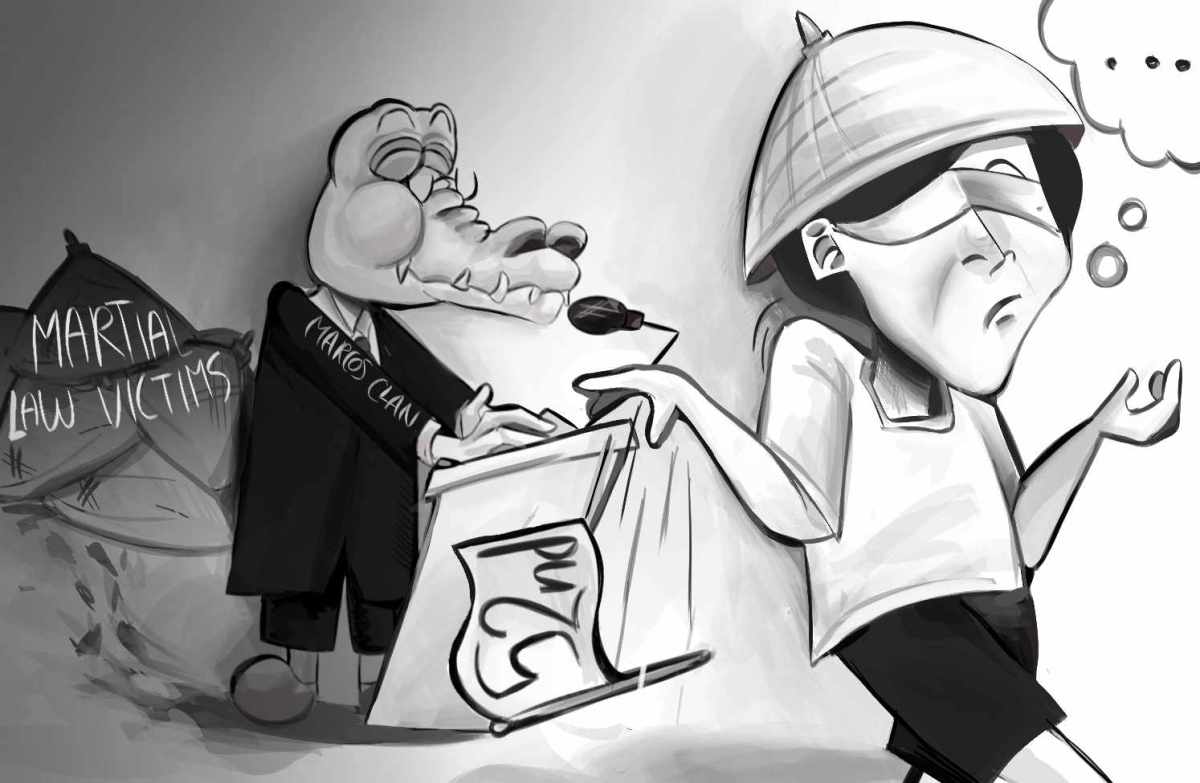
President Ferdinand Marcos Jr. now sits on the same mountain of rot that has weighed on this country for decades. He may bark “Mahiya naman kayo [You should be ashamed]” to perfume himself with the scent of justice that the Filipinos yearn to grasp, but shaming the corrupt does not make heads turn away from glaring back at him. The investigations into ghost projects and phantom flood walls only flared when he ordered them, which makes you wonder if these “discoveries” are anything more than old favors finally falling out of fashion, or if the ghosts were already feeding the very politicians now pretending to hunt them.

The symmetry is brutal. In 1972, Martial Law was justified as a way to keep order; today, corruption in flood control and public works is excused as “just politics.” Then and now, power collects in a few hands while ordinary Filipinos drown—sometimes in cellars, sometimes in knee-deep street water. Forgetting is the bridge between those two eras. Forgetting is the permission slip. Forgetting is why another Marcos can look the camera dead in the eye and tell the public to be ashamed, as though the shame were ours.

To the Marcos administration, I would like to commend you for at least attempting to reframe the indignity and shame that must come with corruption; though I have no clue of what is to happen when the Filipino inevitably choose to take matters into their own hands–as it should have been. And though it may look like they have gained the public’s trust, history has always proven itself cyclical; and should a spark inevitably be ignited, as with other nations that refused to endure empty promises, it is impossible to know whose heads will roll.

Recently, the world has seen a fallen government in Nepal, a weakened parliament in France, and a gruesome chain of protests in Indonesia. In the age of social media, we have been privileged to witness secondhand how the people of these nations have stood their ground, reclaiming the power that was meant to be theirs from the beginning, power once betrothed to their leaders but betrayed in its keeping. And now, as the Filipino people attempt to follow this path, it becomes a formidable reminder that, while some have forgotten, there are still many who refuse to succumb to the outbreak of controlled dementia that numbs only the memory of cruelty and tyranny.

The tyrants’ attempts to remove their bloodstained legacy from our nation’s history will never cease; but as long as the people cry “never again,” they can never be raised upon the pedestal of saints. So when you see the black tide of protest moving through Luneta and along EDSA, do not look away. Do not comfort yourself with the lie that this is just another weekend rally, just another bout of bad weather. Look into the flood and you will see a mirror: the soldiers who raided homes in 1972, the billions siphoned off in 2025, the same families fattening on taxes while warning us not to make trouble.

Be angry. Be unafraid of that anger. Let it move through you like a current through a live wire. Anger is a memory refusing to die. Anger is the sound of doors not yet kicked in, of a people who still remember the taste of freedom. March if you can and speak if you cannot march. Refuse the slow drowning of silence. Because the cycle ends only when we end it. “Never again” is not a phrase uttered by legends in history books; it is a command for the living, and it is up to us whether or not we choose to immortalize the memories of our ancestors before they are forgotten. Only then can history never be forgotten ever and again.

Who Gets to Sail

By Jazie Rangga || Illustration by Jen Abasola

“And God looked upon the earth, and, behold, it was corrupt.”

These words, drawn from ancient scripture, echo in a modern Philippines where every storm exposes the rot. When the rains come, rivers overflow, roads transform into canals, and lives are once again paused because the State has failed to deliver what was promised. Yet, on glowing phone screens, another kind of flood surges forth — a flood of excess, of wealth so casually flaunted that it mocks the suffering outside.

This is not wealth born of innovation or industry. It is wealth siphoned from contracts signed in the people’s name, from taxes scraped off their paychecks, from flood control projects that failed to hold back the waters. And at the center of this scandal stands not only Claudine Co, with her surplus of paid happiness, but the dynasty that enables her indulgence: her father, former Ako Bicol Rep. Christopher Co and uncle, Albay Rep. Elizaldy “Zaldy” Co. Businessmen turned politicians, whose construction business entitled them to become one of the supercontractors for the Department of Public Works and Highway (DPWH).

These men are not strangers to the public purse. The public was promised safety from swollen rivers and submerged neighborhoods, yet what came instead were unfinished projects, recycled allocations, and suspiciously repeated bidding patterns. And while the waters continued to rise, what rose alongside them were images on social media — snapshots of luxury handbags, private jets, and shopping trips abroad, symbols of excess seemingly built on the very projects that failed the people. Claudine Co’s life of ease plays out in high-definition on TikTok and Instagram, a silent indictment of promises unkept.

The backlash was swift. Every image of a G-Wagon, every Instagram reel of a private flight became a mirror of the suffering of Filipinos left to swim through broken systems. The anger was not directed only at one woman but at what she symbolized: the unholy marriage of public money and private indulgence.

But the Ark of privilege has room for many. Sarah Dicaya, Gela Alonte, Jammy Cruz, Mark Allen Arevalo — companions, fellow influencers and other tasked contractors — appear in the same orbit, sharing in the spectacle of indulgence. Their images, too, become symbols of a deeper truth: while the poor are left clinging to rooftops during storms, the well-connected float together, insulated, immune.

This is not new. One cannot help but remember how the Marcoses, whose ill-gotten wealth is still being litigated decades after Martial Law, once threw lavish parties in Malacañang while Filipinos lined up for rice during an economic collapse. How Joseph Estrada built his mansions and stashed millions in bank accounts while claiming to be a “man of the masses.” How the Revillas became poster children of the pork barrel scam, with Janet Napoles orchestrating ghost projects while senators smiled for cameras. How Gloria Macapagal-Arroyo was linked to padded government deals while hospitals lacked basic medicine. The Dutertes, meanwhile, now face Senate scrutiny over confidential funds that vanished into bureaucratic shadows.

The cycle is so entrenched that it has numbed the public. Every scandal becomes “just another.” Every revelation is met with a shrug. This resignation is perhaps the most dangerous consequence of all. When betrayal becomes expected, accountability dies.

Claudine Co’s scandal is different only in its immediacy. Unlike offshore accounts and shadowy Senate hearings of past decades, her family’s excess is broadcast in real time, visible to millions. Every post, every story, every video becomes a mirror of Filipino suffering — taxes deducted from paychecks, excise duties on fuel, billions earmarked for flood prevention — all funneled into a lifestyle so alien it feels untouchable.

The anger is righteous. It is not envy nor the crab mentality critics invoke to dismiss public outrage. Ordinary people endure hardship and pay faithfully, yet those tasked with their protection treat public funds as inheritance. Every rainy season exposes betrayal: Marikina residents stacking furniture on second floors, Cavite residents waiting for makeshift boats, Albay farmers losing crops and homes. Billions poured into flood control remain invisible in their protective effect and still, the Co family’s fortune grows.

This pattern is unbroken. Every scandal — Estrada, Revilla, Arroyo, Marcos, Duterte, Co — reinforces the same lesson: public service is a performance, accountability optional, and the people’s trust expendable. Each scandal numbs the citizenry further, until resignation becomes the default. Yet the Claudine Co episode cuts differently because it is personal, immediate, and impossible to ignore. It exposes a fundamental imbalance: those who give everything are the ones left behind, while those born into privilege remain untouchable.

The legal defense that Claudine holds no office is irrelevant. Republic Act 6713, the Code of Conduct for Public Officials, extends moral and ethical expectations to family members, making her proximity to power complicit. To flaunt wealth derived directly or indirectly from government contracts is a violation of public trust, a slap in the face of every Filipino who funds those projects. Investigations, lifestyle checks, and televised hearings cannot erase the deeper truth: the system itself facilitates this betrayal.

The Filipino cannot afford complacency. This is about more than one influencer. It is about whether taxes serve protection or indulgence, whether infrastructure serves the people or dynastic wealth, whether leadership is an obligation or a birthright. Claudine Co’s life of luxury is a lens revealing the nation’s enduring failure: a government that prioritizes the comfort of the few over the survival of the many.

There is a quiet irony in the Bible; that when Noah built the Ark, it was to save the innocent from the flood that washes the world of sin. Today, in the Philippines, the floods still come but it is now the righteous that are left to sink.

Until accountability becomes real, until public projects serve the public, every jet that takes off and every luxury car that rolls out of a gated driveway will remain a reminder of betrayal. Each rainy season, as they let the waters rise again, the nation will only be reminded who truly bears the cost of privilege: the ordinary Filipino. Claudine Co is not just an influencer. She is the gleaming Ark of her dynasty — a vessel for privilege built on the people’s sacrifice. And until that vessel is dismantled, the floods will keep returning, and it will always be the ordinary Filipino who drowns.

They’re Human Too

By Zachary Tan || Graphics by Elijah Hembra

It’s 7 PM. I’ve just been reminded that my group has got a Social Science presentation tomorrow on the Cold War, and zero progress has been made. So, in a fit of dire necessity, I boot up YouTube and rewatch the Oversimplified video on it to get a feel for what to even put in the rushed PowerPoint our group is making. Yet, the next day, after a few words on the Iron Curtain and some criticism of the Soviet economy, the presentation finishes rather smoothly. Once again, pop history comes to my rescue.

In one way or another, pop history, or historiography aimed at the general public, has most definitely influenced not only people’s understanding of our past but has seeped its way into our education systems to both its benefit and detriment as we can see from landmark events to motivational heroes. 

It is undoubted that pop history is a perfect entrypoint to further your understanding and appreciation for all that has come before us to mold our world into what it is today. The creation of pop history for widespread understanding is in of itself a skill to boil down complicated matters into simple concepts without ignoring the nuance of it all. When it’s done well, pop history can be the pinnacle of ‘edutainment’ as I myself can attest to. 

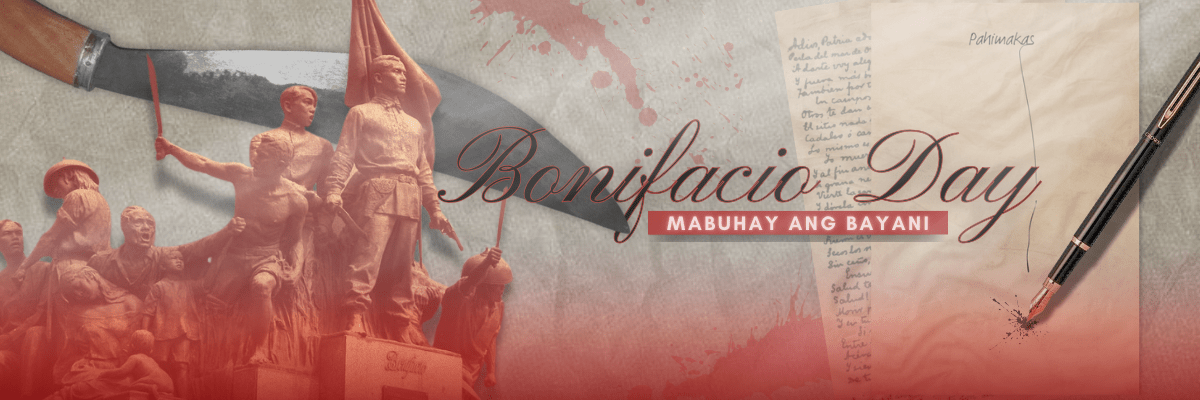
During the pandemic, I entered the rabbit hole of history YouTube and discovered wondrous creators such as that of Historia Civilis which managed to hook me into a story from millenia ago while not compromising historical integrity. However, with each Historia Civilis, there lies tens more which are unable to meet the important need for truth and nuance in pop history. This is as one of the great perils in pop history lies in the fact that it compiles the past into neat boxes with clear delineations to create a clean and simple story for the general public. However, real life is far more complicated than a simple black and white or good and bad. This is true even with our national heroes, Jose Rizal and Andrés Bonifacio, the faces transcending time from our statues to our currency.

When we think of Rizal and Bonifacio, they often feel like they are diametrically opposed. Rizal comes from the rich ilustrado class wherein he was educated in the best schools the Philippines had to offer and used the power of the pen to push for the Philippines’ autonomy. Meanwhile, Bonifacio was born working class, unable to finish formal education, and helped found the Katipunan, the foremost armed force in fighting for an independent Philippines. The only thing uniting these two men were their love for their country and their hope for a better Philippines. 

These are the ideas cemented into our minds from when we were young through the media we consume and even occasionally our schools. This is as we often get tunnel visioned into these figures’ ‘greatest contributions’ while ignoring the fact that they are multifaceted human beings. Rizal, as much as he was an advocate for nonviolent resistance, was a pragmatic individual. With this, according to accounts from his time such as that of Pio Valenzuela, nearing the end of his life, Rizal believed that assuming no other means were viable and the resistance was ready enough, a violent revolution would be favorable. On the other hand, Bonifacio was by no means some sort of brutal warmonger only out for Spanish heads. Rather, he had even been a member of Rizal’s own reformist organization La Liga Filipina which aimed to push for internal change within the Philippines under Spanish rule.

However, despite this seemingly glaring gray area with their respective beliefs, both these great men have generally been reduced to simple pacifism or violence. I myself find it difficult to remember a time in which I was taught anything more complicated about their lives beyond their simple attributes and somewhat irrelevant fun facts. In fact, this does not only just apply to Rizal and Bonifacio, but a whole host of other people, events, and entire eras when the topic is as complicated as history is. However, this issue does not necessarily come from our educators, it is a matter of how we as a whole approach the idea of teaching history and the usage of pop history. 

We already know in our daily lives that people or rather the human experience as a whole is such a complicated subject with multiple sides and complicated moralities. Why can we not extend this to those who have come before, the somewhat deified figures of our past still remain to be people after all, no matter how dead they may be. Engaging stories and nuance under pop history are not mutually exclusive. Oftentimes, the most engaging stories are those containing fully fleshed out characters without clear lines of evil and good, and history is no exception. This is why the utmost care must be taken when speaking about these complicated issues and larger-than-life individuals which affect who we are today. After all, these names on our textbooks had personalities, hopes, and loved ones as well like all human beings do.

Tapestry of Tradition and Justice

By Sophie Fabrigar || Illustration by Joxyne Gravoso

Indigenous communities in the Philippines, from the Ivatan tribes in Batanes to the Badjaos in Tawi-Tawi, have developed vast and beautiful customs that stem from a long and rich history. In celebration of National Indigenous Peoples Month, the beauty of indigenous culture is appreciated. However, certain aspects of their traditional ways of life put into question the Philippines’ careful balancing act between indigenous traditions and modern values. 

For instance, the Teduray tribal council of Mindanao resolve rape cases through compensation or arranged marriage instead of imprisonment. In cases where a minor gets raped, as part of their tradition, the victim is offered a certain amount of money or livestock by the perpetrator. Otherwise, the tribal council may advise the victim to marry the offender to clear any crimes committed against them. However, if the family declines this traditional justice system, they may file a legal case against the perpetrator of the rape. However, this rarely occurs due to the exorbitant costs, tiring bureaucracy, or a number of other roadblocks when filing a lawsuit.

It may seem to an outsider that such practices are barbaric and outrageous, particularly from the viewpoint of current justice systems. The concept of compensating for sexual violence through payments of money, providing livestock, or marrying the abuser dismisses the trauma the victim experienced and leaves a bad taste in many people’s mouths. However, understanding the cultural and historical context behind these practices is highly important, as these traditions are often the glue used in these indigenous justice systems to maintain social stability within the community, especially when outside solutions fail. Thus, as the Philippines’ formal legal apparatuses fail to adequately serve its indigenous communities, these traditions serve as easy to use failsafes to lean on during disputes for these communities.

Alongside this, though it is necessary to differentiate between tradition and the acknowledgement of human rights to solve these problems, haphazardly imposing external laws on indigenous communities without regard to their significance and norms results in the destruction of traditional authority and the fostering of aggression both within the community and externally towards those who disrupt the regular order of the community. Thus, it is unreasonable to call these traditional practices terrible or unfair from an external point of view as they take up the critical roles as cultural responses to the challenges that modern legal systems have previously and continuously failed to provide for such as through a lack of resources and servicing of these communities by the nation’s legal apparatus.

While these cultural practices are indigenous methods of justice and community peace, they show the fine boundary between societal and legal expectations set in the modern world upon these communities. An example would be Republic Act No. 8371 of 1997 which recognized the right to self-government, including the existing traditional justice system of the Philippines’ indigenous peoples. This law adopted the concept that culture and practices, such as compensatory or community-based settlement, affect the peace in such societies. It enables the communities to have their courts and settle cases through traditional and customary law which is consistent with their practices.

However, as an extra precaution, if such indigenous justice practices would be perceived as a violation of the victim’s rights, or if the family wishes to take the case to court under the Philippines’ national justice system, provisions are in place to allow for this. This could then also result in a suit before the courts of the Philippines exposed to national laws such as RA 8353, the Anti-Rape law declaring sexual violence as a crime and punishing offenders. However, oftentimes, due to inadequate resources in the implementation of this, during the few occasions in which these victims wish to take such cases to formal court, they are forced to resort to traditional systems due to a variety of reasons including payments and the large effort required.

Given the variety of indigenous practices and the downfalls of the current system, it is unfortunate that the Philippine government has not yet envisioned a strategy that integrates these traditional practices with the national laws, especially in cases where people’s rights may be concerned. Customary justice systems, which are tailored to the cultural specificities of a given audience, have been used by indigenous peoples for a long period, but such systems sometimes conflict with modern laws. With this, the state can work first with indigenous peoples by focusing on their chiefs, as a way of creating a system that balances the existing structures concerning traditional power and community peace and the incorporation of modern legal shields. This way, the country can adequately respect the richness of various indigenous peoples’ cultures and provide for equality and justice among all its people.

References:

Stars, Scandals, and the State

By Chris Jon Peñaflor || Illustration by Joxyne Gravoso

What exactly does it say when voters cast their ballots based on familiarity with the candidates instead of understanding their platforms and assessing their actual capabilities to lead?

In the realm of politics, votes are often cast due to the significant influence of a candidate’s name recognition. However, Filipino voters should shift their focus to a candidate’s qualifications, competence, track record, tenacity, and accessibility to the masses. The country’s leaders should bring sound value, strong educational backgrounds, and extensive leadership experience. 

One significant issue currently faced by the country is the tendency of voters to equate a candidate’s visibility with capability. Recently, several well-known celebrities and entertainers have taken the position of public servants, successfully gaining mass support despite lacking leadership skills and political experience. Yet, this problem is not solely rooted in the nation’s voters, as many are not privileged enough to gain access to quality education. Those who have inadequate awareness and understanding fall victim to manipulative tactics during campaign periods. Even before the election, candidates often use the “mere-exposure” effect. This involves distributing printed materials with their faces in certain areas to gain repeated exposure. This tactic subconsciously influences the minds of voters, making the candidates appear favorable and fit to be leaders.

Indeed, fame plays a significant role in a candidate’s electoral success. For example, former Department of Interior and Local Government Secretary Benhur Abalos, now a senatorial candidate, appeared in the Philippine TV action drama series “Black Rider” broadcasted by GMA. Despite already being a prominent figure as DILG secretary, Abalos probably did it to gain more public exposure and establish a sense of familiarity with a large scale of voters who still do not recognize him.

Celebrities and online influencers who run for public office should reflect if they are competent enough to serve and help the country, rather than adding to the existing problems of the country. For example, Deo Balbuena, also known as “Diwata” or “Diwata Pares”, decided to file COC as the fourth nominee of Vendors Partylist regardless of his lack of understanding of the laws and skills to create beneficial policies, make changes, or effectively deal with contemporary social problems. In an interview by Rappler on October 2, 2024, Balbuena gave only indirect and circular answers instead of being straightforward with what specific policies or laws the Partylist has to offer and how they will be implemented. This just goes to show the importance of ensuring that those who are being put in power have the skills and political experience the position requires. 

It’s not sufficient for people to know the candidate; the candidate should also know the people’s needs.  Candidates who already believe that they are qualified should still bear in mind that other candidates might be more qualified than them. Those who are running for office should be fully aware and should be reminded that they are pursuing a duty and responsibility, not a hobby.

Another alarming issue is the country’s legal loophole that allows convicted individuals to run for public office. Due to the state of rigidity and inability to address contemporary issues of the constitution, candidates with criminal convictions, but whose cases are under appeal or have been pardoned, can still seek office as legally stated under the 1987 Philippine Constitution and the Omnibus Election Code. One notorious example is Kerwin Espinosa, a self-confessed drug lord, who filed a candidacy for mayor in Albuera, Leyte despite ongoing legal battles. 

These are just a few of the heavy burdens and unfortunate realities in our country. The nation is still categorized as a flawed democracy. The system tends to favor the famous and wealthy, or the stars and the “big-time.” This dynamic not only allows criminals to evade the full consequences of their actions but also hinders those less-known candidates who have the skills, knowledge, and commitment to public service to secure a spot for public office. 

The trend of celebrities, influencers, and convicted criminals to hold office in the country endangers the integrity and democracy of the nation. A candidate’s fame or popularity should not be a deciding factor in selecting leaders. The country has made significant progress through the sacrifices of countless Filipino heroes, and honoring their contributions requires breaking free from ignorance.

Filipinos have long been giving power to the hands of those who only make the country poorer. Filipinos have shouldered this burden for too long and it persists to weigh heavier with time. Now is the moment to make wiser choices, have good judgment, and regain consciousness. This won’t change the past, but it gives back to the Filipino people the future of the Philippines – the country sworn to love and die for.

The Resistance of Remembrance

By Poimen Agnila || Illustration by Lilianne Salorio

The downfall of a nation lies in its short memory.

Whether it be because of the perpetuation of a golden era narrative, the antagonizing of progressive ideology, or the non-acknowledgment of the barbarism caused by the past regime, the current state of this country’s democracy hinges strongly on the people’s collective capacity to remember. 

September 21st marks the 52nd anniversary of the signing of Proclamation No. 1081—the beginning of Ferdinand Marcos Sr.’s authoritarian reign over what he described as a country in peril. Threatened by communist movements gaining traction in the Philippines, Marcos sought to “save the republic and reform society” through the declaration of martial law. What would follow was 14 years of violence, forced silence, and infamous kleptocracy. 

In the wake of Bongbong Marcos’ candidacy and his family’s rise to mainstream relevance once more, a sickness seems to have gripped the nation—forgetfulness. Seemingly losing all memory of the family’s misdeeds, the Filipino masses have elected another Marcos to power, despite questionable claims of achievements and streaks of disinformation painting his reputation as a politician.

His subsequent appointment as president allowed him to reframe the country’s view of his family and their wrongdoings, wiping away a bloodied history rife with torture and abuse endured by those whose only crime was resistance. 

As we witness history being revised in real-time, we face the important question of what it truly means to never forget.

In times like these, it is imperative to question the validity of claims rather than simply accepting the information given to us. In a subject matter with as wide-ranging consequences as politics, being critical and holding those in power accountable are the first steps to rebuilding a memory actively being erased.

There never was a “golden era”. 

What the Marcos clan claimed was a prosperous period in the nation’s history was in truth only applicable to them, having appropriated billions of pesos from the country’s funds. In July 2003, the Supreme Court allowed for the forfeiture of the Marcoses’ $683 million in funds, deposited in Switzerland through questionable Swiss foundations. In 2018, the anti-graft court Sandiganbayan found former First Lady Imelda Marcos guilty of 7 counts of graft related to the aforementioned plunder.

Moreover, the “discipline” and “order” of the martial law era, which was and still is praised for, were the result of censorship and tyranny. Life was only “peaceful” back then because those who dared to speak up against the regime’s crimes were silenced forever. Journalists and activists who opposed government decisions were tracked down, arrested, and forced to keep shut. In more severe cases, they were brutally tortured and even killed. Data from Amnesty International (as cited in The Martial Law Chronicles Project) reports that 70,000 people were imprisoned, 34,000 were tortured, and 3,240 were killed during Marcos Sr.’s reign of terror. 

It is undeniable that the declaration of Proclamation No. 1081 paved the way for the late dictator’s authoritarian regime. And as history repeats itself with the election of his son to office, we must also reminisce, along with the facts we are armed with, of the power collective resistance holds. 

There is a reason why the EDSA People Power Revolution succeeded in ousting Marcos. It was the refusal to forget by the thousands who filled EDSA that fateful series of days in 1986 that led us to the freedom we now enjoy. Whether or not we continue the example they have set will determine if this country will live to see a different era of governance. 

In the film adaptation of F.H. Bacatan’s book, Smaller and Smaller Circles, Father Jerome Lucero imparts to his students a valuable lesson on the Martial Law era: “Time and forgetfulness are the allies of abusers.”

We hold in our hands the power to end revisionist narratives. As citizens, our duty to remember extends beyond just a simple recollection of what happened; it also directs us to fight against attempts to rewrite history. Learn from the past. Engage in discourse. Become a voice for truth. There is no greater antidote to forgetfulness than a mind that keeps remembering.

The downfall of a nation lies in its short memory but its revival hinges on its people’s capacity to remember.

All in the Past

by Jazie Rangga || Illustration by Kyle Nase

Here’s a question for President Marcos: Why does one “move” a historical event that has sparked one of the greatest revolutions of world history? 

On August 21, 1983, Benigno “Ninoy” Aquino Jr., one of the most vocal critics of the Marcos dictatorship, was assassinated right after he emerged from his plane following a flight back to the Philippines. Aquino had just spent three years in the United States to get medically treated for his heart attack, only to have fallen on the same fate he was escaping from. 

His death was the final straw, the turning point that drove Filipinos from different walks of life to unite for one cause: flood the streets of EDSA and reclaim their country from Martial Law and authoritarian rule.

41 years later, in 2024, the holiday that marked the commemoration of this event was pushed back to August 23, a Friday, to make it a continuous four-day non-working holiday, with Monday being National Heroes’ Day, a decision in line with the Marcos administration’s “Holiday Economics” policy.

This is not to say that this four-day break is completely ruinous. In a country where, according to Microsoft Philippines, 63% of Filipinos feel overworked while another 31% feel exhausted, four days of no work seems like complete bliss. This long weekend allows hard-working Filipinos to relax, unwind, and spend time with their family. 

But it still begs the question: Are four days of relaxation worth it when done at the expense of trivializing one of the most significant events of our country’s history?

To move around the date of a holiday that has, for years, been commemorated by the people, all in the name of convenience, is as tone-deaf as it is entirely straightforward. For the non-disruptor Marcos, moving this holiday around marks another step towards ultimately erasing the narrative that tied Aquino’s death back to the Marcos family and the legion of atrocities committed in their name. Through publicly changing its date as if it were everyday scheduling, it is as if Marcos is reducing the significance of the late senator’s death to a mere speck, all while hiding this agenda under the sly guise of needed rest and pragmatic economics.

This is not even the first time that President Marcos switched up a holiday that coincidentally commemorates the events which led to his family’s ousting. Last October 11, he signed Proclamation No. 368, which made the anniversary which celebrated the EDSA Revolution no longer a special non-working holiday; it was simply another regular working holiday. 

However, legally, an administration cannot suddenly declare a non-working holiday as a working one, unless it falls on days like Sunday and Wednesday; and only then can it be moved to the next week’s Monday to avoid an inconvenient ‘sandwich day’. If so, it has to be announced 6 months in advance, which was not abided by when Ninoy Aquino Day was moved. 

So not only was it highly disrespectful to the memory of Aquino’s martyrdom, it was also a blatant violation of the law, another lousy attempt at slowly extinguishing the flame his sacrifice lit in the hearts of the masses.

Although the reason Marcos moves these holidays can be simply attributed to the implementation of “Holiday Economics,” one can argue that it is also an underhanded attempt at revising history to feed a narrative that slowly forgets the horror of the Marcos regime and its ruthless past with the Aquinos and Filipinos.

Through these seemingly innocuous yet highly numerous plays, Marcos wielded a weapon greater than blame or power—he expertly employed the use of indifference to the cause, and nothing erases history faster than blatant callousness towards the past. 

If Marcos cannot bring himself to respect our fallen brethren in our nation’s never-ending fight for democracy, it is then up to us to uphold the honor and memory of these pivotal events and the heroes behind them to uphold the freedoms which they had died for and which we must live by. 

Just as Ninoy Aquino himself said, “We must not only preserve yesterday’s heritage, fight for today’s ephemeral interests, but die if need be, for tomorrow’s hopes.” 

May his words remind us to continue the good fight for the liberties and new way-of-life breathed not only into our people, but into the nation as a whole, through his death, lest the next generation suffer a similar fate to that of our forefathers.

Words Apart

by Poimen Agnila || Cartoon by Zenas Agnila

The Filipinos deserve more than a government that is unwilling to use its voice for the sake of those who cannot speak for themselves. 

Vice President and Education Secretary Sara Duterte’s “no comment” remark on China’s relentless aggression towards the country over the West Philippine Sea has drawn flak in various social media circles, and not without good cause. Recent cases of hostility, such as a Chinese Coast Guard vessel’s blasting of water cannons at the Philippine resupply boat Unaizah May 4 on March 23, have shed an important light on China’s seemingly never-ending obsession with bullying smaller countries into submission. This bullying, coupled with the VP’s lack of conviction on the matter, is a recipe that spells disaster for our years-long fight against Chinese claims over the West Philippine Sea and unjust international territorial control in general.

While this administration has had some great lapses in judgment in their public statements over the years, somehow, what makes me more disappointed than tone-deaf official statements addressing a current issue is silence. 

As a writer, one of the first things instilled in us by the world is that our words carry power. We are told that the change we will see in society is directly proportional to the volume by which we are willing to advocate for it. Silence, when wielded for the benefit of the status quo, is harmful. 

The Philippines would not have gained independence from the Spanish had Dr. Jose Rizal chosen to take a neutral stance on their abuses. The colonizers would not have been driven out if it weren’t for the revolutionaries who fought to make their voices heard. We are not where we are as a democratic country today because our ancestors had “no comment”. Words, especially critical ones, are the reason why history is referred to in writing metaphors. 

When all we get from a government official as influential as the Vice President on a topic as important as the West Philippine Sea is silence, we may have to seriously start rethinking the parameters by which we vote for national leaders. It is easy to speak up for a greeting on China’s 73rd National Day (although props for doing it in Mandarin), after all, you have nothing to lose. What’s difficult but ultimately more leader-like is condemning abuses by a powerful country that has repeatedly belittled the Filipinos. Our countrymen, especially those rendered vulnerable by their line of work, deserve more than to be treated as something too risky or insignificant to talk about.

In a time where our silence is the enemy’s weapon, freedom and oppression are only words apart. The difference between a truly liberated country and one that remains tyrannized is leaders who can speak up and stand with their countrymen when it matters the most. 

It’s Right to Hate the Young

by Arianne Enderez || Cartoon by Kyle Nase

I hate freshies. Freshies make my blood boil. These kids are so disrespectful and culturally unfunny that it makes me want to physically turn into a propeller and catapult them at 100 mph.

The previous statements expressed before this paragraph are sentiments that every senior probably felt when a new batch of PSHS students came onto campus. It is customary, considered a tradition and culture even, to feel hostile towards these 11 to 12-year-old kids who are fresh out of elementary school. But, are these kids that bad? Are they really as intolerable as our higher-ups complain? Are these kids that big of a narcissist, with prideful and overly pretentious egos? Do they deserve the hate and rage that sprout from their seniors? 

The roots of ‘freshie hating’ can be traced back to the high demeanors of swaggering freshmen who freshly passed the National Competitive Examination (NCE)—considered one of the hardest entrance exams in the country, with only around 10% of examinees capable of grabbing a slot—with a desire to establish validation, relevancy, and inclusivity. Most of the time, this attempt of mentioned values falls short to achieve its objective due to its lack of knowledge and understanding of Pisay culture. Which, in return, drives seniors to loathe or hold a grudge against these 11 to 12-year-olds. 

One of the primary examples of these scenarios occurring comes from an online page on Facebook where students belonging to Pisay (or even those outside the school) can anonymously submit their undying love confessions, giddy messages to mess with their friends and complaints or rants about contemporary societal issues — Pisay Hugot. These anonymous submissions are posted for everyone in the world to see if approved by one of the admins of the page—following strict guidelines such as the ban of hate speech, bullying, and distasteful topics—but somehow, anonymous submissions that clearly exhibit this essence still surpass the filters, even under the surveillance of an external party. Consequently, anything a freshman states, even if it is painfully evident that the child lacks the mental maturity and critical thinking to create an insightful and modest opinion about a peculiar topic, is posted for the whole world to view.

If we’re educating these children to be more considerate and sensitive about their verbal and physical inflictions towards other people, wouldn’t we get to avoid instances where they lack these requisite features? Though it seems like we allow this type of behavior for the sole, and vile mindset of, “they’ll learn the hard way,” only for them to receive the brutal backlash that results from the severity of their consequences. Instead, we should cultivate an environment that is complemented by a support system, providing them the guidance and understanding they need to navigate through challenges. Which includes providing them with less harsh reality checks, and assessing their current behavior. Although some freshmen will likely refuse to change and remain the ignorant, self-centered character that they are; it is with hope however, that some will listen and actually make an effort to improve for the better. 

The mental age gap between a recent primary school graduate and an 8th grader who had already been grilled with the brutal reality and lifestyle of a scholar —is like a 5-year-old kid talking to a 30-year-old man going through a midlife crisis. We should not expect that these children are emotionally and mentally prepared to face the scary environment which is known as the Pisay culture from the get-go. “It’s just culture,” they say, but that culture needs to be reevaluated to better conditions to create an environment that is welcoming for all.  

Breaking the Bonds

By: Allyssa Janice Capoquian || Illustration by: Kyla Campo

A notable shift in the Philippine legislative landscape occurred on September 19, 2023, when the Senate of the Philippines approved a bill providing a legal ground for absolute divorce. The approval of the bill did not mean it had already been passed into a law. However, its passing could usher in a major reformation to the conservative Filipino society. Sen. Risa Hontiveros, the one who passed the bill, stated that, “The passage of a divorce law is one of the ultimate forms of freedom we can give Filipino women.” In a nation of conservative and patriarchal tendencies, the bill aims to provide every person, especially women, with an equal footing- an ability to make a choice. 

The Philippines has long been known for its strict laws against divorce. The country emphasizes the sanctity of marriage, but fails to see the prevailing issues found in that union. Domestic violence remains a pervasive issue in our country. According to the Philippine Commission on Women, one in four Filipino women age 15-49 has experienced physical, emotional, or sexual violence by their husband or partner. However, many women subjected to abuse do not report their experiences. The culture of victim-blaming has led to silence amongst abuse victims. This can be connected back to the strong societal and religious norms in the country, and their desperate need to uphold the patriarchal family image. 

Moreover, the country is unsuccessful in providing a strong justice system for these victims. They end up staying in these toxic marriages because they are not provided the support or opportunity to escape from those harmful situations. Even though annulment is a possibility, it is far too long a process and far too expensive for the working-class to afford. The tedious and unaffordable process of annulment ironically exhibits the Philippines’ perpetuating stand against divorce.

Additionally, women stay in abusive marriages for their children. But abusive or unhappy marriages also affect the development of children who are exposed to those stressful conditions. Children constantly being exposed to an aggressive environment are more likely to develop aggressive tendencies, or perceive that aggression as normal. It may dissuade them from marriage altogether. According to The Child and Youth Welfare Code, children are entitled to rights providing them with familial security and protection from harm. These rights can be neglected in abusive or dysfunctional households. Divorce, in many of these situations, could have been a gateway to stop these problems before they could worsen. 

It is expected that coming from a predominantly Catholic country, many Filipinos oppose the bill. However, it is essential to emphasize that the passing of this bill was not made to undermine Catholic beliefs, but simply meant to provide the option for people to divorce and remarry. In our democratic country, everyone should be given a choice. Everyone should have their rights upheld. The Senate’s approval of the divorce bill is not meant to disrespect anyone’s religious beliefs. Rather, it is another path bringing progression, freedom, and inclusivity into this nation.