Maharlika Investment Fund bill swiftly approved by the House of Representatives

by: Daneil Anthony Cerdeña || Photo Credit: Rappler

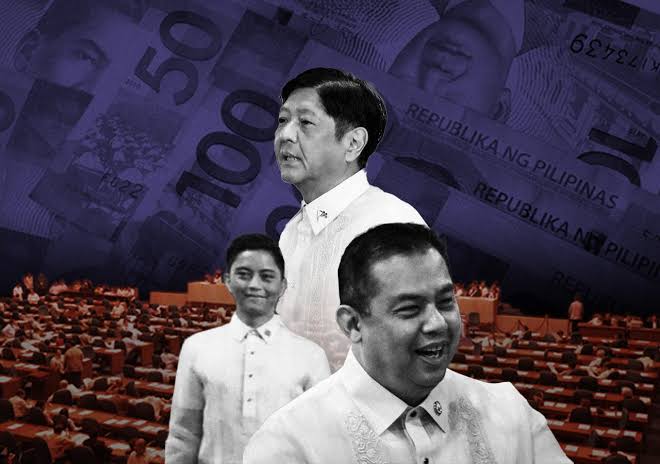
On December 15, 2022, House Bill No. 6608, also known as the Maharlika Investment Fund (MIF) bill, was approved in its third and final reading at the House of Representatives. The MIF bill is a policy that employs citizens, promotes trade, expands infrastructure, and aims to establish the role of various investments in financial assets. With a staggering approval rate of over 95%, the bill was approved days before the Congress’ recess from December 17, 2022, to January 22, 2022. Notably, all legislators voted on this bill and had no abstaining voters.

Speaker Ferdinand Martin Romualdez, Majority Floor Leader and Zamboanga City 2nd District Representative Manuel Jose Dalipe, Ilocos Norte 1st District Representative Ferdinand Alexander “Sandro” Marcos, Marikina 2nd District Representative Stella Luz Quimbo, and Tingog-Partylist Representatives Yedda Marie Romualdez and Jude Acidre are among those who authored the MIF bill. Their association led to the establishment of the Maharlika Investment Fund (MIF) Corporation.

“The proposed sovereign wealth fund will help President Ferdinand Marcos Jr. keep the country on the high-growth path,” principal author Martin Romauldez stated.

As a sovereign wealth fund of the Philippines, the MIF Corporation will have a capital of over 75 billion pesos coming from the Land Bank of the Philippines, the Development Bank of the Philippines (DBP), the Philippine Gaming and Amusement Corp (PAGCOR), and the Bangko Sentral ng Pilipinas (BSP) as the MIF contributors. 

However, the MIF bill has met criticism from its content to its approval. President Ferdinand “Bongbong” Marcos Jr. categorized the MIF bill as something urgent, leading to its swift approval in the House of Representatives due to the provisions of Article VI, Section 26 (2) of the 1987 Constitution.

“There is no necessity to certify as urgent the Maharlika Investment Fund. It is not needed by the people who are already deep [in] debt,” voiced France Castro, representative of the Alliance of Concerned Teachers Partylist. She also highlighted the public’s outcry by expressing that organizations, economists, academics, and more have opposed a bill “that prioritizes an investment fund over budget for social services even with a deficit budget.”

In an interview, Co-author Sandro Marcos remarked that although the President favors the bill, he did not spearhead its proposal.

“Yes, it became apparent that the President was in support of creating a sovereign wealth fund, but it didn’t— the idea did not come from him per se because this is something that has been in the works or something that has been pushed by not even this administration but administrations past,” he expounded.

“The intention of sovereign wealth funds is very laudable,” Camarines Sur 3rd District Rep. Gabriel Bordado Jr. expressed his views. 

“Indeed, Mr. Speaker, putting up a sovereign wealth fund through Maharlika Investment Fund can be beneficial to the country IF done properly and [at] the right time,” Bordado Jr. added, pointing out that the MIF bill was created at the wrong time.

PasKoral and Pasko Jingle kick off EVC’s Holiday Season 

by: Aya Ecaldre || Photo Credit: Paskorus Technical Working Group

To celebrate the holiday season, the Philippine Science High School – Eastern Visayas Campus (PSHS-EVC) held the annual competition for the PasKoral and PaskoJingle virtually last December 19, 2022, via Facebook Live. Organized by the PEHM unit, together with Musikanta, the event showcased video outputs by the students. 

The event was formally opened by Mrs. Leslie Cruto. She mentioned that this yearly tradition allows us to discover students’ talents and skills. 

“Traditions are important in the Filipino culture, and all Pisay scholars go through this celebration year after year to tell us their stories,” she added.

Ms. Cindy Campanero then introduced the board of judges. The board consisted of three members, namely the chair, Ms. Maricar Tegero, together with Mr. John Mark Esperas and Mr. Jelf Seberre. Tegero graduated cum laude with a Bachelor of Secondary Education Major in Music, Arts, PE, and Health from Leyte Normal University (LNU) and is currently pursuing a Doctor of Education Major in Physical Education at the University of Visayas, Cebu City. She was also a former PSHS-EVC PEHM mentor, A.Y. 2013-2014. 

Esperas is also a graduate of Bachelor of Secondary Education Major in Music, Arts, PE, and Health from LNU, an instructor at Eastern Visayas State University (EVSU), and is the assistant choirmaster of Sinirangan Chamber Singers. On the other hand, Seberre is a musician, song accompanist, band and liturgical keyboardist, violinist, and choir trainer who participated in 11 local and three international tours overall. 

The PasKoral and PaskoJingle were both conducted by house and category. Houses Aglaea, Thalia, and Euthymia prepared one entry for each contest under Category A, consisting of students from Grades 7-9, and Category B, composed of students from Grades 10-12. 

The criteria for judging include the engagements garnered for each video entry posted on the EVC Direct Facebook Page. The competition results will be released on Christmas Day, December 25, 2022.

Briella Acala, a freshman, shared how fun and enjoyable her PasKoral experience was since it was her first time participating. 

Grade 8 student Joxyne Gravoso also stated that the event was a fun experience. She expressed their gratitude to their Grade 9 seniors, who facilitated and guided them throughout the preparation period. 

Jhun Kenneth Iniego from Batch Arimo (2023) quoted that they had fun while practicing for PasKoral. He also highlighted that their overall cooperation together as a house resulted in their majestic output. 

“Because the PasKoral was by category, I was able to interact with a few lower year [students] which I loved! The practices and recordings allowed us to bond and overall, it was an event that I’ll look forward to happening again,” Ariadni Palomo, a Grade 9 student, said. 

The event was then concluded with a closing message from the Campus Director, Ms. Yvonne Esperas. In her message, she thanked the PEHM unit and those involved in making the event a success. 

“It is with utmost sincerity that I wish you all the love from your family and friends, the joy and harmony of being together with your loved ones, and peace in your hearts,” she noted. 

US Vice President Kamala Harris visits the Philippines

by: April Princess Closa || Photo Credit: Rappler

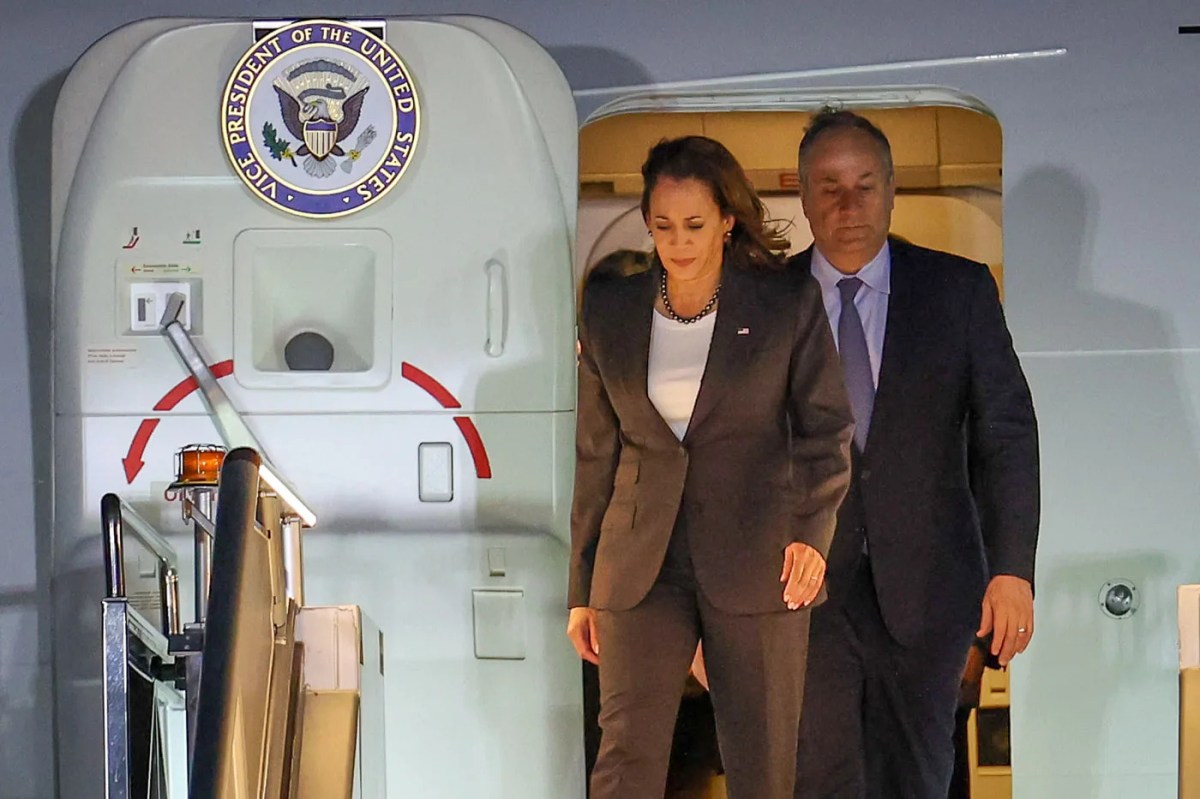
In an effort to bolster the US-Philippines alliance, US Vice President Kamala Harris traveled to the Philippines for a three-day official trip from November 20 to 22, making her the highest-ranking US official to visit the country under the Marcos administration.

Harris arrived on Sunday night, November 20, after participating in the Asia-Pacific Economic Cooperation (APEC) Summit in Bangkok, Thailand. 

On Monday, November 21, she met with President Ferdinand Marcos Jr. and Vice President Sara Duterte. During the talk, Harris underscored the mutual commitment of the US-PH alliance regarding economic prosperity and the climate crisis in the country. She also stressed the mutual concerns regarding security for the region and highlighted the US’ commitment to the Philippines concerning the South China Sea dispute. 

“We stand with you, in defense of international rules and norms as it relates to the South China Sea; and armed attack on the Philippines, armed forces, public vessels, or aircrafts in the South China Sea would invoke US mutual defense commitments. And that is an unwavering commitment that we have to the Philippines,” Harris stated.

According to the White House, the Vice President emphasized the importance of human rights, which encompassed press freedom and freedom of expression, as well as the importance of reinforcing democratic principles. These matters were also discussed in her talk with 16th Philippine President Rodrigo Duterte, in addition to discussions about the strength of the US-PH alliance, education policy in the country, skills training and internet connectivity, and economic partnership and investment ties.

Harris also connected with Filipino activists, where she expressed solidarity in support of human rights and democracy. She also held a quick town hall with young Filipino women regarding gender equality and women empowerment.

To conclude her stay in the country, the US Vice President visited Tagburos village in Puerto Princesa, Palawan, where she delivered a speech aboard the Philippine Coast Guard’s BRP Teresa Magbanua, situated along the highly disputed South China Sea. She acknowledged the fisheries of Palawan as the “economic lifeblood” of the island, highlighting the threat of illegal fishing on the livelihood of local fishers. Furthermore, she emphasized the US-PH alliance by pledging defense against unlawful behavior in the region and reaffirming the US’ commitment to upholding international laws to protect lives and coastal ecosystems.

“The United States-Philippines alliance is strong. We are committed to you. We are committed to your success. And to all the lives and livelihoods that rely on your work,” Harris expressed.

President Marcos attends the APEC CEO Summit 2022

by: Johanna Macababbad || Photo Credit: PBBM’s Official Facebook Page/Xinhua

“Dark clouds loom large if we are not to be prepared. They loom on the economic horizon, and now, more than ever, our governments and economies must work closer and better together as partners in order to find that break in the clouds where the light of hope and progress can shine through.”

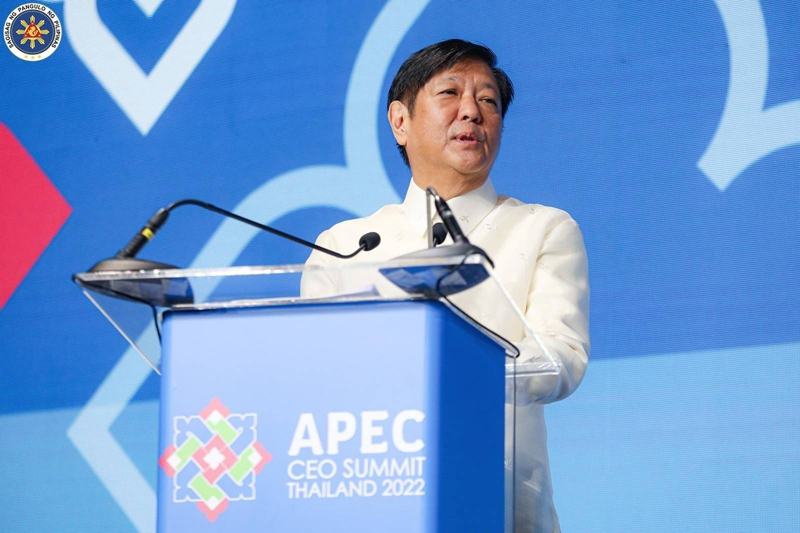
President Ferdinand “Bongbong” Marcos Jr. opened during the Asia-Pacific Economic Cooperation (APEC) CEO Summit 2022 held in Bangkok, Thailand, last November 17, 2022, with the theme “EMBRACE, ENGAGE and ENABLE.”

The APEC CEO Summit is a three-day open forum held from November 16 to 18, where CEOs and top executives discuss issues and possible solutions with APEC leaders. It is an economic forum where 21 countries in the Asia-Pacific gather and discuss economic integration in their respective regions. As for this year’s event, it focused on the plans for a post-COVID-19 economic climate.

Marcos stressed that there are three main hindrances to fostering growth; thus, addressing their structural and policy issues can aid the economy in rapidly recovering from the pandemic.

“Food security must be a top priority for all governments, and developing economies especially must have the policy flexibility needed to ensure an increased domestic food production and diversification, and to improve the local agricultural supply and value chain,” he said regarding the first issue.

He also emphasized the importance of establishing and strengthening global health systems against emerging infectious diseases and improving governments’ pandemic response, in which he proposed ratifying the One-Health approach and improving the health surveillance of new or re-emerging illnesses.

“Climate change, the most pressing existential challenge of our time… Stronger action is required… Diversification into renewables and other resources is imperative… The Philippine government will work closely with the private sector to improve the resilience of people and businesses by leveraging the tools for sustainability,” Marcos noted while referring to programs such as Thailand’s Bio-Circular-Green Economy model.

The Philippine President concluded his talk by recognizing the purpose and importance of the APEC and its open environment in formulating economic and trade ideas and solutions to pressing global problems. 

“Prosperity and progress is [are] only possible in a world that is at peace because we, as nations of the world, can never reach our full potential unless we do it together,” he added.

Paeng leaves PH in ruins after making landfall as a severe tropical storm

by: Vinci Tamayo || Photo Credit: Eloisa Lopez/Reuters

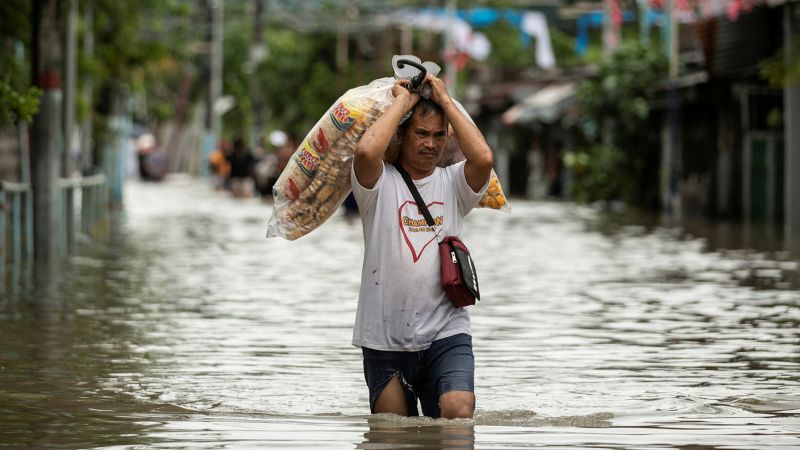
After plowing through the Philippines and affecting the lives of over 3.96 million individuals, Severe Tropical Storm “Paeng” — internationally known as Nalgae — left the Philippine Area of Responsibility (PAR) on Monday noon, October 31, leaving 6,542 damaged residences. The death toll also now sits at 150 as of November 3, 2022, with 63 verified fatalities from the Bangsamoro Autonomous Region in Muslim Mindanao, 23 from Western Visayas, and three from Soccsksargen.

The storm first entered the PAR as a tropical depression, 965 kilometers east of Eastern Visayas at 12:30 PM on October 26 and was given its local name, “Paeng.” It then intensified into a tropical storm a day later. Its first landfall took place in Virac, Catanduanes, as a severe tropical storm at approximately 1 AM on Saturday, October 29, while sustaining winds of up to 95 kph and a gustiness of 160 kph.

During its time in the PAR, STS Paeng made landfall in a total of five different places: Virac, Catanduanes; Caramoan, Camarines Sur; Buenavista, Quezon; Santa Cruz, Marinduque; and San Juan, Batangas, while maintaining its strength and status as a severe tropical storm throughout. After its recent departure from the PAR, however, its winds intensified further in the West Philippine Sea, reportedly packing winds of up to 110 kph and a gustiness of 135 kph on the afternoon of Monday, October 31. This increase in strength led to the expansion of the area covered by the storm, causing numerous regions in the northwestern parts of the country to remain under Signal No. 1 despite STS Paeng already being outside the PAR.

According to the National Disaster Risk Reduction and Management Council (NDRRMC), STS Paeng was one of the most destructive storms to hit the Philippines this year, with infrastructural and agricultural damages reaching an estimated ₱2.83 billion and ₱2.44 billion, respectively as of November 3. 

During a council meeting of the NDRRMC on October 29, President Ferdinand “Bongbong” Marcos Jr. highlighted his concerns regarding the number of deaths, expressing that the death toll seemed “very high for a flooding incident” and wondering why affected individuals were not evacuated immediately.

“I would like to start with the flooding in Maguindanao, simply because we have to already look at it dahil ang daming casualty. It will be important to us to look back and see why this happened, na hindi natin naagapan ito na 67 ang casualty, that seems very high for a flooding incident,” Marcos said during the meeting.

[I would like to start with the flooding in Maguindanao, simply because we have to already look at it because there are many casualties. It will be important to us to look back and see why this happened, that we could not prevent this 67 casualties, that seems very high for a flooding incident.]

“So maybe if we could start with there first, just to give me a better idea of what happened, what caused the flooding and bakit hindi natin sila na-evacuate at nagkaganyan ang casualty, napakataas [why were we not able to evacuate them and that the casualty turned out to be so high]?” the Philippine President expressed.

Horror in Seoul: At Least 151 Killed in Itaewon as Halloween Night turns into Deadly Crowd Crush

by: Frances Katharine Manalo || Photo Credit: Jung Yeon-Je/AFP

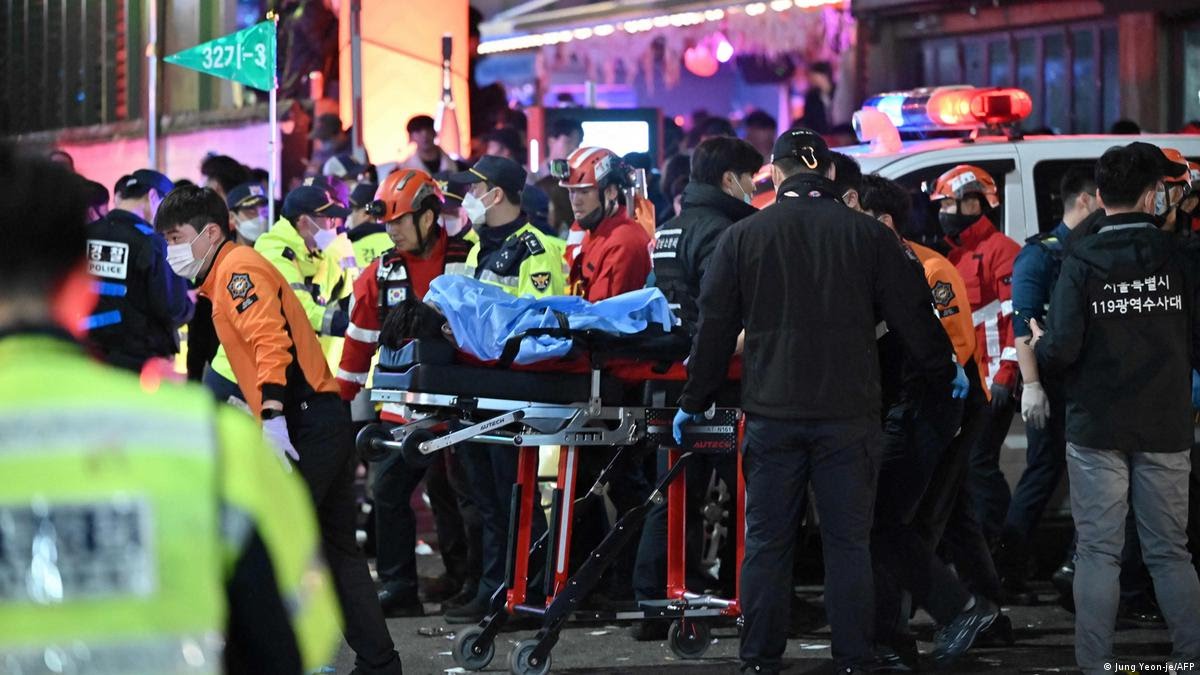
An estimated 100,000 people in a surge, costumed partygoers fleeing in terror, desperate first aid attempts on sidewalks, and dead bodies lined up in narrow streets—these were the scenes in the nightlife district of the South Korean capital as a Halloween celebration turned into a tragic night.

At least 151 individuals were reported dead, including 19 foreign nationals, and a further 82 were injured in a crowd surge and stampede in Itaewon, Seoul, on Saturday night. Most victims were teenagers and young adults in their 20s who attended the first major Halloween celebration after 3 years as the country lifted the COVID-19 restrictions and social distancing protocols.

According to Choi Seong-beom, Chief of the Yongsan Fire Department, the death toll could still rise, and the exact number of those in critical condition remains unclear. 

South Korean authorities have not yet provided exact details and are still investigating the specific cause of the incident. However, Yonhap News Agency reported that according to fire officials, dozens of people suffered from “cardiac arrest” and breathing difficulties.

Witnesses and survivors described that it was difficult to move around as partygoers were packed in the narrow streets of Itaewon. Additionally, the police were having trouble maintaining control of the crowds.

“You would see big crowds at Christmas and fireworks … but this was several ten-folds bigger than any of that,” said Park Jung-hoon, a witness from Reuters.

A CNN witness, Sung Sehyun, described the space and chaos in the scenes as a “jammed subway.”

“I saw people going to the left side and I saw the person getting to the opposite side. So, the person in the middle got jammed, they had no way to communicate, they could not breathe,” he stated.

“I was lucky to get through (but an) hour later, I heard people got killed. Because people got stamped on… and people got jammed together,” Sung added.

Many others were similarly unaware of the risk until it was too late.

“There was also a police officer screaming but we couldn’t really tell (if it) was a real police officer because so many people were wearing costumes,” Ah Su Jo disclosed to CNN. 

She elaborated that she had only realized the gravity of the situation when she took a detour and fled to safety, seeing people climb buildings in an attempt to survive. 

Addressing the nation early Sunday, South Korean President Yoon Suk Yeol declared a period of national mourning “until the handling of the accident is concluded.” Afterward, Prime Minister Han Duck-soo stated that the mourning period would conclude at midnight on November 5.

The last time South Korea encountered an incident leaving a high death toll was the sinking of Sewol last 2014, killing 304 individuals, mainly high school students.

“A tragedy and disaster that should not have happened took place in the heart of Seoul last night,” Yoon expressed.

via CNN, Reuters, and Voice of America

DepEd Spokesman Michael Poa reveals plan to omit Mother Tongue from curriculum still under review

by Vinci Tamayo || Photo Credit: George Calvelo/ABS-CBN News

On October 18, 2022, a day after the Department of Education (DepEd) Undersecretary Epimaco Densing III announced the desertion of Mother Tongue as a subject to ease the K-12 curriculum, DepEd Spokesman Michael Poa clarified during a public briefing that the plan was yet to be finalized.   

On October 17, 2022, Densing III discussed the removal of the subject “Mother Tongue,” where pupils from Kindergarten to Grade 3 learn how to read, write, and speak in their local language. He stated that the subject would be used as a learning medium rather than having 50-minute class discussions dedicated to it.

According to Densing III, the Curriculum and Instruction Division approved of this, as it aims to declutter the curriculum. He also added that declaring the omission of Mother Tongue from the curriculum opens up more time that can be allotted to national reading and math programs.

The following day, however, DepEd Spokesman, Michael Poa, reported that the approval of this plan was not yet certain as DepEd is still in the process of putting it under rigorous review. 

“Our review is not yet over. Once we have the final curriculum, that’s when we will release an announcement about what will happen to the programs, not only [in] Mother Tongue but also in our learning competencies,” Poa said during a recent Laging Handa briefing.

The plan also received backlash, with others asking DepEd to reconsider their decision. According to Dr. Romylyn Metila, an associate at the Assessment, Curriculum and Technology Research Center, Mother Tongue strengthens students’ skills in English and Filipino.

TDC, also known as Teacher’s Dignity Coalition, fully supports the plan but gives DepEd a heads-up that this must be implemented suitably.

“If we can improve their Mother Tongue skills and properly implement the Mother Tongue-Based Multilingual Education (MTB-MLE), this would also affect their mastery in English and Filipino,” Dr. Metila elaborated, adding that theories and studies can support her statement.

PSHS-EVC Awards its Scholars in Pasidungog 2021-2022

by Patricia Galapon || Photo Credit: Floydalyn Nitura

To our dear students, Antonio Brown once said: “The journey is never-ending. There’s always gonna be growth, improvement, adversity; you just gotta take it all in and do what’s right, continue to grow, continue to live in the moment.”

The Philippine Science High School-Eastern Visayas Campus (PSHS-EVC) held Pasidungog 2021-2022: The Virtual Recognition Program last October 7, 2022, in honor of the exceptional skills and academic excellence showcased by the PSHS-EVC students in the previous academic year. The event took place at the PSHS-EVC Gymnasium, while simultaneously being streamed through the EVC Direct Facebook Group.  

Grades 10 to 12 students and all members of the school faculty were invited to witness the recognition program at the campus gymnasium during the universal break last Friday at 4 PM.

The program commenced with an invocation and the singing of the Philippine National Anthem. It was then followed with the warm, welcoming remarks of Ms. Yvonne Esperas, the Campus Director. Dr. Alfred J. Miralles, a PSHS-EVC alumnus, also delivered a keynote address to further motivate the scholars to continue persevering in future endeavors. “Slow and steady wins the race,” he emphasized throughout his speech. 

The announcement of the director’s listers and awardees of SY 2021-2022 followed afterward. The Curriculum & Instruction Division Chief, Mrs. Ana Riza Gozon, introduced the student awardees, beginning with the lower grade levels and finishing off with the senior year students. Amidst the program were intermission numbers by talented scholars, Troyann Justin Pallones and John Luwenzky Jorge, who showcased their musical prowess.

Mr. Dennis Juabot, the Students Services Division Chief, concluded the event by expressing his gratitude to all participants and facilitators for their contribution to the program’s success.

Mass Shooting: Over 30 people killed by former police officer at a local day-care center in Thailand

by Daneil Anthony N. Cerdeña || Photo Credit: Arab News

Trigger Warnings for the content of this article: Violence and mentions of suicide

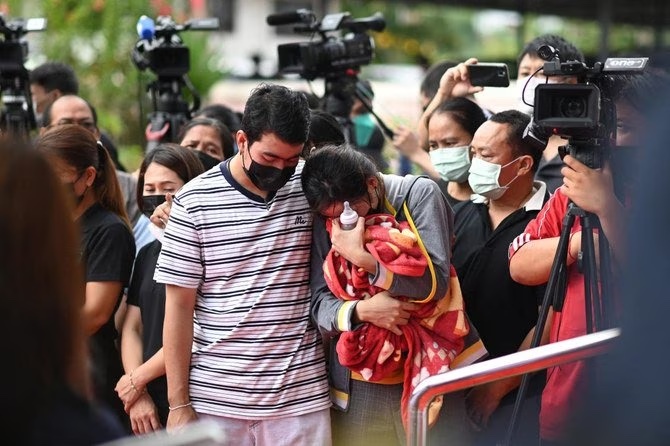
Last October 6, 2022, in Uthai Sawan, Nong Bua Lamphu, Thailand, a local day-care center shifted from being a positive place to instantly becoming a historical area due to a former police officer going on a rampage—resulting in the death of over 30 people, mainly children.

According to Aaron Karp from the Small Arms Survey (2018), Thailand is estimated to approximately have 10 million civilian-held legal and illegal firearms. In the same year, 1,359 people died due to firearms (Alpers, Philip & Picard, 2022). However, mass shootings in Thailand are rare, with the last occurrence taking place in 2020 in Nakhon Ratchasima, Thailand, where a soldier killed 29 people due to rage. However, that has changed due to the daycare attack.

The gunman was Panya Khamrab—a 34-year-old former police officer discharged from service due to his case: alleged possession of drugs.

On October 6, 2022, Khamrab attended a court hearing regarding his case. However, according to the Royal Thai Police, he was supposed to receive his verdict on October 7, 2022.

After the hearing, Khamrab directly went to the local nursery in Nong Bua Lamphu to pick up his son, although when he arrived, his son was nowhere to be found. He then began attacking civilians. 

Khamrab shot both the adults and staff in the daycare. In his rampage, he stabbed a group of sleeping children in a room, among other horrible atrocities. The police then stated that he fled the scene with his pick-up, shooting random passers-by while driving back home.

The attacker used a 9mm gun he legally acquired; however, most of the killings were committed by stabbing victims with a knife, the police added.

“We surrounded the house and then found that he committed suicide in his home,” Police Chief Damrongsak Kittiprapat said. He also added that Khamrab killed both his wife and son before killing himself. 

His attack is now the newest addition to the various massacres in Thailand’s history, with more than 30 people killed through shooting or stabbing by this former police officer. 

However, most of the children from the class were safe, as they were absent due to recent floods, preventing them from coming to the center.

Currently, it is unclear what motivated the attacker. He was, however, apparently under the influence of drugs, police spokesperson Paisal Lusueomboon told the Thai Public Broadcasting System (ThaiPBS) in a phone interview.           

Doctor Krisanaphong Poothakool, a local Thai criminologist and faculty member of Rangsit University, was also interviewed by ThaiPBS. He expressed that the Nong Bua Lamphu Massacre would not be the last of its kind and that Thai society should rethink the state of firearm possession in the country. Dr. Poothakool also suggested that a mental health screening should be conducted before an individual is allowed to possess a firearm.

The Thai government has started its commitment to solving this issue. Recently, the King and Queen visited the massacre victims at the local hospitals in Nong Bua Lamphu. In addition, ThaiPBS reported that in order to prevent gun-related violence, the topic of gun control will be brought up at a meeting of the House Committee on Police Affairs. 

Global figures all around have also shared their support and grief for the Thai people. The United Nations International Children’s Emergency Fund (UNICEF) commented on the tragedy by declaring that “UNICEF condemns all forms of violence against children. No child should be a target or witness of violence anywhere, anytime.”

In a tweet by the Australian Prime Minister, Anthony Albanese, he articulated, “It’s impossible to comprehend the heartbreak of this horrific news from Thailand. All Australians send their love and condolences.”  

“I am shocked to hear of the horrific events in Thailand this morning. My thoughts are with all those affected and the first responders. The UK stands with the Thai people at this terrible time,” Liz Truss, the Prime Minister of the United Kingdom and Northern Island, also expressed through a tweet.

Chadchart Sittipunt, Bangkok’s Governor, shared his thoughts in a tweet stating “การสูญเสียลูกคือโศกนาฎกรรมที่รุนแรงที่สุดของพ่อแม่ ผมขอแสดงความเสียใจกับครอบครัวผู้สูญเสียและผู้ได้รับบาดเจ็บทุกคน และขอเป็นกำลังใจให้พวกเราทุกคนผ่านพ้นช่วงเวลาที่หดหู่โหดร้ายนี้ไปได้ครับ [The loss of a child is a parent’s greatest tragedy. My condolences to all the bereaved and injured families. And I would like to encourage all of us to get through this gloomy time.].” 

This gave the Thai people hope since their government officials acknowledged the issue and would improve the current state to prevent a massacre from happening again.

Unity: Marcos’ solution to issues presented to the United Nations General Assembly

by Daneil Anthony N. Cerdeña || Photo Credit: Eduardo Munoz/Reuters

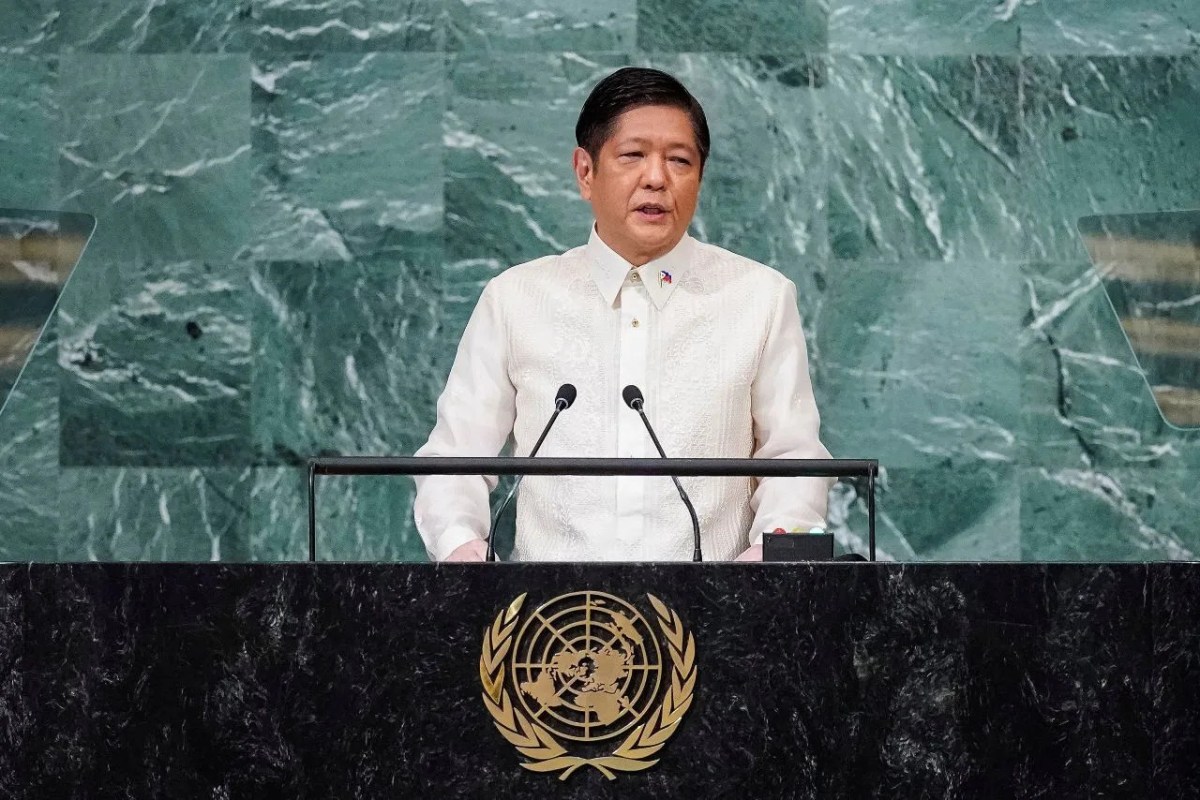
On September 21, 2022, the President of the Philippines, Ferdinand “Bongbong” Marcos Jr., represented the Philippines by speaking at the 77th Session of the United Nations General Assembly in New York.

“Climate change is the greatest threat affecting our nations and peoples. There is no other problem so global in nature that it requires a united effort, one led by the United Nations,” he commented about the need for climate justice as a global issue.

Marcos also talked about how advanced technologies are rapidly transforming human life. “We still barely understand how these transformations are unfolding and where they are leading,” he explained. He then addressed how the multilateral system of the United Nations is slowly crumbling due to an international lack of trust.

“The Philippines shall continue to be a friend to all and an enemy of none,” he added.

Lastly, he highlighted the injustice the Philippines faced during the pandemic. Marcos brought to light the unfair vaccine distribution by saying it is “evident during this pandemic when the richer nations immediately received vaccines at the expense of the have-nots.”

After discussing with the United Nations General Assembly, he offered a solution for the nations under the United Nations to stand in solidarity. “We need to reaffirm the wisdom of the founders of our United Nations. This means transcending our differences and committing to ending the war, upholding justice, respecting human rights, and maintaining international peace and security,” he expressed.

Marcos demonstrated the potential of unity and solidarity by mentioning the success of the Bangsamoro Autonomous Region in Muslim Mindanao as the centerpiece of the said efforts. He expounded that the peace our country has achieved after decades of struggle between warring factions and clansmen shows that “unity is possible even in the most trying circumstances.”

“The peoples of the world look to their leaders, to us, to make into reality these aspirations for our future. We must not fail them. And if we stand together, we will not fail them. If we stand together, we can only succeed,” he remarked, concluding his speech.