Student Loans

By Roj Faelnar || Illustration by Denine Latoja

The first thing Pisay hands you isn’t a textbook—it’s a title, heavy and gilded.

Iskolar ng bayan. 

It sounds sweet, patriotic, noble even. But with that title comes a jarring realization that you study on borrowed time, borrowed money, and borrowed faith pulled from fields, offices, sari-sari stores, and jeepney routes. 

It’s a strange kind of pride, knowing that you are quite literally being paid to be educated with the pooled chips of Filipino taxpayers. But pride has its twin—pressure. Pressure that gnaws at the back of your mind when grades slip lower than expected. Pressure that makes you hear past your teacher’s comments and into the echo of calloused hands that could have used the money spent on your education elsewhere. The tindera who counted coins at the palengke, the pedicab driver who wrestled through EDSA traffic, the OFW who sent remittances home only to be clipped by tax. Instead, their collective sacrifice amounted to your mistake on problem number three.

Pressure in Pisay isn’t a mood. It’s a roommate. It sits with you during 1 A.M. cram sessions, whispering: Someone else could’ve taken this slot, don’t be someone who wastes it. It walks with you across campus, reminding you that taxpayers are betting on your brain. It stares at you through your grades, every mark heavy with meaning.

To others, it’s a gift; to us, it’s a weight we can’t admit without sounding ungrateful. Officials call it a scholarship. Accountants call it public investment. I think of it as a debt, a gamble—a constant IOU tucked into every quiz paper, every lab report, every late-night light switch flipped on. With every assignment demanding an ROI in invisible ink: The nation gives, we must repay. Not later, not someday— now. With grades, with discipline, with the stubborn promise that we will not squander the sacrifices of millions.

So every time you scribble down an answer you know is wrong, it feels as if you’re wasting someone’s overtime pay. Every careless mistake on a test feels like a jeepney ride that went nowhere. Every late project is a wasted sack of rice from a farmer’s field. It’s not just failing—it’s an imagined headline: “Taxpayer-funded student fails biology quiz.”

It presses on your chest at night, when you wonder if you’re good enough, or if you’re just an expensive mistake, begging the question: Am I worth what they’ve given me?

The answer isn’t in medals or averages. It’s in the silent moments when you choose not to fold. It’s in the way you learn to respect the work that built this privilege, the labor of people who may never see your name but believe in the possibility it carries.

Because here’s the thing: we’re still kids. Yes, Pisay kids, but kids nonetheless. Not horses bred to race, or poker hands waiting to pay out, no, just teenagers who forget assignments, mess up equations, room-hop in the dorms, and sometimes bomb tests so badly all we can do is laugh about it. And that’s okay. It has to be okay. Nobody sane expects perfection from students still stumbling their way into who they’ll become. What’s expected is that we pull ourselves out of whatever hole we bury ourselves in, put on our uniforms, sling our bags over our shoulders and show up again anyway.

The weight of sacrifice behind our education doesn’t make Pisay scholars flawless. Far from it. What makes the experience human is precisely the stumble—the late nights where nothing seems to stick, the exams that undo weeks of review, the creeping thought that you are an impostor in a place designed for the exceptional. But perhaps that too, is part of the lesson: the nation isn’t asking you to ace every exam. It’s asking you to endure, to grow, to turn pressure into persistence.

Still, the fear never fully goes away. Even victories feel fleeting, because tomorrow’s exam waits, tomorrow’s deadline looms, and tomorrow’s stakes increase exponentially. Pressure doesn’t end—it evolves. But maybe that’s the hidden gift: pressure never lets you get complacent. It keeps you reaching, stretching, demanding more from yourself than you thought you could give.

As an iskolar ng bayan, the weight we carry is complicated. There’s a heaviness of always feeling the need to prove ourselves worthy of an education built on sacrifice. Then, there’s the messy reality of stumbling along the way, of effort ending in failure. The weight reminds us that we are tethered to something bigger, something shared. The scholarship is itself a kind of loan – not measured merely in pesos, but in trust. And yet, it is also the most rewarding debt one could bear, because it is the nation that entrusted it to you. Every stumble, then, is not disqualification, but test: proof that even faltering steps can still be toward service. Rising despite, or precisely because of it, is payment, however small, to the nation that taught you not just how to think, but why to matter.

A Journey to Home

By Althea Samson || Graphics by Tyreena Tuazon

The air was thick from anticipation. It has been approximately 547 nights since she has last stepped inside the buildings she once called home, each night stretching longer than the other. The nostalgia of the place hit her once more as she stepped through the doors.

On the other hand, there was another who came from afar. One who was looking for a place to call home. He didn’t know what to do, or where to go. The pang of realization hit him as the plans he had set for himself in the future didn’t pan out. He wandered around tirelessly, walking through various corridors– yet, none of them felt like home. That was until he sensed it. Whispers seeped through the cracked walls, telling him that this place might just be the one he was looking for. 

She walked through the hallways. The sunlight shone through the crevices of the open air corridors, the wind gently rustled the leaves of the trees that surrounded the campus, the weathered red brick walls– as she walked further, the memories she had of this place washed over her in an instant. She remembered it all too well. 

The bustling atmosphere, the laughter of students bouncing off the walls, the whispers she shared with her colleagues– she felt at home once more. Despite the changes in atmosphere, the students, the faculty– there was no doubt that the feeling of being back home was laced with an intense longing. 

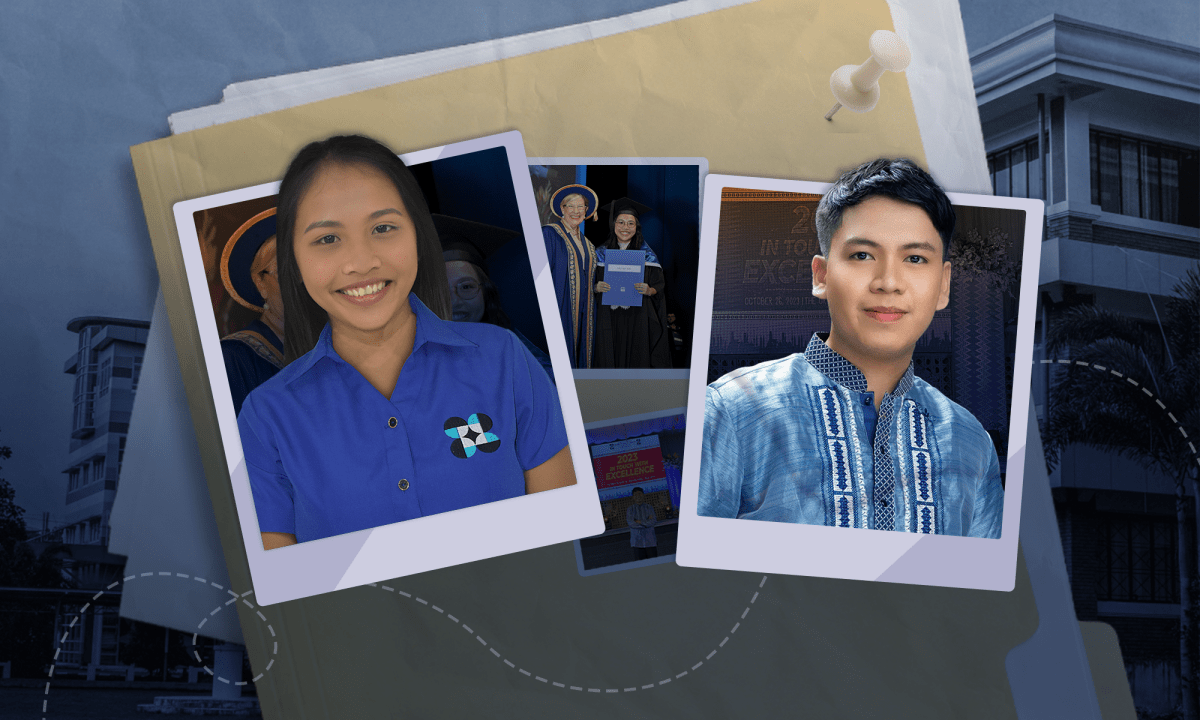
Despite the occasional bout of home-sickness plaguing her journey in Brisbane, Australia, Ma’am Nikki Rabe has finally returned to PSHS-EVC. While she was in the Land Down Under, she pursued a master’s degree in Education specializing in both STEM Education and Inclusive Education at Queensland University of Technology. However, Ma’am Nikki is no stranger to being far from home. Hailing all the way from Dinagat Islands, she graduated Cum Laude with a Bachelor’s Degree in Physics at Mindanao State University. She began her journey as a teacher here in EVC in 2019, and since then, she has been glued to the Physics Unit, the safehaven of the subject in which her passion is unmatched. Physics, as she describes it, is both challenging and exciting. There’s no doubt that with her presence gracing the halls of EVC again, students will be introduced once more to the wonders and intricacies of Physics.

Meanwhile, he eyed the place. Gazing at it with wonder and fascination. He knew going here wasn’t his original plan. However, the appeal of this unexplored realm drew him closer and closer. A whisper from within was urging him to take a step inside. Without a doubt, he started walking closer and closer – until he took a step inside. 

Perhaps the abruptness of this decision was the turning point in his journey. 

To him, the place was a culture shock. The atmosphere was something he was not used to. A sense of youthfulness and enthusiasm echoed through the hallways; something he’d never quite been in the midst of before. He watched the students as they hurried past, their faces lit up with determination. This scene was more than uncommon to him. Being used to the stoic expressions and dull environment of higher educational institutions, the attitude of these students were contradictory to that of his peers which he had grown used to during his formative years in college. Navigating through this new environment was daunting, it was going to take time to settle in. Regardless, this new place might just be one he would grow to call home. 

Sir Gideon Yepes, also known as Sir Gids, a new teacher of the Biology Unit, has meticulously stepped into the gates of PSHS-EVC. He had just graduated from Visayas State University as a magna cum laude with a bachelor’s degree in Biology. Each lesson he imparts with enthusiasm, his passion for Biology burning bright, flickering with intensity and warmth– despite being a first-time teacher, there’s no doubt that Sir Gids greatly enjoys teaching the subject he loves the most. 

Home isn’t just confined to a physical space. It takes on many forms. Home can be found in between red bricked walls, the yellow gingham skirts seen in every corner, the silent whispers of gossip shared in the faculty room, and the passion for science. 

Two pairs of footsteps resound against the stone floors, each arriving from different journeys. Whether it be nations apart, or just around the corner, one thing is certain– they have finally arrived home. 

Finding Yourself Amid College Chaos

by Aine Latoja || Photo by Ashkinaz Canonoy

Everything, everywhere, all at once.

Picture this: you’ve finally reached the last year of high school, and everything seems much easier now. Class schedules are freer, memories of junior years reminisced, and there’s an air of ease and confidence that wasn’t there when high school first began. You think to yourself, ‘Finally, I’ve reached the end!’

Until college application season begins.

Everything: Entrance test schedules are announced, essays are suddenly due left and right, and recommendation letters are requested from teachers. All these things are happening, all at once. You knew it was coming, but in hindsight, the pandemic doesn’t really prepare you for the coming war that is college application season. The mere fact that the world was in turmoil added an extra layer of stress and uncertainty to an already daunting process. Despite all this, you have to push through.

While some already knew their path in life, most are still undecided— and that’s okay. How can big life decisions be made so early in life? (as if signing the Pisay contract at barely 12 years old was enough) Deadlines are suddenly placed on these major decisions and it’s up to you to find out what you really want. Ready or not, the world continues to go on with or without you.

Everywhere: And then it hits you. Imposter syndrome comes much like bumping into a wall of bricks. It suddenly strikes at 4 AM on a Sunday night as you’re finishing an application essay, once again when friends and family ask about your plans for college, and again when you’re staring at the ceiling pondering on what it is you really want. It’s a never ending cycle of not feeling enough and existential dread.

The waiting game begins once you click the submission button on your application. From suddenly being bombarded with endless requirements to doing almost nothing but sit there and wait. This is the time, you realize, to focus on senior year and live in the moment without thinking of the future for once.

All at once: The weight of the decisions you’re making hits you like a ton of bricks. Questions flood your mind: Who am I? What do I want? Can I live up to everyone’s expectations? It’s like standing on the edge of a cliff, staring into the vast unknown of the future, and realizing that you have to take a leap of faith.

At some point, the smoke clears. Is our identity formed as we grow? Or is it already within us, waiting to be discovered, like peeling the layers of an onion? Perhaps it’s a bit of both. College application season forces us to confront these questions head-on, forcing us to delve deep into our aspirations, fears, and desires. It’s a journey of self-discovery, a process of unraveling the complexities of our own identities and figuring out who we truly are and what we want out of life.

As the dust settles and the acceptance letters start rolling in, we begin to piece together the puzzle of our identities. Taking the next step forward into the unknown territory of college life, we must carry with us the lessons learned, the self-discoveries made, and the identities formed during this transformative journey.

Welcoming The Unknown

by Flaer de Leon || Photo Credit: BusinessWorld Online

Another year, another adventure. 

Here we are again, at the precipice of a new year. There is comfort in the familiarity of the chaos. Fireworks light up the sky, laughter fills each home and street, children puff into their party horns, and the music is so loud it vibrates the ground. The end of this year feels all so nostalgic and yet it couldn’t be much more different than the last. After all, nothing is immune to change. In a world where everything is temporary, change seems to be the only thing constant in our lives.

Over the course of the last year, we have cried and laughed, with friends and family and sometimes even alone. We’ve been put in situations where our cores were left shaken and where we questioned our reason for being yet again. We have gained new experiences,  heartbreak, and insights on reality. I doubt any of us are the same as we were last December and now we’re getting ready yet again for a new year. Another year of expecting the unexpected, riding the waves of life, and adapting to the ever-changing. 

I admit, the future is daunting. The uncertainty that comes along with it causes anxiety and overthinking. Especially as Pisay scholars who undergo increasing expectations with different subjects and non-academic requirements almost every year, the added stress of the incoming year is debilitating. As a Grade 11 student, I don’t even know which college I’ll get into or if I’ll still even be a scholar by next year. There are multiple possibilities that come with the new year and a hundred things could go wrong. 

But then again, a hundred things could also go right. There are multiple amazing possibilities and some of those are that I might get into a college abroad or if I work hard enough I might become a Director’s Lister. The uncertainty of the future is what makes it daunting but it is the very thing that makes it exciting. Anything is possible, the future is not limited by the past. 

We may not know what the future might bring but we face it nonetheless. We didn’t come this far to only get this far. In the currents of change, we ride the crest and troughs. And so we continue, as Pisay scholars we continue to fight for what is right and continue to pursue excellence.

With courage as our armor, perseverance as our shield, and kindness as our weapon, we get ready for another adventure. 

Are you ready for your quest, explorer?

Christmas Down Under

by Zandra Mendoza || Photo by Philstar Global

It’s the 24th of December. The scent of Noche Buena dinner permeating the air, the sound of wrinkling gift wrap being stripped apart by children underneath embellished trees singing around the living room, and the soft glow of series lighting wrapped around a tree are what fill the house of a family living inside a gated community. Their subdivision is raised upon hilltops conveniently tall enough to not catch a glimpse of the people who live just below their feet. 

The people who have never felt leche flan melting on their tongue on Noche Buena. Children who’ve never been under the shade of a plastic pine tree, with holes in their socks and no milk and cookies left for themselves, much less for Santa. People whose dinner tables are not chock-full of hearty, warm meals on the eve before the biggest holiday of the season.

People whose Christmas is not a holiday, but merely another day spent working for the knife. 

Christmas for them is walking the streets with aching feet as the buildings they pass by blast Mariah Carey, blissfully unaware. Christmas is worrying about whether or not a thirteenth month pay is coming, if they’re lucky enough to even work minimum wage. Christmas is squeezing through aisles in divisorias to find toys cheap enough to keep at least some sort of Christmas spirit alive for their children who’ve yet to realize the reality of what Christmas is and will be like for them. Christmas is no day to celebrate at all. It’s a day where the line between them and those that live comfortably above is even more apparent. 

It’s the 24th of December, still. The scent of a newly opened can of sardines and soy sauce permeates the air. The sound of children singing off-tune and mismatched lyrics to holiday songs in front of large mahogany doorsteps, some even simply begging for a morsel of food or a dime, chimes through. The flickering glow of a lightbulb seconds away from going out is the only light left shining on them. These are what fill not only one house, but dozens of streets where dilapidated houses line up in rows.

This isn’t merely Christmas for one, or two, or a few people. This is Christmas for all that live below privileged feet, no matter how deep under. This is Christmas for most in a country where staying warm on the eve before the 25th is a luxury in itself. 

This is a Paskong Pinoy, in a country where even the Christmas Spirit has a price.

Nothing Anywhere Can Compare

By Zachary Tan || Photo Credits: Reading Rockets

“He had six small wheels, a short stumpy funnel, a short stumpy boiler, and a short stumpy dome,” the beginning of possibly the most iconic of its stories. When you hear those enchanting words, you know you’re in for a wild adventure. From a heroic escape from death to a weary old man given another chance to prove himself once again, the Railway Series has got it all. You may not have heard of this unsung hero of children’s stories, but you definitely know of the television series it spawned, Thomas the Tank Engine and Friends.

Those innocuous stories of sentient locomotives and their hijinks have had immeasurable effects on my personality and myself as a whole to my benefit or, as my “friends” like to say, to my detriment. Those friends of mine can also attest to my englishero-ness, which I partly attribute to my fascination, maybe addiction, to the television series and books.

There are a multitude of reasons why I still come back to a children’s book series despite being in tenth grade, aside from me being a five-year-old reincarnated into a 15-year-old’s body, is the boundless respect the author, Reverend Wilbert Awdry, had for the series, characters, and greatest of all, the readers, like Little Timmy and I. The series treated the reader, whether they be adult or child, with a level of maturity, as Awdry empathized with the poor souls, in the guardians and parents, who would have to constantly read and reread the stories to their children and the conspicuously older man-child sitting next to them. In turn, this led to little old me learning crazy big new words like “indignity”, “deputation”, and “quay”, which I probably misused anyway.

Aside from my apparent unceasing barrage of grammar and spelling corrections, my friends tell me that there’s another reason why they are figments of my imagination, that being my “challenging” personality. There are many great moral lessons in the series, big and small. However, what I admire most about its lessons is their simplicity yet not being spelled out in large bold font. Children may be young and slightly dim, but they are absolutely not complete blockheads who are incapable of critical thinking. The slow-paced nature of the Railway Series’ stories also allows for complete comprehension of the stories, which is why it has always appealed to a younger demographic and those on the autistic spectrum. This all shows the love Awdry had for not only his stories but for the children reading his books as well, even if one or two may end up a schizophrenic nerd.

All this talk about an old children’s book series from World War II is all for me to say that books are for everyone. If even a self-avowed non-bookworm like me can find a series or two I like, anyone can. Oh, who am I kidding, it’s obvious that you should buy me the Complete Series this Christmas. Thanks!

Conquer D-Day The Pisayer Way: 10 Tips to Ace Your NCE

by Ellyce Lim || Illustration by: Kyle Nase

THE NCE IS BACK! Right off the bat, let’s take a moment to appreciate the fact that you are applying to Philippine Science High School. Has this been your dream high school forever? Did you only apply because of your friends? Or are you perhaps taking it just to see if you could pass? No matter the case, I’m sure you’d want to ace this exam.

So to help you out, here are some tips and tricks from your future senior ates and kuyas that could make your NCE experience much less daunting.

Tips, Tricks, and To-do’s

  1. What’s in your bag?

Trust me when I say you’ll want to prepare your bag beforehand. The last thing you need is to get to the testing center to find you forgot to pack an eraser, calculator, or worse— your lucky pen. In all seriousness, it may seem like a small thing to do, but it can help a lot knowing that you’re ready and set to go.

  1. Food is life

One tip you’ll hear from almost every NCE taker is to bring snacks. Biscuits, chips, drinks, water, whatever you choose, ensure it is convenient and filling. Just like with learning, taking a test on an empty stomach is never a good idea. You’ll need all your focus to be on the paper, not your grumbling organ. I prefer smaller snacks and candies, but that can vary among people. Make sure to bring your favorites, but avoid messy food!

  1. Sleep like a baby

Proper rest is super important for when you take the NCE. Your brain won’t be at its best if you lack an adequate amount of sleep. 8 hours at least. Trust me, you don’t want to be falling asleep while taking (speaking from experience).

  1. Be comfortable

Preparing yourself for the test includes being as comfortable as possible. The test isn’t about looking good, so be sure to wear something decent but comfortable.

  1. Time waits for no one

Always be aware of the time. Usually, the proctors will update you on how much time you have, but sometimes, they can forget to do that. Just to be safe, bring a watch since you can’t use your phone during the test, and remember to check it occasionally.

  1. Don’t panic

It’s pretty obvious that you shouldn’t panic, but it’s worth reminding. If you feel like you don’t know the answer to a question, just move on to the next and go back to it later. If time is almost up and you have a lot of blanks left, guess! Try to finish the paper as much as possible, even if you have to resort to guessing. Statistically, you would still have a chance to get the right answer.

  1. Gut Feel is so Real

I cannot count how often I’ve heard people say, “I shouldn’t have changed my answer” or “I should have trusted my gut” after taking a test. It’s good to rely on logic most of the time, but sometimes you just need to step back and let your instincts take the reins.

  1. Imagination

This tip is for the abstract reasoning portion. Your imagination is a valuable asset! When you get questions that require viewing other perspectives, you can try to picture the object in front of you. Imagine that it is tangible. Spin it, twist it, and move it around so you can see what it would look like. I know you might look like a weirdo in the process, but trust me, it works.

  1. Question Clues

Sometimes the questions in the test reference each other. You might be able to find the answers by simply reading other questions, so take note of the repetitions and reoccurring themes while you go through the test.

  1. Stop Reviewing

I know this sounds ridiculous, but this is 100% serious. Stop reviewing the night before and the day of the test. You’ve done what you can and one day of extra reviewing cannot change that much. You need your mind to be as fresh and energized as possible. So, take the night off to prepare your things and just go to sleep, okay? You need and deserve the rest.

To sum it all up, Prepare early, be comfortable and calm, and be sure to be in your best condition before the test. Stop reviewing the night before and instead, use the time to prepare your things and get enough rest. During the test, trust your instincts, use your imagination, and be on the lookout for question clues. Finally, remember that you deserve this. Taking the test is already a huge achievement on its own. You can do this, future Isko

Good luck, and see you in Pisay!

When Home is too Far From Reach

by: Lianna Lopez || Illustration Credit: Ashkinaz Canonoy

Stack-by-stack, elementary school textbooks piled themselves on top of one another on the round table of the family dining room. Along with them was a collection of old and crumpled academic worksheets and eraser debris scattered all over. In the midst of it was a girl in thick-rimmed glasses absorbed in the confines of academic work. But this isn’t about her. It’s about the boy who slept just a room away from where she sat. It’s about his story and a visitor whose presence did wonders. A visitor whom we’ve all met at least once in our lives. 

Unlike that overachieving little girl drowned in the sea of academic life, this lad was stuck still and lost sitting on a boat in the midst of turbulent blue ocean waves. His tiny boat fits just him— no room for stacks of textbooks, used worksheets, thoughts of anything of the sort. It was a place devoid of any living human but himself. A place where he was alone, and his notions could go uncharted–where home was nowhere near. He was lost. Afraid? Maybe. However, on that Sunday noon, he was in a deep lonely slumber.

“Maupay nga udto,” the woman with a neat high bun greeted as she entered the house. The kid sat by the table looked at her curiously, slightly intimidated by the presence of a stranger in her home. She observed the visitor as she stood there with a warm smile on her face, one so warm and bright the gloomy weather did not feel as gloomy as it should have been. Shortly after, she fell into a conversation with the mother whose hands were damp and clammy as she led the woman who had introduced herself as the boy’s teacher and homeroom adviser to the room wherein the boy had himself barred in. She let herself inside.

She let herself sail across the dark, barren, and solitary waters the boy had remained afloat in for the past several days. He had spent the minutes and hours of the clock and the days of the calendar locked in this cataclysmic abyss, losing touch with the other world–refusing the hand of those who had tried reaching in. Yet, this woman, whose black and white-streaked hair, perseveringly and unrelentingly took in the extra time, work, and effort willingly on a Sunday noon to reach in for this helpless student. She could’ve used the day to spend time with her own family, but she was here. This spoke volumes.

He was a failing student. Left too much astray in the dark. Yet, this teacher had lost no hope in him. She had welcomed him, and had urged him back. And that says even more. 

She was his teacher: a second parent, a second mother. She was someone who had cared and understood enough to unwaveringly reach out to a student whose times had been difficult. Someone who would not so easily let her own student stray away and give up on quality education, on a future that awaits him. She is who a teacher is. She is who teachers are. 

They are not just educators in the classroom but also guardians willing to guide their students outside of it —whether these be about complex trigonometry and stoichiometry problems, or the heart-wrenching argument from last night’s dinner. They are the adults these children can turn to for advice, knowledge, and values essential to their growth as human beings. They are the grownups outside of their homes who can help mold a brighter future for these young individuals. 

As students, we have encountered these teachers. They, who’ve helped us as we’ve, at least once, strayed far too deep beyond the dark waters of this world. When we’ve found ourselves furthest in thunderous storms and desolate seas, they are the lighthouses that guide us in whipping through the challenges and sailing our way back to the right path in dreary times. 

When home is too far from reach, we see our beacons of light: we see our teachers— our life counselors, our academic instructors, our second parents, and everything more. 


Editor’s Note:

We at the Science Net are more than grateful for our teachers who make EVC home. To our second parents, greatest confidants, and unsung heroes, your dedication and love are truly worthy of all recognition.

Thank you for imparting to us your superpowers, so that one day, we, too, could become the heroes in our own stories.

Happy Teacher’s Day!

Embracing New Beginnings: SY 2023-2024’s First Week Recap and Insights

by: Poimen Agnila & Zenas Agnila || Photo Credit: Nathalia Canlas

On a Wednesday, in a Zoom Meeting, we watched it begin again.

Behind the glare of monitors, students of Philippine Science High School – Eastern Visayas Campus (PSHS-EVC) welcomed the new school year with nervous anticipation and high hopes, ready to take on the perils and joys Pisay life has in store. 

After three days of rigorous orientations and enlistments, the Virtual Opening Program of PSHS – EVC, held through Zoom from August 23-25, 2023, has officially drawn to a close.

Here is everything you need to know and more about what happened in the past three days.

Day 1 (August 23, 2023)

Starting the morning off with a bang, Pasidungog 2023 recognized the efforts of last school year’s Director’s Listers and called on students to give this year their very best. 

Afterward, it was the school personnel’s time to shine as their names and designations were introduced one-by-one to the student body, offering scholars a chance to meet the staff who would guide them through their arduous journey at Pisay. 

In the afternoon, the orientation program was set in motion with talks from the different school divisions: the Student Services Division (SSD), the Curriculum and Instruction Division (CID), and the Finance and Administration Division (FAD).

The day’s Zoom meeting concluded with orientations for the different school services: the Guidance and Counseling Unit (GCU), the School Laboratory, and the Discipline Office (DO), among others, which aimed to enlighten students as to which offices to approach should they have a specific need to address. 

Day 2 (August 24, 2023)

Scholars kickstarted the first half of the second day with the long-awaited Alternative Learning Activity (ALA) Orientation. FAYP students were offered to join the existing school ALAs, which consisted of Maker’s Movement, Musikanta, Pisayaw, Rondalla, Sikatala, and SUGA. However, new additions were made, much to the delight of the ecstatic students. The latest set of ALAs making their debut were Alquemie, Amateur Astronomy, Basketball, Malay, Mulat, Mamamahayag, Mapa Pisay, Planet Lemniscae, and Reel Talk. The Echo ALA also made its electrifying comeback this school year. 

The rest of the day was dedicated to online ALA registration and Club and Organization Orientation. The students were introduced to PSHS-EVC’s Red Cross Youth (RCY), Booklover’s Club, and our campus’s very own Model United Nations (MUN) Club.

The multiformity of these ALAs and clubs alike is one striking manifestation of the diversity and inclusivity that PSHS-EVC upholds. For a system that prides itself on creating globally competitive Filipino scientists, Pisay is a safe space to practice both science and the humanities. Whether you’re a scholar with an affinity for writing, a dancer, an athlete, an astronomy enthusiast, a language buff, or a coding prodigy, Pisay has a place for everyone on campus.

Day 3 (August 25, 2023)

On the opening program’s third day, homeroom orientations for Foundation and Advancement Years (FAYP) and Specialization Years (SYP) were held.

Juniors were sorted into designated breakout rooms per section, with some electing classroom officers while others opting for face-to-face nominations the following week. Homeroom advisers also briefed the thrilled scholars on what to expect this school year and the general ethics in the classroom. Students were introduced (and reintroduced) to the classmates they would be calling home for the next ten months. 

For SYP students, both SCALE and Homeroom orientations were moved to next week whenin-person classes officially begin. 

Wrapping the final day up, the last set of Organizational Meetings commenced. Scholars were acquainted with PSHS-EVC Organizations such as the Society for the Advancement of Research in Science (SARS), CAFÉ Pisay, Innovators Club, and the Pisay Math Circle. 

New Beginnings

Although the festivities were slightly less vibrant owing to it being held online, the estranged setup did not dampen the students’ resolve to remain hopeful for this school year. 

When asked what they anticipate the most, scholars emphasized the unique student culture at Pisay, highlighting both the hardships and pleasures of high school life in EVC. 

As a freshman within the esteemed halls of Pisay, the anticipation centers around an immersive experience. The prospect of engaging with new and diverse subjects, forging connections, and plunging head-on into the rich tapestry of curricular and extracurricular pursuits paints an exciting canvas for the school year. It’s an eagerly awaited chapter promising personal growth not just as a writer but as a person aspiring to change the world”, shared incoming freshman Zoe Quibranza. 

I look forward to our batch hosting this year’s Sports Fest because it’s going to be our first time organizing a school-wide event. Not to mention the fact that our first face-to-face SF experience was just last year“, stated Batch 2026’s Samantha Macabit.

With last school year not setting a good entry for the beginning of face-to-face classes, I’m looking forward to this school year’s improvement. I’m excited about the lessons and hardships that are to come. In terms of finally reaching the Specialization Years Program, I’m looking forward to the different activities that SCALE and the new electives can offer, and of course, the free time that comes with our new schedules. I’m also looking forward to what the Grade 10 students can offer this school year, especially with Sports Fest, after having been the batch to host the event last year”, remarked 11th grader Kyle Nase. 

Indeed, the first few days have been a mix of frustration and excitement. Over the week, there have been concerns raised and expectations not met. However, it is the unwavering tenacity the scholars have shown despite the setbacks within that makes this year something truly remarkable to look forward to. 

Adieu, Arimo: Looking Back and Moving Forward

by: Poimen Agnila || Photo Credit: Leila Sabando

The Academic Year 2022-2023 has been filled with firsts for students who never really had the chance to live their high school life on campus. But for Batch 2023, it was a school year of lasts: a last Sportsfest, a last prom (which was, sadly, also their first and only), a last SMT Week, a last Pisay Night, and one last chance to savor the bittersweet moments Pisay is only so capable of creating. Indeed, the road to where they are now has not been an easy one. It was a trek riddled with hardships, isolation, and the ever-present pitfalls of being a scholar in one of the country’s most rigorous academic institutions. However, it was also one filled with hard-earned lessons and fond memories, which the batch will surely look back on in time. Now, as the yearly profile picture blast blesses our newsfeeds with glimpses of the batch’s colorful Pisay life, let us take a look back at the experiences and insights they’ve gained in the past six years.

Challenges During the Pandemic

Having had their 9th-grade year cut short due to the onslaught of COVID-19 in the Philippines, Batch 2023 had to spend the following two grade levels isolated inside their homes and away from the company of the classmates and batchmates they have bonded with over the past three years. Zoom meetings replaced the familiarity of the classroom setting, and post-class hangouts with friends took the form of Messenger group chats. Of course, this setup came with a new set of challenges, with the consensus being that the disconnection the pandemic caused strained a few relationships within the batch. 

“For me, I think the pandemic brought the batch further apart from each other because, during the two-year online classes, a lot of relationships drifted apart due to not being able to see each other. I also think that personal problems arose during the pandemic and made it harder for many people to communicate with their friends,” Paola Comonal shared.

Favorite Things About Pisay

While there’s a lot to love about the school, few things truly make Pisay, Pisay. For Kyle Balasanos, some things he’ll miss when he goes to college are the school events (especially the rave nights) and the chika sessions with friends, which is everyone’s favorite pastime. 

“I will definitely miss the rave nights because it has always been iconic. It’s fun to party inside the school, especially when it’s a once-a-year event. I will also miss the ranting/chismisan sessions as it’s a way to vent out with others who share the same experiences, and at the same, it’s also a way to socialize,” he shared.

Advice for Younger Batches

Of course, a batch article would not be complete without a few words of wisdom from the seniors. When asked for a piece of particular advice they wish to pass on to the younger batches, Denice Carles shared, “If you are having a hard time or you just don’t enjoy math at all, please do yourself a favor by not choosing Math Level 2 for your senior years.”

Another tip from Denice for the upcoming college applicants is, “If you have plans to take medicine, but you’re still unsure, pick at least one college where med isn’t your first choice course. Sometimes, what you want for college will change, and you’ll only realize it when the results are already out.”

Friendships and Relationships in Pisay

     It is no secret that one of the deciding factors in a student’s success as a scholar is the people they choose to surround themselves with. For Gian Tongzon, it was the support system he gained that made his Pisay stay worth it. 

“Without the friendships and relationships built through the six years, my high school life wouldn’t be complete. Friendships supported me during my ups and downs. Having friends that understand my struggles and experiences gave me a sense of comfort that helped me go through the six years. My relationship with teachers also helped me as they have imparted knowledge and provided guidance, encouragement, and valuable life lessons. These connections have greatly enriched my high school journey and will continue to impact my life beyond graduation,” he shared.

Regrets and Hopes

However, like everything, regret is also inevitable. For Phem Nardo, they regret not having enough time to create more friendships within the batch. 

“Towards the end of our last year, I felt like I got a lot closer with the batch, and I can’t help but wish I had befriended many of these people earlier, so I think that’s my biggest regret. Back then, I missed so many chances to make friends and talk to people I found interesting. Pisay has some really fun people, many of whom I only got to know and be friends with recently, which is a bummer because we’re leaving in just a few days. Regardless, I wanna make the best of these last few days, but I still do regret not being open and friendly,” they shared.

A Legacy to Leave Behind

Every batch has its ups and downs; some things they would rather forget, and others they will want to immortalize in their memories. But in the grand scheme of high school, it is ultimately the legacy they will leave behind that will be forever engraved in the halls and classrooms for the batches that will come after them. When asked what she wants her batch to be remembered for, Norielle Eco shared, “I think for me, what I want them to remember about us is, no matter how chaotic and disorganized we were, we were still able to make it through.”

For Batch 2023, what distinguishes Arímo from the rest is their exceptional growth as a batch in overcoming differences, despite the numerous hurdles they faced during their stay in Pisay.

“In terms of legacy, we could not establish it fully due to the pandemic’s onset during our ninth grade. During that period, we were supposed to begin showcasing our batch’s potential and involvement in various activities. Unfortunately, the transition to online classes presented challenges, impeding us from making any substantial impact. By the time we resumed in-person schooling, we had already reached Grade 12, nearing graduation,” they shared. 

“Moreover, when it comes to distinguishing ourselves from other batches, we collectively concluded that pinpointing a specific aspect is challenging. However, if we were to describe our batch, the word that comes to mind is “chaotic.” We experienced a multitude of differing opinions and ideas, which often presented obstacles for us. Nevertheless, in retrospect, we managed to adapt and complement each other’s weaknesses—a feat we were unable to accomplish in the previous years. The growth we witnessed within our batch is something we take pride in; it is truly an achievement. Additionally, while unity may elude us most of the time, we find that we get along quite well when it comes to games, fun activities, and embracing our wild side,” they added.

Arímo, the batch’s chosen moniker, comes from a Hiligaynon word meaning to rely upon, shelter oneself behind, ask for help or recommendation, or to be backed up—reflective of their pursuit of service as scholars. Indeed, now more than ever, we need people who we can trust, who will fight for those who cannot fight for themselves, and who will choose to do what is right despite what is easy. Truly, Arímo’s chosen emoji of a sword is reminiscent of Pisay’s call to action to help those who are helpless and to use the knowledge and values its scholars have been armed with to be a weapon of good change in the greater battle that is serving the people.

     While their final school year comes to a sentimental close, moving forward is just as important as looking back. Although goodbyes are undoubtedly difficult, one can rest assured in the fact that with every ending comes an opportunity for a new beginning. Now, as the batch prepares to exit the hallways of the high school that molded them, they bring with them a new kind of hope—that the different paths and college campuses that await them might be able to benefit from the lessons they’ve discussed inside the classroom, the new perspectives they’ve gained from the friendships and relationships they’ve formed, and the experiences they’ve lived through from the unique, exhausting, beautiful, and crazy six-year adventure of being a student at PSHS – EVC.