Tapestry of Tradition and Justice

By Sophie Fabrigar || Illustration by Joxyne Gravoso

Indigenous communities in the Philippines, from the Ivatan tribes in Batanes to the Badjaos in Tawi-Tawi, have developed vast and beautiful customs that stem from a long and rich history. In celebration of National Indigenous Peoples Month, the beauty of indigenous culture is appreciated. However, certain aspects of their traditional ways of life put into question the Philippines’ careful balancing act between indigenous traditions and modern values. 

For instance, the Teduray tribal council of Mindanao resolve rape cases through compensation or arranged marriage instead of imprisonment. In cases where a minor gets raped, as part of their tradition, the victim is offered a certain amount of money or livestock by the perpetrator. Otherwise, the tribal council may advise the victim to marry the offender to clear any crimes committed against them. However, if the family declines this traditional justice system, they may file a legal case against the perpetrator of the rape. However, this rarely occurs due to the exorbitant costs, tiring bureaucracy, or a number of other roadblocks when filing a lawsuit.

It may seem to an outsider that such practices are barbaric and outrageous, particularly from the viewpoint of current justice systems. The concept of compensating for sexual violence through payments of money, providing livestock, or marrying the abuser dismisses the trauma the victim experienced and leaves a bad taste in many people’s mouths. However, understanding the cultural and historical context behind these practices is highly important, as these traditions are often the glue used in these indigenous justice systems to maintain social stability within the community, especially when outside solutions fail. Thus, as the Philippines’ formal legal apparatuses fail to adequately serve its indigenous communities, these traditions serve as easy to use failsafes to lean on during disputes for these communities.

Alongside this, though it is necessary to differentiate between tradition and the acknowledgement of human rights to solve these problems, haphazardly imposing external laws on indigenous communities without regard to their significance and norms results in the destruction of traditional authority and the fostering of aggression both within the community and externally towards those who disrupt the regular order of the community. Thus, it is unreasonable to call these traditional practices terrible or unfair from an external point of view as they take up the critical roles as cultural responses to the challenges that modern legal systems have previously and continuously failed to provide for such as through a lack of resources and servicing of these communities by the nation’s legal apparatus.

While these cultural practices are indigenous methods of justice and community peace, they show the fine boundary between societal and legal expectations set in the modern world upon these communities. An example would be Republic Act No. 8371 of 1997 which recognized the right to self-government, including the existing traditional justice system of the Philippines’ indigenous peoples. This law adopted the concept that culture and practices, such as compensatory or community-based settlement, affect the peace in such societies. It enables the communities to have their courts and settle cases through traditional and customary law which is consistent with their practices.

However, as an extra precaution, if such indigenous justice practices would be perceived as a violation of the victim’s rights, or if the family wishes to take the case to court under the Philippines’ national justice system, provisions are in place to allow for this. This could then also result in a suit before the courts of the Philippines exposed to national laws such as RA 8353, the Anti-Rape law declaring sexual violence as a crime and punishing offenders. However, oftentimes, due to inadequate resources in the implementation of this, during the few occasions in which these victims wish to take such cases to formal court, they are forced to resort to traditional systems due to a variety of reasons including payments and the large effort required.

Given the variety of indigenous practices and the downfalls of the current system, it is unfortunate that the Philippine government has not yet envisioned a strategy that integrates these traditional practices with the national laws, especially in cases where people’s rights may be concerned. Customary justice systems, which are tailored to the cultural specificities of a given audience, have been used by indigenous peoples for a long period, but such systems sometimes conflict with modern laws. With this, the state can work first with indigenous peoples by focusing on their chiefs, as a way of creating a system that balances the existing structures concerning traditional power and community peace and the incorporation of modern legal shields. This way, the country can adequately respect the richness of various indigenous peoples’ cultures and provide for equality and justice among all its people.

References:

Stars, Scandals, and the State

By Chris Jon Peñaflor || Illustration by Joxyne Gravoso

What exactly does it say when voters cast their ballots based on familiarity with the candidates instead of understanding their platforms and assessing their actual capabilities to lead?

In the realm of politics, votes are often cast due to the significant influence of a candidate’s name recognition. However, Filipino voters should shift their focus to a candidate’s qualifications, competence, track record, tenacity, and accessibility to the masses. The country’s leaders should bring sound value, strong educational backgrounds, and extensive leadership experience. 

One significant issue currently faced by the country is the tendency of voters to equate a candidate’s visibility with capability. Recently, several well-known celebrities and entertainers have taken the position of public servants, successfully gaining mass support despite lacking leadership skills and political experience. Yet, this problem is not solely rooted in the nation’s voters, as many are not privileged enough to gain access to quality education. Those who have inadequate awareness and understanding fall victim to manipulative tactics during campaign periods. Even before the election, candidates often use the “mere-exposure” effect. This involves distributing printed materials with their faces in certain areas to gain repeated exposure. This tactic subconsciously influences the minds of voters, making the candidates appear favorable and fit to be leaders.

Indeed, fame plays a significant role in a candidate’s electoral success. For example, former Department of Interior and Local Government Secretary Benhur Abalos, now a senatorial candidate, appeared in the Philippine TV action drama series “Black Rider” broadcasted by GMA. Despite already being a prominent figure as DILG secretary, Abalos probably did it to gain more public exposure and establish a sense of familiarity with a large scale of voters who still do not recognize him.

Celebrities and online influencers who run for public office should reflect if they are competent enough to serve and help the country, rather than adding to the existing problems of the country. For example, Deo Balbuena, also known as “Diwata” or “Diwata Pares”, decided to file COC as the fourth nominee of Vendors Partylist regardless of his lack of understanding of the laws and skills to create beneficial policies, make changes, or effectively deal with contemporary social problems. In an interview by Rappler on October 2, 2024, Balbuena gave only indirect and circular answers instead of being straightforward with what specific policies or laws the Partylist has to offer and how they will be implemented. This just goes to show the importance of ensuring that those who are being put in power have the skills and political experience the position requires. 

It’s not sufficient for people to know the candidate; the candidate should also know the people’s needs.  Candidates who already believe that they are qualified should still bear in mind that other candidates might be more qualified than them. Those who are running for office should be fully aware and should be reminded that they are pursuing a duty and responsibility, not a hobby.

Another alarming issue is the country’s legal loophole that allows convicted individuals to run for public office. Due to the state of rigidity and inability to address contemporary issues of the constitution, candidates with criminal convictions, but whose cases are under appeal or have been pardoned, can still seek office as legally stated under the 1987 Philippine Constitution and the Omnibus Election Code. One notorious example is Kerwin Espinosa, a self-confessed drug lord, who filed a candidacy for mayor in Albuera, Leyte despite ongoing legal battles. 

These are just a few of the heavy burdens and unfortunate realities in our country. The nation is still categorized as a flawed democracy. The system tends to favor the famous and wealthy, or the stars and the “big-time.” This dynamic not only allows criminals to evade the full consequences of their actions but also hinders those less-known candidates who have the skills, knowledge, and commitment to public service to secure a spot for public office. 

The trend of celebrities, influencers, and convicted criminals to hold office in the country endangers the integrity and democracy of the nation. A candidate’s fame or popularity should not be a deciding factor in selecting leaders. The country has made significant progress through the sacrifices of countless Filipino heroes, and honoring their contributions requires breaking free from ignorance.

Filipinos have long been giving power to the hands of those who only make the country poorer. Filipinos have shouldered this burden for too long and it persists to weigh heavier with time. Now is the moment to make wiser choices, have good judgment, and regain consciousness. This won’t change the past, but it gives back to the Filipino people the future of the Philippines – the country sworn to love and die for.

Repeat or Reform: The Philippines and Mpox

By Ellyce Lim || Illustration by Joxyne Gravoso

As we rise from the aftermath of the COVID-19 pandemic, the emergence of mpox—formerly known as monkeypox—presents a stark reminder that our public health system remains under strain.

In mid-August, World Health Organization (WHO) Director-General Tedros Adhanom Ghebreyesus  declared the mpox outbreak a public health emergency of international concern. Less than a week later, the Philippines reported its first case of mpox. With cases steadily creeping into regions previously unaffected, such as the Philippines, which had seen no prior outbreaks, we must confront a pressing question:

Is our country prepared for the next looming challenge?

Understanding Mpox

Mpox is caused by the monkeypox virus (MPXV), part of the Orthopoxvirus genus. It typically manifests with symptoms such as fever, headaches, muscle aches, and a distinctive skin rash that can linger for weeks. Transmission occurs through close contact with infected individuals, contaminated materials, or animals.

Similar to COVID-19, mpox can spread even before symptoms appear. This asymptomatic transmission makes it crucial to approach the virus with the gravity it warrants, as early detection and preventive measures are essential.

Background on Mpox

The World Health Organization (WHO) declared mpox a global health emergency in July 2022 as the virus began to spread through sexual contact, affecting more than 70 countries, primarily in the African region, including the Democratic Republic of Congo. This declaration highlighted the urgent need for coordinated global action.

Although the WHO lifted the emergency status in May 2023 as cases declined, the virus’s recent resurgence has highlighted just how resilient the MPXV truly is. Neglecting outbreaks in regions of origin, as we saw with COVID-19, could result in global consequences. The virus’s ability to spread unchecked highlights the need for constant vigilance and action.

Mpox in the Philippines

Mpox has recently made its way to the Philippines, with the first recorded case appearing in August 2024. As of September 16, the country has reported 18 confirmed cases, with 5 individuals having already recovered.

While Department of Health Secretary Herbosa claimed that  “Napakadaling i-control ang mpox” and asserted that the country can prevent the outbreak without a vaccine, it is important to recognize that despite being less transmissible than COVID-19, mpox still poses a serious threat to the country and should not be underestimated. As Dr. Susan Mercado, a former Department of Health Undersecretary and WHO appointed Director of Programme Management (DPM) in the Western Pacific, expressed in an episode of the Health Updates webinar series of the University of the Philippines Manila, “This virus is not as infectious as COVID-19, but we must continue to spread awareness and take preventive measures.” The country’s experience with COVID-19 highlights the importance of proactive health measures, ensuring that we do not fall into complacency. 

Resource and Healthcare

While vaccines are available in the market, the public’s awareness and access to these resources remain limited. Health Secretary Balbosa announced that 2,500 mpox vaccines have been requested, with delivery expected in a few months. For now, the Philippines is not a priority according to WHO statistics.

COVID-19 exposed significant gaps in our healthcare system, including underfunding, insufficient infrastructure, and lack of personnel. As we transition to tackling mpox, we need to invest in healthcare resources that bolster our capacity to respond to outbreaks. This includes better diagnostic tools, increased vaccine stockpiles, and enhanced training for healthcare workers.

Community Involvement

One of the critical lessons from the COVID-19 pandemic was the power of community solidarity. For example, the Homeless People’s Federation Philippines, Inc. (HPFPI), with support from the Philippine Action for Community-led Shelter Initiatives, Inc. (PACSII)—a non-profit, non-governmental organization—implemented programs to mitigate the health and economic impacts of COVID-19. As many people experienced an abrupt loss of income with the enforcement of the lockdown, these programs included community drives to mobilize funds and resource distribution. Additionally, HPFPI focused on raising awareness and promoting mitigation techniques, such as good hygiene practices by placing hand washing stations in certain areas of the community.

This underscores the need for similar grassroots efforts to disseminate accurate information, promote vaccination, and address the stigma that may deter individuals from seeking care in the event of a pandemic. Community movements like HPFPI have demonstrated the effectiveness of local engagement in tackling these challenges.

As we stand on the brink of another potential health crisis, it is crucial that the Philippine government acts decisively. We must learn from the mistakes of the past that swift action, effective communication, and proper resource allocation are essential to preventing a widespread outbreak of mpox. Our nation’s ability to respond effectively to this challenge will depend not only on governmental action but also on the cooperation of each citizen.

As we face the continuing threat of emerging infectious diseases like mpox, the importance of preparedness, healthcare resources, and community engagement cannot be overstated. While the habits we developed during the COVID-19 pandemic can help mitigate the outbreak of mpox, we cannot afford to be complacent. It is imperative that we actively learn from our past experiences to avoid repeating history. The sooner it is addressed, the less susceptible the country will be to a full-scale pandemic.

While the government’s proactive measures are a positive step forward in our collective preparedness, the role of citizens in adhering to health protocols, committing to precautionary measures, embracing collective responsibility, and supporting local initiatives is what building a stronger front for our country hinges on in preparing for another possible pandemic. Only through  our united efforts can we ensure that we are ready to face whatever challenges lie ahead and promote a safer future for all.

Pisay-EVC thanks faculty, staff in Pagbati 2024

By Josh Aseo || Photo by Dani Anos

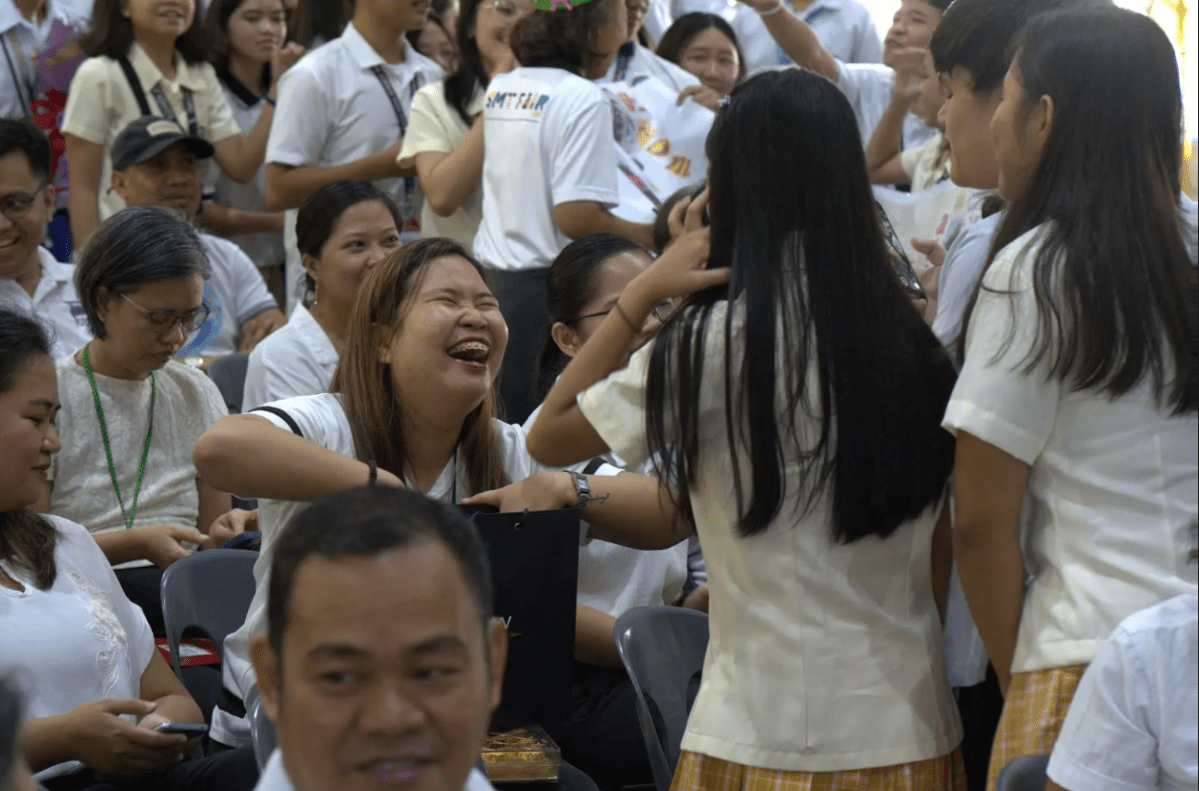
To show appreciation for the hard work of its employees, Philippine Science High School – Eastern Visayas Campus (PSHS-EVC) held Pagbati 2024 in the campus gymnasium on October 7, 2024.

The event, headed by the Student Alliance (SA), served as the school’s official culminating activity for National Teachers’ Day. The activity was not limited only to the teaching staff but also included other employees.

Pagbati 2024 formally kicked off with an opening message by PSHS-EVC’s SA President Clarence Jude Tabinas.

In his message, Tabinas expressed his thanks to the various employees of PSHS-EVC, saying that the program was meant to show the appreciation of the student body for them.

“Together, each and every one of you plays a vital role in our stay in Pisay, making it so much more memorable,” he said. “Today, we, the student body, would like to show our heartfelt appreciation through this program, prepared especially for you,” he added.

The PSHS-EVC community tribute followed shortly in the form of a video showcasing the dedication and commitment of the employees to their work. Afterward, Pisayaw, the official dance troupe of the campus, presented a performance as their way of showing thanks to the employees. 

The event then culminated with the gift-giving ceremony and was formally concluded with a song performance by PSHS-EVC’s very own student choir, Musikanta.

Pagbati 2024 was held to highlight the efforts and contributions of the school’s faculty and staff and to show the gratitude of the student body for their services.

Earth to Temporarily Gain a Mini-Moon

By Qwynz Bonachita || Photo Credit: ANDRZEJ WOJCICKI/SCIENCE PHOTO LIBRARY

Earth is set to experience a rare celestial event starting today as it temporarily welcomes a mini-moon. On August 7, NASA-funded scientists identified an asteroid and named it asteroid 2024 PT5. This small asteroid is about 33 feet long and hails from the Arjuna asteroid belt, which is about 93 million miles away from our planet.

The asteroid will enter its two-month Earth orbit on September 29, 2024 until November 25, 2024. But, unlike Earth’s moon, mini-moons like 2024 PT5 have unstable orbits. Scientists predict that asteroid 2024 PT5 may not be able to complete one revolution around the planet but will follow a horseshoe-like path instead.

Despite the mini-moon being close to our planet for several months, it is unlikely for it to be visible to the naked eye or even through typical amateur telescopes or binoculars, due to its small size. To witness this mini-moon, a professional telescope with a minimum diameter of 30 inches will be required, says Carlos de la Fuente Marcos, the study’s lead author and a professor of the Universidad Complutense de Madrid.

Another interesting possibility is that 2024 PT5 may not just be any asteroid, but rather a fragment of our moon. Paul Chodas, director of NASA’s Center for Near Earth Object Studies, pointed out that the trajectory of the asteroid suggests that it may be a lunar debris that was expelled off the moon as a result of a prior impact incident.

PT5 is expected to go back to the Arjuna asteroid belt after a short orbit around the Earth in 2024, however there is still a possibility of it re-entering Earth’s orbit in 2055.

Reference:
Johnson, A. (2024, September 19). Temporary ‘Mini-Moon’ will begin to orbit Earth next weAek: What to know. Forbes. https://www.forbes.com/sites/ariannajohnson/2024/09/19/temporary-mini-moon-will-begin-orbit-around-earth-next-week-what-to-know/

ANDRZEJ WOJCICKI/SCIENCE PHOTO LIBRARY & ANDRZEJ WOJCICKI/SCIENCE PHOTO LIBRARY. (2024, September 26). Near-Earth asteroid, artwork – Stock Image F005/5892. Science Photo Library.

A Journey to Home

By Althea Samson || Graphics by Tyreena Tuazon

The air was thick from anticipation. It has been approximately 547 nights since she has last stepped inside the buildings she once called home, each night stretching longer than the other. The nostalgia of the place hit her once more as she stepped through the doors.

On the other hand, there was another who came from afar. One who was looking for a place to call home. He didn’t know what to do, or where to go. The pang of realization hit him as the plans he had set for himself in the future didn’t pan out. He wandered around tirelessly, walking through various corridors– yet, none of them felt like home. That was until he sensed it. Whispers seeped through the cracked walls, telling him that this place might just be the one he was looking for. 

She walked through the hallways. The sunlight shone through the crevices of the open air corridors, the wind gently rustled the leaves of the trees that surrounded the campus, the weathered red brick walls– as she walked further, the memories she had of this place washed over her in an instant. She remembered it all too well. 

The bustling atmosphere, the laughter of students bouncing off the walls, the whispers she shared with her colleagues– she felt at home once more. Despite the changes in atmosphere, the students, the faculty– there was no doubt that the feeling of being back home was laced with an intense longing. 

Despite the occasional bout of home-sickness plaguing her journey in Brisbane, Australia, Ma’am Nikki Rabe has finally returned to PSHS-EVC. While she was in the Land Down Under, she pursued a master’s degree in Education specializing in both STEM Education and Inclusive Education at Queensland University of Technology. However, Ma’am Nikki is no stranger to being far from home. Hailing all the way from Dinagat Islands, she graduated Cum Laude with a Bachelor’s Degree in Physics at Mindanao State University. She began her journey as a teacher here in EVC in 2019, and since then, she has been glued to the Physics Unit, the safehaven of the subject in which her passion is unmatched. Physics, as she describes it, is both challenging and exciting. There’s no doubt that with her presence gracing the halls of EVC again, students will be introduced once more to the wonders and intricacies of Physics.

Meanwhile, he eyed the place. Gazing at it with wonder and fascination. He knew going here wasn’t his original plan. However, the appeal of this unexplored realm drew him closer and closer. A whisper from within was urging him to take a step inside. Without a doubt, he started walking closer and closer – until he took a step inside. 

Perhaps the abruptness of this decision was the turning point in his journey. 

To him, the place was a culture shock. The atmosphere was something he was not used to. A sense of youthfulness and enthusiasm echoed through the hallways; something he’d never quite been in the midst of before. He watched the students as they hurried past, their faces lit up with determination. This scene was more than uncommon to him. Being used to the stoic expressions and dull environment of higher educational institutions, the attitude of these students were contradictory to that of his peers which he had grown used to during his formative years in college. Navigating through this new environment was daunting, it was going to take time to settle in. Regardless, this new place might just be one he would grow to call home. 

Sir Gideon Yepes, also known as Sir Gids, a new teacher of the Biology Unit, has meticulously stepped into the gates of PSHS-EVC. He had just graduated from Visayas State University as a magna cum laude with a bachelor’s degree in Biology. Each lesson he imparts with enthusiasm, his passion for Biology burning bright, flickering with intensity and warmth– despite being a first-time teacher, there’s no doubt that Sir Gids greatly enjoys teaching the subject he loves the most. 

Home isn’t just confined to a physical space. It takes on many forms. Home can be found in between red bricked walls, the yellow gingham skirts seen in every corner, the silent whispers of gossip shared in the faculty room, and the passion for science. 

Two pairs of footsteps resound against the stone floors, each arriving from different journeys. Whether it be nations apart, or just around the corner, one thing is certain– they have finally arrived home. 

The Resistance of Remembrance

By Poimen Agnila || Illustration by Lilianne Salorio

The downfall of a nation lies in its short memory.

Whether it be because of the perpetuation of a golden era narrative, the antagonizing of progressive ideology, or the non-acknowledgment of the barbarism caused by the past regime, the current state of this country’s democracy hinges strongly on the people’s collective capacity to remember. 

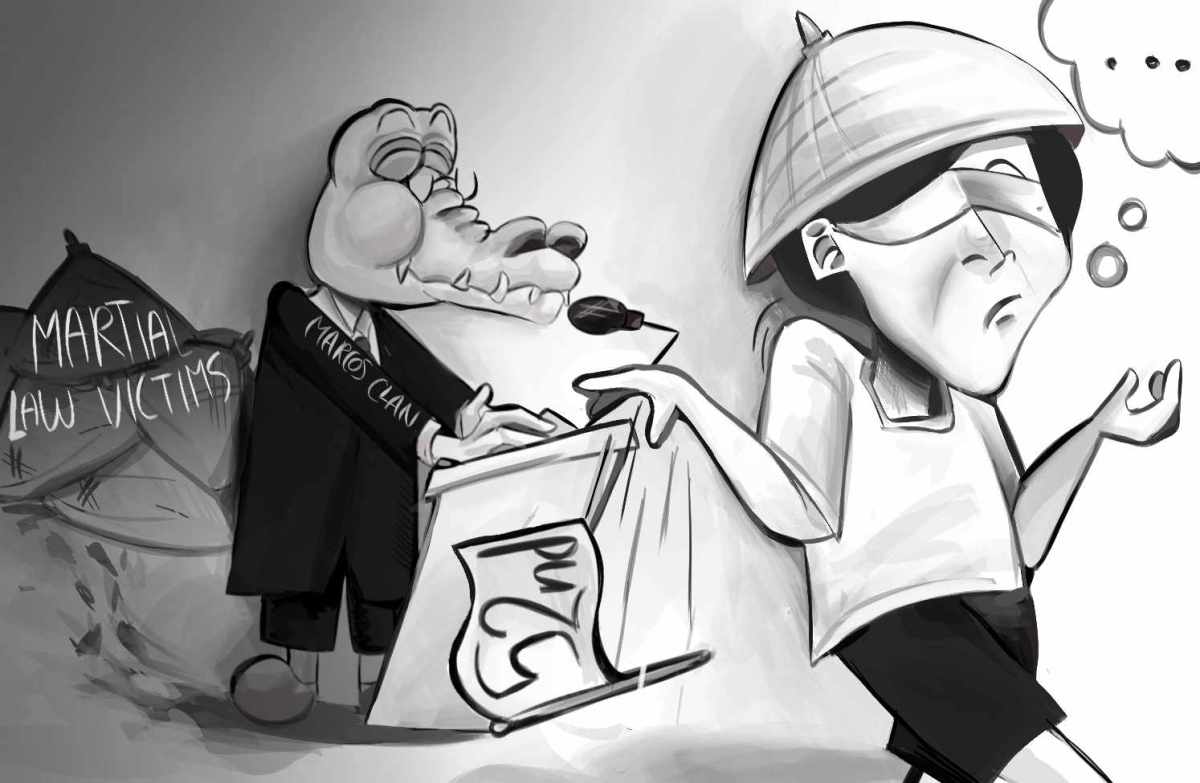
September 21st marks the 52nd anniversary of the signing of Proclamation No. 1081—the beginning of Ferdinand Marcos Sr.’s authoritarian reign over what he described as a country in peril. Threatened by communist movements gaining traction in the Philippines, Marcos sought to “save the republic and reform society” through the declaration of martial law. What would follow was 14 years of violence, forced silence, and infamous kleptocracy. 

In the wake of Bongbong Marcos’ candidacy and his family’s rise to mainstream relevance once more, a sickness seems to have gripped the nation—forgetfulness. Seemingly losing all memory of the family’s misdeeds, the Filipino masses have elected another Marcos to power, despite questionable claims of achievements and streaks of disinformation painting his reputation as a politician.

His subsequent appointment as president allowed him to reframe the country’s view of his family and their wrongdoings, wiping away a bloodied history rife with torture and abuse endured by those whose only crime was resistance. 

As we witness history being revised in real-time, we face the important question of what it truly means to never forget.

In times like these, it is imperative to question the validity of claims rather than simply accepting the information given to us. In a subject matter with as wide-ranging consequences as politics, being critical and holding those in power accountable are the first steps to rebuilding a memory actively being erased.

There never was a “golden era”. 

What the Marcos clan claimed was a prosperous period in the nation’s history was in truth only applicable to them, having appropriated billions of pesos from the country’s funds. In July 2003, the Supreme Court allowed for the forfeiture of the Marcoses’ $683 million in funds, deposited in Switzerland through questionable Swiss foundations. In 2018, the anti-graft court Sandiganbayan found former First Lady Imelda Marcos guilty of 7 counts of graft related to the aforementioned plunder.

Moreover, the “discipline” and “order” of the martial law era, which was and still is praised for, were the result of censorship and tyranny. Life was only “peaceful” back then because those who dared to speak up against the regime’s crimes were silenced forever. Journalists and activists who opposed government decisions were tracked down, arrested, and forced to keep shut. In more severe cases, they were brutally tortured and even killed. Data from Amnesty International (as cited in The Martial Law Chronicles Project) reports that 70,000 people were imprisoned, 34,000 were tortured, and 3,240 were killed during Marcos Sr.’s reign of terror. 

It is undeniable that the declaration of Proclamation No. 1081 paved the way for the late dictator’s authoritarian regime. And as history repeats itself with the election of his son to office, we must also reminisce, along with the facts we are armed with, of the power collective resistance holds. 

There is a reason why the EDSA People Power Revolution succeeded in ousting Marcos. It was the refusal to forget by the thousands who filled EDSA that fateful series of days in 1986 that led us to the freedom we now enjoy. Whether or not we continue the example they have set will determine if this country will live to see a different era of governance. 

In the film adaptation of F.H. Bacatan’s book, Smaller and Smaller Circles, Father Jerome Lucero imparts to his students a valuable lesson on the Martial Law era: “Time and forgetfulness are the allies of abusers.”

We hold in our hands the power to end revisionist narratives. As citizens, our duty to remember extends beyond just a simple recollection of what happened; it also directs us to fight against attempts to rewrite history. Learn from the past. Engage in discourse. Become a voice for truth. There is no greater antidote to forgetfulness than a mind that keeps remembering.

The downfall of a nation lies in its short memory but its revival hinges on its people’s capacity to remember.

Chilly with a Chance of Catastrophe 

By David Edward J. Roberts || Illustration by Mavi Hipe

It’s the height of summer: the sun blazes down, roads shimmer in heat. You shut your doors, run to your air conditioner, and set it to a blissful 17 degrees. As you sink into your favorite spot—either that’s your desk or bed—the gentle harp of the cold bard becomes a familiar love song. Inside, the cool, steady breeze slowly transforms your space into a tranquil oasis in the midst of a sweltering world outside.

But as you revel in this illusion of a refreshing haven, you might want to start pondering about a curious irony: While you’re cooling down, your beloved air conditioner might be contributing to the exact heatwave you’re escaping – Didn’t know that part, did you? 

Unfortunately, summer break in the Philippines isn’t just about basking in endless sunlight or lounging on white sand beaches. Being Filipino also means enduring the fierce blankets of El Niño and the sun’s relentless heat, which brings not only the joy of chilled fruit juices but also the unwelcome trio of headaches, sunburns, and heat strokes—a classic Pinoy summer experience.

In fact, heat index soaring to a blistering 40-50 degrees Celsius, the state weather bureau in PAGASA warned that 40 areas in the country could face “dangerous” heat indexes on a single day, in reference, this is the exact range that PAGASA states is dangerous to human health. In fact, between January 1 and April 29 alone, at least seven people succumbed to heat-related illnesses, according to the Department of Health. 

Humans, always adaptable to their environment, have evolved from simple head coverings to a range of creative solutions for shielding themselves from the sun, yet, with the rising intensity of heat in our modern times, these once-reliable defenses are often rendered nearly useless. 

And so, one method stood the test of time and efficiency: air conditioning —of course, that’s if you turn a blind eye to where all those emissions end up. But really, who needs to know that, right?

Thing is, they work so well because they don’t just blow air around like fans; instead, the magic begins when warm air is drawn in the system, special coils absorb the heat, cleaning the air, making it cool and crisp. The system, in all its efficiency, expels the unwanted heat to our atmosphere to build up—out of sight, out of our minds.

But air conditioning isn’t just about cooling the air; it also pulls moisture out, lowering humidity level —almost like giving you a temporary superpower to shed the “scorching heat armor” your body collects from the stories you had during the day.

In fact, Lee Kuan Yew, the visionary leader who shaped the cloud-reaching skylines in Singapore, once revealed that the surprising secret to the city-state’s success is air conditioning. 

“Air conditioning was a most important invention for us, perhaps one of the signal inventions of history. It changed the nature of civilization by making development possible in the tropics.” he stated. 

Next to the postcard of Singapore in our gallery of air-conditioned success stories is another country, none other than: The United States. That’s right!  Before air conditioning became widespread, summer in the American suburbs wasn’t just uncomfortable—it was deadly, literally. The death rate would spike during the hottest months as people struggled to cope with the heat. Today, with cooling units humming in nearly 90% of American homes, those seasonal spikes in mortality have largely disappeared. So, in a way, we can call it a lifesaver—a device that doesn’t just provide comfort but plays a vital role in modern public health.

This hunger we have for cool air has then caught the attention of the International Energy Agency (IEA), which collected and delivered some predictions in their groundbreaking 2018 report, The Future of Cooling: Opportunities for Energy-Efficient Air Conditioning. Among the said forecasts: in just 26 years, four billion new air conditioning units will be added globally, with nearly half of them in China and India. Even more startling, energy consumption from AC units is expected to triple, leaping from 2,020 terawatt-hours in 2016 to a staggering 6,200 terawatt-hours by 2050. 

Additionally, the IEA predicts a staggering 395% rise in power demand by mid-century, quite literally, using up all our energy. 

To meet this almost impossible energy demand, the reliance on grinding and burning fossil fuels increases drastically, increasing the emission of greenhouse gasses. This serves as the root of IEA’s another alarming prediction: by 2050, carbon dioxide emissions from air conditioning will nearly double, rising from 1,135 million tons in 2016 to a staggering 2,070 million tons. This relentless push for energy is driven by the intensifying consumption of fossil fuels, leading to a vicious cycle of environmental harm.

Right now, air conditioning is responsible for about 4% of the world’s greenhouse gas emissions, and with the trend we have going on, can skyrocket in a major way in the future. A major culprit is hydrofluorocarbons, the refrigerants used in many air conditioners. These potent gasses trap even more heat in our atmosphere and are a major part of the problem.

So, should we just throw in the towel and embrace the sweltering summer heat? Well, no.

Turning up the air conditioner isn’t necessarily a crime, but a vivid illustration of the First Law of Thermodynamics: energy isn’t created or destroyed, it simply changes from one form to another. 

Sure, air conditioning provides much-needed relief from the sweltering heat, makes crowded spaces more bearable, and can even be a lifesaver in extreme conditions. The immediate comfort it offers is undeniable, especially during those punishing heat waves or in densely populated areas where cooling is essential. Yet, this relief—like everything, comes at a price.

In other words, the cool sanctuary of our air-conditioned spaces is, paradoxically, contributing to a hotter planet. Our quest for comfort through cooling systems is intensifying the very heat we’re trying to avoid.

So, the next time you crank up your air conditioner, maybe reconsider the sound its breeze makes. Is it a romantic tune that fills your space with cool air to turn it to a sanctuary, or a tragic ballad about our beloved mother planet slowly and slowly heating up, by every burning note?

Sporting the Scholarly Spirit

By Fionna Canales || Illustration by Mavi Hipe

From the playful sparring sessions with her brother to bearing the country’s name on her back in the Olympics, Aira has always been driven by a passion for boxing. While just a few kilometers away, a young student with a little history hobby finds his passion for medicine and applies to Pisay, unknowing of the future it holds and the bravery it’d take to conquer it.

Taking deep breaths, the Filipina boxer pranced down the walkway with confidence in each bound, her name echoing throughout the stadium as she approached the ring to meet her opponent, steeling herself for what is to come. The whistle blew and the bout started. The two exchanged powerful blows going back and forth, without a moment to blink. Though, even with their all-out efforts, only one could be declared the winner. As the match concluded and the referee clasped onto both their hands, Aira’s was not the one raised in the end.

Taking deep breaths, the Pisay scholar hesitantly flipped open his laptop with eyes locked onto the clock ticking ever-closer to 7:30, his name echoing from the speaker as the teacher started to record the session’s attendance. As he braced himself for yet another week’s classes under lockdown, that distinctive ping and the appearance of that all-too-familiar hook graphic signified that the weekend couldn’t have gone by any quicker.

He was now a 12th grader, and despite it being his graduating year, he felt far from ready. Often, he would find himself doing anything, anything at all, but listening to the droning discussions on Meet. Even getting out of bed in the morning to start the day felt like a chore. The stress, the schoolwork, and his dog’s passing were just too much for one teenage student stuck at home to handle. It was as if the scholarly flame in him had been reduced to a mere sputter.

“Not winning the gold was a blessing in disguise.”

Despite having lost her ticket to the gold-medal match in the Olympics, no defeat could deter the boxer’s unwavering commitment and passion for the sport she oh-so loved. The layered medallion glinting in the spotlight alongside her bright smile, while not the ultimate prize, served as a powerful reminder of how far she’s come and what she has yet to achieve.

Despite having lost his academic ferver which got him throughout the crests and troughs of 11th grade, after minutes turned to hours turned to days and even months, the student got up. He simply knew that he had to get the ball rolling. A return to normalcy and a good talk with his friends were just what he needed to keep himself sane. Even though he hadn’t quite fully put himself back together, he was graduating, and the scholar needed to make every waking moment of that year count. He had already gone through so much and college was barrelling towards him no matter what he chose. No way he’d let himself stop now.

“Seeing my brother’s trophies and knowing he became a scholar without needing our parents’ support inspired me to achieve the same.”

She was only nine when she first fell in love with the sport. Her brother, who brought her behind the curtains and showed her a whole new world, lit an inferno within her, and along with her family, served as her support system throughout her years in a career many see as hopeless. Knowing her family always had her back, and with a few matches up her sleeve, she slowly but surely worked her way up the boxing ladder from her quaint barangay all the way to the very pinnacle of competition. With all that she built up for herself alongside the family which brought her to this point, Aira knew that boxing was not just her hobby, not just an ordinary passion, but her purpose in life.

He was in 11th grade when he first fell in love with MUN. His mentors in Model United Nations, who took his passion for history and diplomacy and enlightened him with experiences and fun which he could only have dreamt of, lit a fuse destined to explode, and along with his friends, served as his support system throughout his graduating year which he found to be hopeless. After each argument over trade, each resolution passed, and each improvised speech, with all the late-night Discord calls with his friends, he had found his passion and eventually regained his purpose.

“The goal is to get that gold.”

Taking deep breaths, Aira stepped up the podium with confidence, her name echoing throughout each voice cheering for her. The bronze medal clutched in her hand reminding her of the story which brought her here. Her family was watching her from home, some even from the sidelines, and with them she had discovered who she was and got through each tough loss through them.

Taking deep breaths, the Pisay student stepped up the stage with pride, his name echoing throughout the gym listing out all that he had accomplished. The diploma clutched in his hand reminding him of the story which brought him here. His friends were just below, in their own togas, watching him wrap up his time in Pisay, and with them he had discovered more of who he was and got through each hardship of the year with them.

“It’s really okay to feel like you lack something.”

Through their tough times, whether it was Aira facing defeat in an Olympic match or the scholar grappling with a loss of motivation, the passion they find with their family and friends brings new light into their lives which previously wasn’t there.

The olympian and the scholar lead different lives. Tell different tales. Look forward to different hopes. Yet, even if their flame flickered and seemed to wane, through their own tenacity and the support they sought from those around them, the two eventually found their passion and rediscovered their light – a fire that would never burn out.

Use available resources to reach goals — Villegas 

By Vinci Tamayo || Photo by Dani Anos

Paris Olympics 2024 Bronze Medalist Aira Villegas on August 23 shared words of inspiration for young athletes during an interview by The Science Net, the official English student publication of Philippine Science High School – Eastern Visayas Campus.

Upon being asked about her advice for aspiring athletes, Villegas shared that they should manage with the resources they were given in order to achieve their goals.

“Sa lahat ng kabataan din talaga, parang hindi mo naman kailangan ng mga bagay na kung ano-ano, parang be grateful for what you have. And then kung anong meron resources ka, ‘yun ang gamitin para makuha ang gusto mo,” the boxer said. 

[To all the youths, you do not really need lots of things. Be grateful for what you have, and then use the resources you have now to achieve what you want.]

She further emphasized that lack of completeness and dissatisfaction are necessary in an athlete’s journey, highlighting its importance in keeping one’s motivation in sports.  

“Sometimes kasi, once you are an athlete and you are able to have everything, mawawala kasi ‘yung drive mo eh. Kasi meron ako nito, meron ako nito, meron akong ganyan. So parang mawawala yung drive mo kasi everything nandiyan eh. So mas okay din talaga minsan may kulang, para sa kulang na ‘yun, ikaw ‘yung pupuna,” Villegas said. 

[Sometimes, once you are an athlete and you are able to have everything, your drive will also be lost because you have everything. So it is like you will lose your motivation since everything you want is right there. So, sometimes it is really okay to lack something, so you can fill whatever it is you are lacking.]

The olympian then urged young athletes to avoid thinking of the income in sports, but rather treat it as a bonus that comes with their achievements.

“For me kasi, hindi ko iniisip ‘yung pera. Iniisip ko kasi, ‘yung sports, para makapag aral ako. And then yung iba po kasi ‘yung isip nila, ‘Yayaman ako sa sports.’ Hindi, once kasi na inisip mo ‘yung money agad, hindi ka tatagal sa sports. Because the truth is, money is evil. Bonus lang ‘yan pag dumating, like me now,” Villegas said. 

[For me, I do not think of the money. My mindset is ‘sports is so I can study.’ However, others have a different mindset like ‘sports will make me rich.’ Once you think of the money right away, you will not last long. Because the truth is, money is evil. It is just a bonus when it comes as a reward, just like me now.] 

Villegas also expressed her wishes for the government to pay more attention to sports as a whole, citing the media’s current focus on the “elite athletes” rather than the aspiring athletes. 

“Now kasi parang nakatutok sa elite athletes. So, I hope tingnan nila (the government) ‘yung mga aspiring athlete kasi diyan naman ako nanggaling eh,” Villegas said. 

[Right now, the attention seems to be focused on the elite athletes only. So, I hope the government looks at the aspiring athletes too since I also started from there.]

Motivations

In the same interview, Villegas talked about her past and how she was inspired to start boxing despite her circumstances.

“I had nothing eh, so nung nagstart ako ng boxing, dati ‘yung uniform, lahat hiram ko lang. But the good thing is ginamit ko siyang motivation,” she said. 

[I had nothing. So when I started boxing, my uniform, everything was borrowed. But the good thing is I used it as motivation.]

When asked about the specific people who encouraged her to pursue boxing, she highlighted the role her family, mainly her brother, played in inspiring her and keeping her motivation. 

“Pinakauna po talaga, my family. Lalo na my brother kasi siya po talaga ‘yung nagturo sakin ng boxing. Kung nakikita ko siya, nasa boxing siya. Kaya niyang mag aral na hindi humihingi ng pera sa magulang ko through boxing. And then may scholarship siya through boxing,” Villegas said. 

[Foremost is my family. Especially my brother because he taught me how to play boxing. Whenever I would see him, he would be boxing. He could go to school without asking for money from our parents through boxing. He also has a scholarship through boxing.]

She also expressed her goal to further her career by winning a gold medal in future competitions. 

“As an olympian, plano ko pa rin talaga makuha ‘yung gold. So this bronze, hindi ko naman sinasabing nakasettle lang ako sa bronze, but my goal talaga in the Olympics is to get that gold,” she said. 

[As an olympian, I still plan to get a gold medal. So this bronze, I am not saying that I’ve settled with it, but my goal in the Olympcs is really to get that gold.] 

Villegas then talked about how fame has not changed her attitude towards life, and that she is grateful for everything she has achieved so far.

“The good thing about me is that I’m still me. Wala paring nagbago, ganon. The fame and everything is alam ko na pansamantala lang. Ako kasi, I always stay low grounded and I look back at where I came from so ganon po ako, parang grateful lang ako for everything,” the olympian said.

[The good thing about me is that I’m still me. Nothing has changed. I know that fame and everything along with it is temporary. I always stay grounded and I look back to where I came from so I am just grateful for everything.]

Despite losing 5-0 to Turkish opponent Buse Naz Cakiroglu in the semifinals, Villegas managed to snatch a bronze victory— a historic first for the country in the sport.