
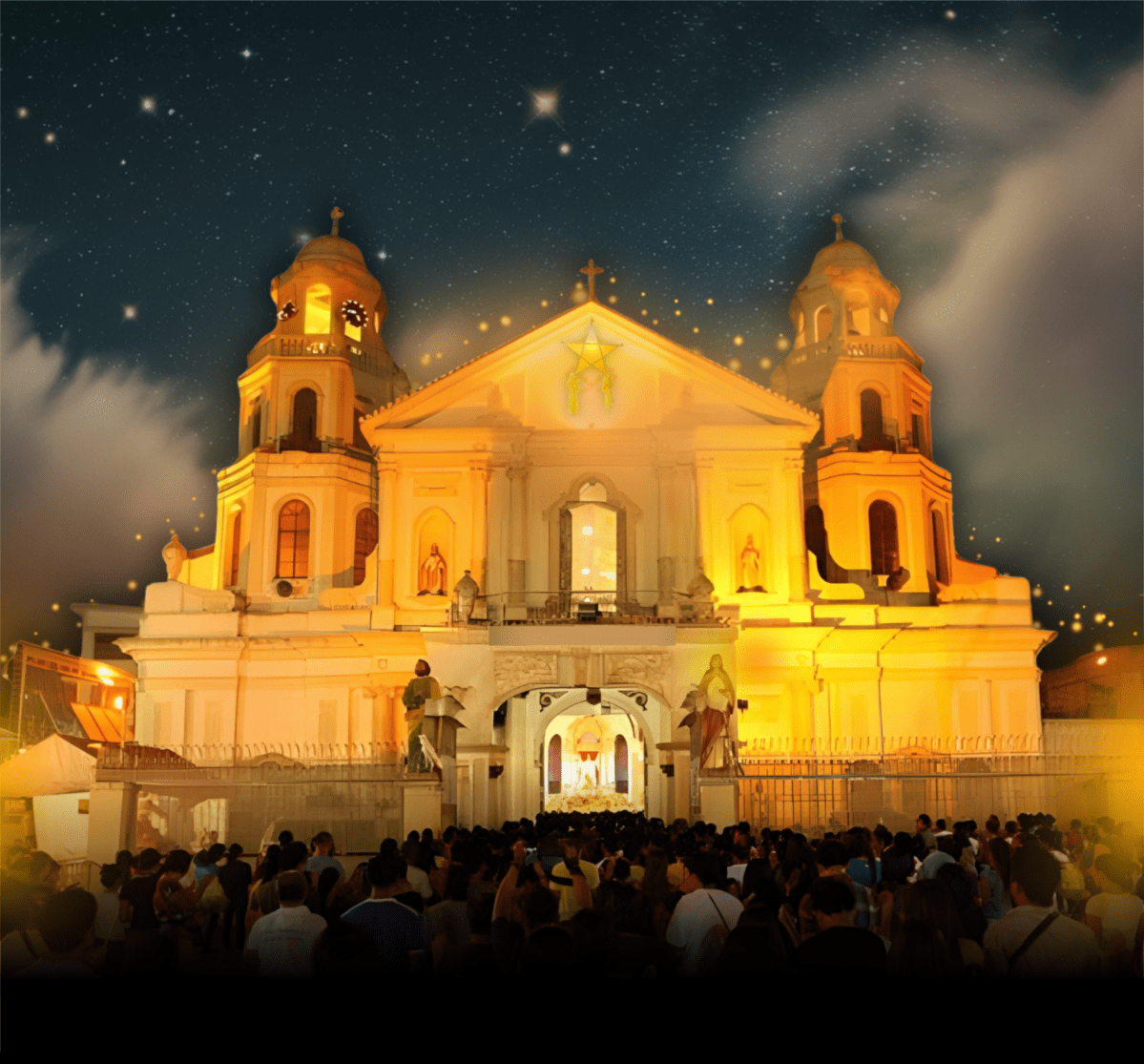
By Roj Faelnar || Graphics by Rei Alinsub
Christmas doesn’t arrive the way we pretend it does. It doesn’t fall from the sky fully formed, wrapped and glowing. Nor does it come on a creaking sleigh pulled by a red-nosed reindeer. What arrives first is the waiting—the long, restless kind. The kind that settles in your chest as soon as the first “ber” month hits, when lights begin to appear but the feeling hasn’t quite caught up yet.
As kids, we thought Christmas simply happened. That one morning, the world just woke up softer. Maybe that’s why we grow up to say, “Christmas feels different now”. Yet, the feeling we wait for does not merely come from the calendar. December alone does nothing. What actually happens is simpler, and far kinder.
Christmas was never something we received. It was something being made around us, quietly and collectively, from the small efforts of ordinary people.
It is built in parols swaying outside houses, uneven and handmade, but still glowing faithfully each night. It is in the sound of laughter echoing down the street as children rehearse carols, voices cracking, turotots slightly off-beat. This season is built on decisions that look insignificant until they accumulate; small efforts that don’t look like much on their own, but somehow gather into something warm.
Sometimes Christmas arrives quietly, not with fireworks, but with the sound of a gate creaking open past midnight. It is a father coming home tired, shirt wrinkled, worn shoes scraping the floor as he sets down a familiar white box on the table—Krispy Kreme, the kind with Snoopy printed on the lid.
The feeling we associate with the season—the softness, the pause, the strange way time seems to slow—did not and still doesn’t come from the holiday itself. It comes from people agreeing, consciously or not, to act differently for a while. To speak more gently. To choose warmth over indifference. To give a little more patience than usual. To make a little more space, even when space is scarce.
In a Filipino home, Christmas isn’t contained within walls; it spills out. Food stretches further than it should, overflowing onto extra plates, foil-covered trays balancing on laps. Chairs are pulled closer together until elbows brush and laughter spills over. Relatives arrive unannounced, bags of food in hand, while a tumble of slippers and shoes crowds the doorway.
We wait for Christmas as a break, a pause from pressure, from expectations that do not rest. But slowly, we learn that the relief we feel is not handed to us. It is created. It is created by parents who flip through bills under the dim glow of a kitchen light, the faint hum of a fan being their only companion. It is made by classmates who excitedly play Manito Manita with oddly wrapped gifts. By families who insist on gathering, even when it would be easier not to.
This is the unspoken truth: Christmas only feels real because people work to make it so.
And when it finally settles in, when the laughter sounds different, when the night feels fuller—it feels earned. Not waited for, but made. It is constructed from shared effort, shared fatigue, and shared gentle hope—just enough to warm the pause between one year and the next.
That is why Christmas lingers. Not because it is perfect, but because it is human. It meets us where we are—older, busier, a little worn—and offers something gentler than excitement. It offers meaning that does not rush.
It asks us to contribute, not consume; to participate, not just expect. It asks us to understand that the feeling we long for is not something we stumble upon. It is something we owe one another.
Christmas was never meant to arrive on its own. It was always something we had to build—piece by piece, moment by moment. And in doing so—despite the year, despite ourselves—we make the season real.
When December finally passes, what lingers is not the noise, but the stillness it briefly allowed: a reminder that even in a loud world, there are moments meant to be held carefully.
 the-science-net.com