
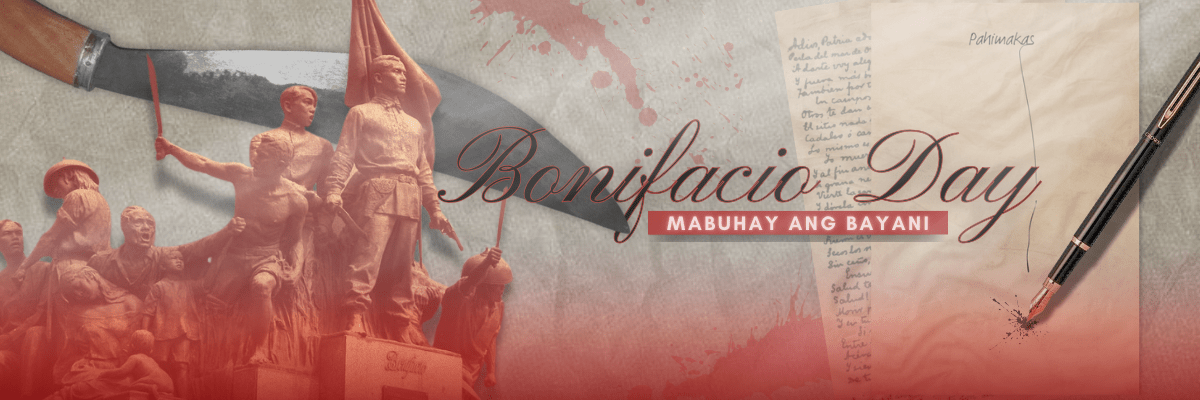
By Zachary Tan || Graphics by Elijah Hembra
It’s 7 PM. I’ve just been reminded that my group has got a Social Science presentation tomorrow on the Cold War, and zero progress has been made. So, in a fit of dire necessity, I boot up YouTube and rewatch the Oversimplified video on it to get a feel for what to even put in the rushed PowerPoint our group is making. Yet, the next day, after a few words on the Iron Curtain and some criticism of the Soviet economy, the presentation finishes rather smoothly. Once again, pop history comes to my rescue.
In one way or another, pop history, or historiography aimed at the general public, has most definitely influenced not only people’s understanding of our past but has seeped its way into our education systems to both its benefit and detriment as we can see from landmark events to motivational heroes.
It is undoubted that pop history is a perfect entrypoint to further your understanding and appreciation for all that has come before us to mold our world into what it is today. The creation of pop history for widespread understanding is in of itself a skill to boil down complicated matters into simple concepts without ignoring the nuance of it all. When it’s done well, pop history can be the pinnacle of ‘edutainment’ as I myself can attest to.
During the pandemic, I entered the rabbit hole of history YouTube and discovered wondrous creators such as that of Historia Civilis which managed to hook me into a story from millenia ago while not compromising historical integrity. However, with each Historia Civilis, there lies tens more which are unable to meet the important need for truth and nuance in pop history. This is as one of the great perils in pop history lies in the fact that it compiles the past into neat boxes with clear delineations to create a clean and simple story for the general public. However, real life is far more complicated than a simple black and white or good and bad. This is true even with our national heroes, Jose Rizal and Andrés Bonifacio, the faces transcending time from our statues to our currency.
When we think of Rizal and Bonifacio, they often feel like they are diametrically opposed. Rizal comes from the rich ilustrado class wherein he was educated in the best schools the Philippines had to offer and used the power of the pen to push for the Philippines’ autonomy. Meanwhile, Bonifacio was born working class, unable to finish formal education, and helped found the Katipunan, the foremost armed force in fighting for an independent Philippines. The only thing uniting these two men were their love for their country and their hope for a better Philippines.
These are the ideas cemented into our minds from when we were young through the media we consume and even occasionally our schools. This is as we often get tunnel visioned into these figures’ ‘greatest contributions’ while ignoring the fact that they are multifaceted human beings. Rizal, as much as he was an advocate for nonviolent resistance, was a pragmatic individual. With this, according to accounts from his time such as that of Pio Valenzuela, nearing the end of his life, Rizal believed that assuming no other means were viable and the resistance was ready enough, a violent revolution would be favorable. On the other hand, Bonifacio was by no means some sort of brutal warmonger only out for Spanish heads. Rather, he had even been a member of Rizal’s own reformist organization La Liga Filipina which aimed to push for internal change within the Philippines under Spanish rule.
However, despite this seemingly glaring gray area with their respective beliefs, both these great men have generally been reduced to simple pacifism or violence. I myself find it difficult to remember a time in which I was taught anything more complicated about their lives beyond their simple attributes and somewhat irrelevant fun facts. In fact, this does not only just apply to Rizal and Bonifacio, but a whole host of other people, events, and entire eras when the topic is as complicated as history is. However, this issue does not necessarily come from our educators, it is a matter of how we as a whole approach the idea of teaching history and the usage of pop history.
We already know in our daily lives that people or rather the human experience as a whole is such a complicated subject with multiple sides and complicated moralities. Why can we not extend this to those who have come before, the somewhat deified figures of our past still remain to be people after all, no matter how dead they may be. Engaging stories and nuance under pop history are not mutually exclusive. Oftentimes, the most engaging stories are those containing fully fleshed out characters without clear lines of evil and good, and history is no exception. This is why the utmost care must be taken when speaking about these complicated issues and larger-than-life individuals which affect who we are today. After all, these names on our textbooks had personalities, hopes, and loved ones as well like all human beings do.
 the-science-net.com