
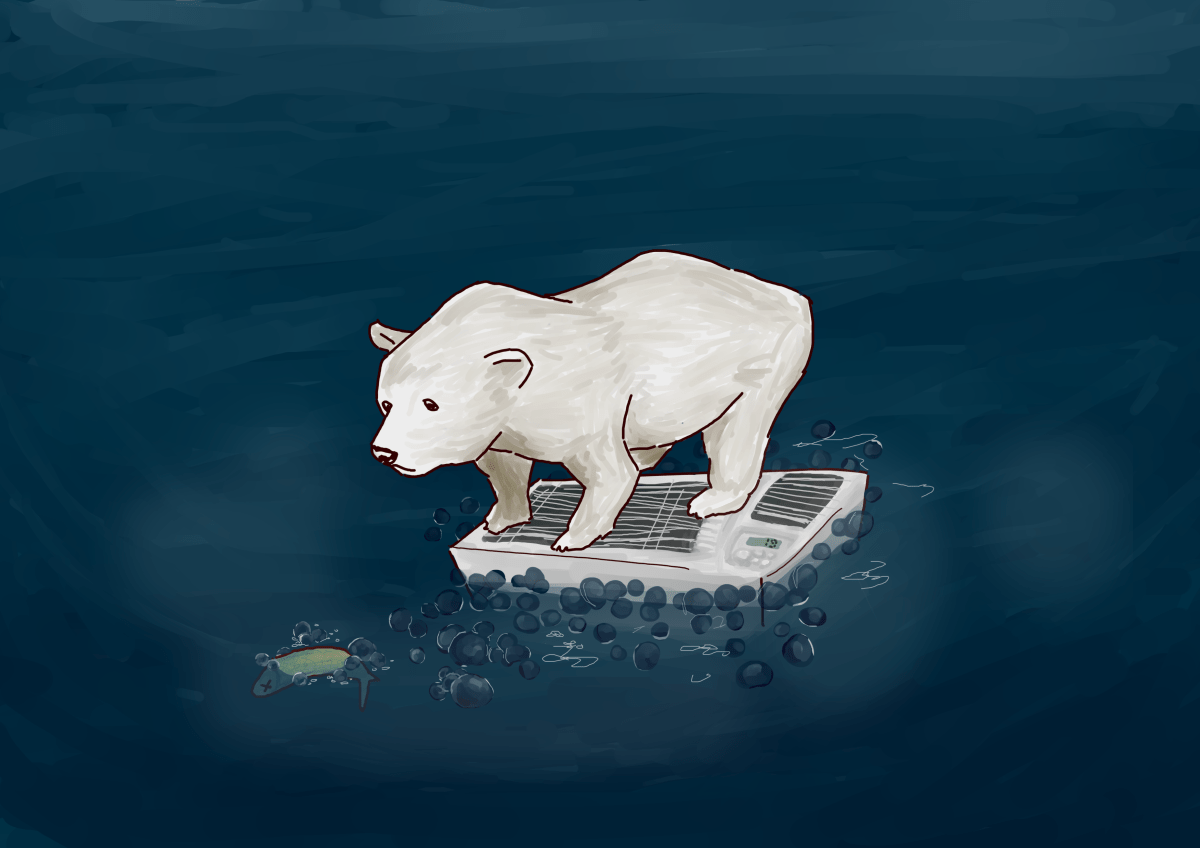
By David Edward J. Roberts || Illustration by Mavi Hipe
It’s the height of summer: the sun blazes down, roads shimmer in heat. You shut your doors, run to your air conditioner, and set it to a blissful 17 degrees. As you sink into your favorite spot—either that’s your desk or bed—the gentle harp of the cold bard becomes a familiar love song. Inside, the cool, steady breeze slowly transforms your space into a tranquil oasis in the midst of a sweltering world outside.
But as you revel in this illusion of a refreshing haven, you might want to start pondering about a curious irony: While you’re cooling down, your beloved air conditioner might be contributing to the exact heatwave you’re escaping – Didn’t know that part, did you?
Unfortunately, summer break in the Philippines isn’t just about basking in endless sunlight or lounging on white sand beaches. Being Filipino also means enduring the fierce blankets of El Niño and the sun’s relentless heat, which brings not only the joy of chilled fruit juices but also the unwelcome trio of headaches, sunburns, and heat strokes—a classic Pinoy summer experience.
In fact, heat index soaring to a blistering 40-50 degrees Celsius, the state weather bureau in PAGASA warned that 40 areas in the country could face “dangerous” heat indexes on a single day, in reference, this is the exact range that PAGASA states is dangerous to human health. In fact, between January 1 and April 29 alone, at least seven people succumbed to heat-related illnesses, according to the Department of Health.
Humans, always adaptable to their environment, have evolved from simple head coverings to a range of creative solutions for shielding themselves from the sun, yet, with the rising intensity of heat in our modern times, these once-reliable defenses are often rendered nearly useless.
And so, one method stood the test of time and efficiency: air conditioning —of course, that’s if you turn a blind eye to where all those emissions end up. But really, who needs to know that, right?
Thing is, they work so well because they don’t just blow air around like fans; instead, the magic begins when warm air is drawn in the system, special coils absorb the heat, cleaning the air, making it cool and crisp. The system, in all its efficiency, expels the unwanted heat to our atmosphere to build up—out of sight, out of our minds.
But air conditioning isn’t just about cooling the air; it also pulls moisture out, lowering humidity level —almost like giving you a temporary superpower to shed the “scorching heat armor” your body collects from the stories you had during the day.
In fact, Lee Kuan Yew, the visionary leader who shaped the cloud-reaching skylines in Singapore, once revealed that the surprising secret to the city-state’s success is air conditioning.
“Air conditioning was a most important invention for us, perhaps one of the signal inventions of history. It changed the nature of civilization by making development possible in the tropics.” he stated.
Next to the postcard of Singapore in our gallery of air-conditioned success stories is another country, none other than: The United States. That’s right! Before air conditioning became widespread, summer in the American suburbs wasn’t just uncomfortable—it was deadly, literally. The death rate would spike during the hottest months as people struggled to cope with the heat. Today, with cooling units humming in nearly 90% of American homes, those seasonal spikes in mortality have largely disappeared. So, in a way, we can call it a lifesaver—a device that doesn’t just provide comfort but plays a vital role in modern public health.
This hunger we have for cool air has then caught the attention of the International Energy Agency (IEA), which collected and delivered some predictions in their groundbreaking 2018 report, The Future of Cooling: Opportunities for Energy-Efficient Air Conditioning. Among the said forecasts: in just 26 years, four billion new air conditioning units will be added globally, with nearly half of them in China and India. Even more startling, energy consumption from AC units is expected to triple, leaping from 2,020 terawatt-hours in 2016 to a staggering 6,200 terawatt-hours by 2050.
Additionally, the IEA predicts a staggering 395% rise in power demand by mid-century, quite literally, using up all our energy.
To meet this almost impossible energy demand, the reliance on grinding and burning fossil fuels increases drastically, increasing the emission of greenhouse gasses. This serves as the root of IEA’s another alarming prediction: by 2050, carbon dioxide emissions from air conditioning will nearly double, rising from 1,135 million tons in 2016 to a staggering 2,070 million tons. This relentless push for energy is driven by the intensifying consumption of fossil fuels, leading to a vicious cycle of environmental harm.
Right now, air conditioning is responsible for about 4% of the world’s greenhouse gas emissions, and with the trend we have going on, can skyrocket in a major way in the future. A major culprit is hydrofluorocarbons, the refrigerants used in many air conditioners. These potent gasses trap even more heat in our atmosphere and are a major part of the problem.
So, should we just throw in the towel and embrace the sweltering summer heat? Well, no.
Turning up the air conditioner isn’t necessarily a crime, but a vivid illustration of the First Law of Thermodynamics: energy isn’t created or destroyed, it simply changes from one form to another.
Sure, air conditioning provides much-needed relief from the sweltering heat, makes crowded spaces more bearable, and can even be a lifesaver in extreme conditions. The immediate comfort it offers is undeniable, especially during those punishing heat waves or in densely populated areas where cooling is essential. Yet, this relief—like everything, comes at a price.
In other words, the cool sanctuary of our air-conditioned spaces is, paradoxically, contributing to a hotter planet. Our quest for comfort through cooling systems is intensifying the very heat we’re trying to avoid.
So, the next time you crank up your air conditioner, maybe reconsider the sound its breeze makes. Is it a romantic tune that fills your space with cool air to turn it to a sanctuary, or a tragic ballad about our beloved mother planet slowly and slowly heating up, by every burning note?
 the-science-net.com